We Tested 27 Grain-Free Dog Food in the UK — See Which One Is Best
We analysed 27 grain-free dog food products, scoring each on ingredient quality, nutritional value, value for money, transparency, and palatability. Here are the top-rated picks for 2026, ranked by overall score.
Last updated: 04 April 2026 · Reviewed by Bart, Health & Tech Enthusiast
Quick Picks

Lily's Kitchen
Lily's Kitchen Cottage Pie is a premium grain-free wet food featuring named beef as the primary protein alongside a visible array of whole vegetables ...
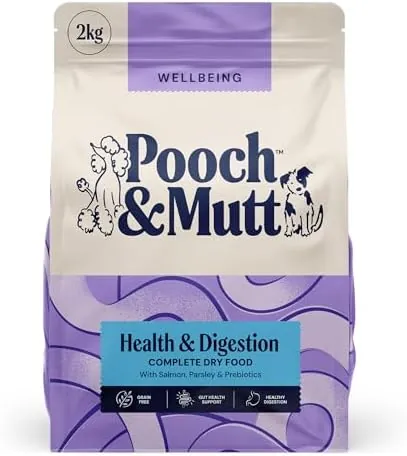
Pooch & Mu
Pooch & Mutt Health & Digestion is a premium grain-free kibble built around 45% salmon as a single, named protein source, paired with sweet potato as ...
Lily's Kitchen
Lily's Kitchen Complete Natural Adult Dog Food is a premium wet food built on a high-quality dual-protein base of 41% turkey and 20% duck — both named...

Lily's Kitchen
Lily's Kitchen Small Breed Grain-Free Chicken & Duck is a premium dry kibble built around 39% named fresh meat (31% chicken, 8% duck), with no by-prod...

Lily's Kitchen
Lily's Kitchen Classic Dinners and Grain-Free variety packs offer nutritionally complete wet food made with freshly prepared named meats (chicken, tur...

Burns
Burns Sensitive Grain Free Duck & Potato uses duck as a named novel protein source with no by-products or meat meal, making it a transparent, hypoalle...
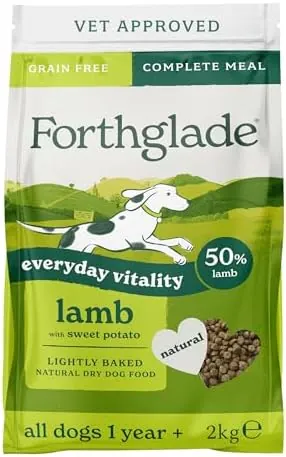
Forthglad
Forthglade's Lightly Baked Lamb with Sweet Potato is a premium hypoallergenic dry food built around 50% single-source lamb, making it one of the clean...

Forthglade
Forthglade's grain-free complementary wet food uses 90% named meat proteins (chicken, turkey, beef, lamb) with no by-products or meat meal, placing it...
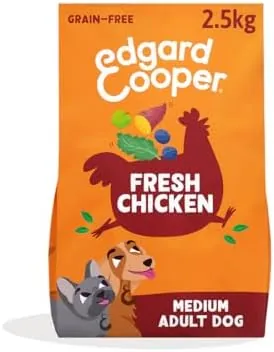
Edgard Coop
Edgard & Cooper's grain-free chicken kibble stands out for its use of fresh, named chicken as the primary protein with an explicit 'never meat meal' c...

Forthglade
Forthglade's grain-free complementary wet food leads with 90% named turkey — an excellent single-protein source with no by-products or meat meal, maki...

Lily's Kitchen
Lily's Kitchen Weekend Favourites is a premium grain-free wet food featuring freshly prepared named chicken, offal, and wholesome vegetables across th...
Pooch & Mutt
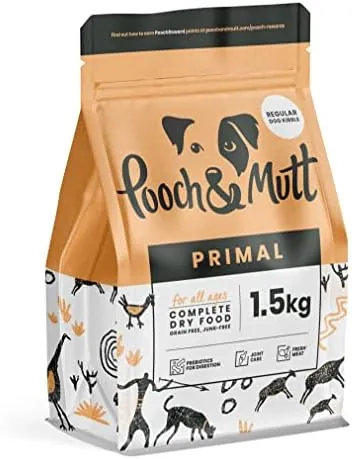
Pooch & Mutt Primal delivers a strong ingredient profile with multiple named protein sources (lamb, ostrich, chicken, salmon) and a claimed 80% meat c...
Pooch & Mutt
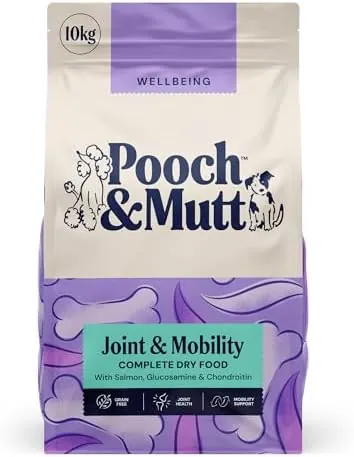
Pooch & Mutt Joint Care uses fresh salmon as its primary named protein — a high-quality, omega-3-rich source well suited to joint and inflammatory sup...

Autarky
Autarky Grain Free Turkey & Potato is a hypoallergenic complete dry food built around a single named meat protein (turkey) with potato as the primary ...
Edgard Coop
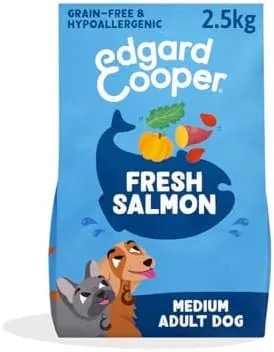
Edgard & Cooper's fresh salmon grain-free kibble uses named, traceable salmon as the sole protein source with no fish meal, by-products, or poultry fa...

Burns
Burns Hypoallergenic Fish & Wholegrain Maize is a limited-ingredient, complete diet for adult and senior dogs with food sensitivities, using ocean fis...

Burns
Burns Turkey & Potato is a genuinely hypoallergenic dry food from a reputable UK brand, built around a single named protein (turkey) and two low-aller...
Skinners
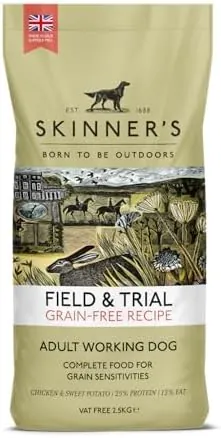
Skinner's Field & Trial Grain Free Chicken & Sweet Potato uses named chicken as its primary protein source with sweet potato as the main carbohydrate ...

Dr John
Dr John Hypoallergenic Lamb with Rice is a wheat-, dairy-, and soy-free complete dry food targeting adult and senior dogs with food sensitivities. It ...
HARRINGTON
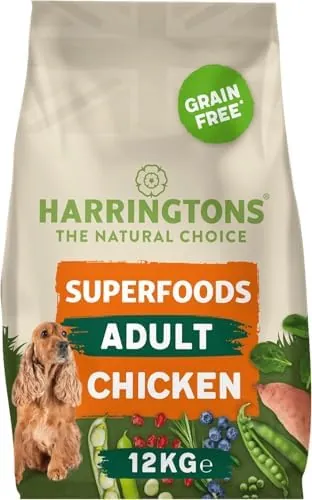
Harringtons Superfoods Grain Free Chicken is a mid-range UK kibble that uses named chicken as its primary protein source with no by-products or meat m...
HARRINGTON
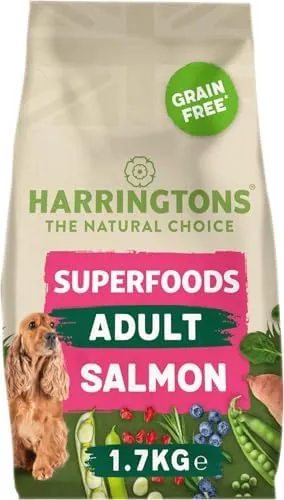
Harringtons Superfoods Grain Free Salmon uses named meat sources (dried chicken and salmon) as primary proteins with no by-products or meat meal, plac...

The Hunger of the Wolf
The Hunger of the Wolf Salmon & Potato is a grain-free, hypoallergenic dry kibble built around dried salmon as its named primary protein — a transpare...

HARRINGTONS
Harringtons Superfoods Grain Free Chicken is a competitively priced grain-free kibble featuring named chicken as its primary protein with no by-produc...
Pooch & Mu
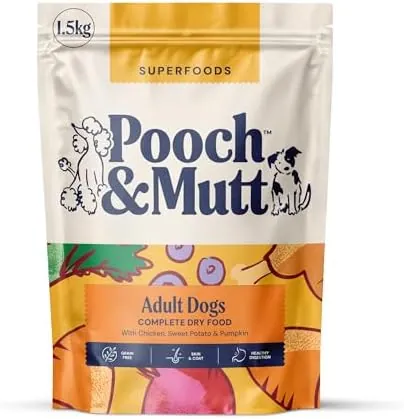
Pooch & Mutt's Superfood Complete uses named chicken as the primary protein source with no by-products or meat meal, which is a positive marker for in...

HARRINGTONS
Harringtons Superfoods Complete is a grain-free dry food featuring named turkey and chicken as primary proteins alongside a botanical superfood blend ...
Nature's Variety
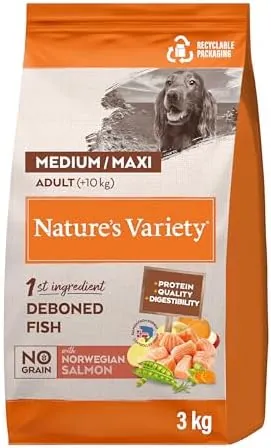
Nature's Variety No Grain Salmon is a premium grain-free dry kibble for medium and maxi adult dogs, with named salmon as the primary protein source, f...

Arkwrights
Arkwrights Sensitive Extra Chicken is a UK-made budget-friendly dry kibble positioned for adult dogs with sensitive digestion — notably wheat, dairy, ...
What to Look for in Grain-Free Dog Food
The most important thing to check is what replaces the grain. Removing wheat, barley, and oats from a recipe doesn't automatically make it better — the question is what fills the gap. The top-scoring products in our analysis, including Lily's Kitchen and Pooch & Mutt, use named whole proteins (chicken, duck, salmon) as the primary ingredient, followed by digestible carbohydrate sources like sweet potato or potato. These alternatives are gentler on the gut and less likely to trigger the sensitivity responses that often prompt owners to switch to grain-free in the first place.
Look at the named meat content percentage wherever it's listed. A product that says "chicken dinner" with 26% chicken is a better choice than one that vaguely lists "meat and animal derivatives" at the top. Ingredient transparency directly correlated with higher scores in our data — the products scoring 80 and above consistently named specific proteins and avoided catch-all phrases.
For dogs with genuine digestive sensitivities, single-protein recipes are worth prioritising. Salmon and sweet potato, or a simple chicken-and-vegetable tray, gives you something to isolate if a reaction occurs. Multi-protein recipes with five or six meat sources make it harder to identify the culprit.
Check whether the recipe is complete and balanced rather than a complementary food. Complementary wet trays need to be paired with another food to meet nutritional requirements — not wrong, but something many buyers miss when they assume any dog food is nutritionally complete.
Common Mistakes When Buying Grain-Free Dog Food
Our analysis of 27 grain-free dog food products reveals a significant gap between marketing claims and actual quality. The price range ran from £6.00 to £47.00, but higher cost did not reliably predict a higher score. The average score across all 27 products was 75 out of 100, and several products in the £30–£47 range scored no better than mid-tier options costing half as much.
One of the most common mistakes UK buyers make is trusting Amazon star ratings as a proxy for nutritional quality. Customer reviews reflect palatability, convenience, and whether the dog ate it enthusiastically — not ingredient integrity or whether the formulation actually supports the health claim on the bag. A product can have thousands of five-star reviews and still contain poor-quality protein sources or excessive filler carbohydrates.
Another frequent error is assuming grain-free means hypoallergenic. Grains are not the most common allergen in dogs — proteins are. If your dog has a true food allergy, removing grain may do nothing at all. True hypoallergenic diets typically use hydrolysed or novel proteins that the dog's immune system hasn't been exposed to before.
Worth noting: none of the 27 products in this analysis were third-party tested. Zero out of 27. That means every claim about ingredient quality and nutritional content comes from the manufacturer alone. This isn't unusual in the UK pet food market, but it does mean you're relying on brand reputation and ingredient label scrutiny rather than independent verification.
Finally, don't overbuy based on bag size alone. Large-format bags (10–12 kg) offer a lower cost per meal, but if your dog's taste preferences change or a formula is discontinued, you're stuck with a large quantity you can't use. Unless your dog has proven they like the product, buy a smaller trial size first.
Types and Forms Explained
Grain-free dog food comes in three main formats: dry kibble, wet trays or pouches, and wet tins. Each has a distinct place depending on your dog's needs and your practical situation.
Dry kibble is the most convenient and typically the most cost-effective per daily serving. It has a long shelf life once opened (usually several weeks in an airtight container) and is easy to measure for portion control. The Autarky Grain Free Turkey and Potato dry food, for example, covers a 12 kg bag that works out as a genuinely practical option for medium to large dogs fed consistently. Kibble also provides light mechanical action on teeth. The downside is that some dogs — particularly smaller breeds or older dogs — find it less palatable than wet food, and hydration intake is lower.
Wet trays are particularly well suited to small and toy breeds where per-meal costs remain reasonable. A 150g tray is roughly one serving for a small dog, making portion control straightforward. The top-scoring products in this analysis were predominantly wet tray formats, which tend to have higher meat content by percentage and fewer bulking agents than dry alternatives. They're also useful for fussy eaters or dogs recovering from illness.
Wet tins offer a middle ground — larger volume than trays, better value per gram, and suitable for medium-sized dogs or owners who prefer to split one tin across two meals. The Lily's Kitchen variety packs of 400g tins allow rotation across flavours, which can help maintain interest for dogs prone to food boredom.
Mixing formats — a base of dry kibble topped with a small amount of wet food — is a practical approach used by many owners to balance cost, palatability, and hydration. If you do this, ensure both products are nutritionally complete or account for the complementary nature of one.
What to Expect to Pay
Based on 27 grain-free dog food products analysed, prices ranged from £6.00 to £47.00, with an average of £23.38. Where your money goes depends significantly on format and brand positioning.
At the lower end — £6.00 to £15.00 — you're typically looking at smaller wet tray multipacks or entry-level dry food. The Complete Natural Adult Dog Food Wet (10 x 150g Trays) by Lily's Kitchen scored the highest in the entire analysis at 81 out of 100, at just £15.94. That's a useful benchmark: top scores are achievable without pushing into premium territory.
The £15.00 to £30.00 range is where most of the best-value purchases sit. Pooch & Mutt Salmon and Sweet Potato 2kg scored 81 out of 100 at £13.19, making it one of the more efficient purchases for owners of small to medium dogs. Lily's Kitchen small breed dry food at £20.00 also scored 81 out of 100 and is appropriately sized for the breeds it targets.
Above £30.00, you're generally paying for larger bag sizes rather than meaningfully better formulations. The Autarky Grain Free Turkey and Potato at £35.69 for 12 kg scored 75 out of 100 — respectable, and the best value-for-money score of 81 out of 100 reflects what you're actually getting: a straightforward, honest dry food at a sensible price per kilogram for larger dogs. It's named the best value pick in this category for good reason.
At the top of the range — £40.00 to £47.00 — scores didn't climb to match the price. Unless you have a specific reason to pay more, the evidence from this data suggests spending between £13.00 and £25.00 is the sensible zone for most grain-free dog food purchases in the UK.
How We Rank Grain-Free Dog Food
We analyse user reviews from Amazon UK and other public sources, cross-references ingredient labels and dosage information, checks for third-party testing certifications, and evaluates value for money. Each product is scored 0–100 across evidence-based categories: ingredient quality, nutritional value, value for money, transparency, palatability, and an overall weighted score.
Rankings are updated regularly as new reviews and pricing data become available. Products must pass our quality gate (minimum review count and data coverage) to appear on this page.
Frequently Asked Questions
What is the best grain-free dog food in 2026? ▼
How are grain-free dog food ranked on AIScored? ▼
Is Lily's Kitchen Natural Adult Wet Dog Food Tray Cottage Pie Grain-Free Recipe 10 x 150g worth the price? ▼
What the Data Says
Is grain-free dog food actually better? What the data shows.
Grain-free leads on every metric, but the gap is smaller than marketing suggests. We scored 27 grain-free and 73 standard dry dog foods across the same criteria.
The numbers: grain-free averages 75.1/100 overall versus 71.5 for standard — a 3.6-point lead. Break it down by category and the picture gets more interesting.
Ingredient quality is where grain-free pulls ahead most: 77.8 versus 71.2, a 6.6-point gap. Grain-free brands tend to use higher meat content and fewer cheap bulking agents. Transparency is the second-largest gap: 74.9 versus 69.8 (5.1 points) — grain-free brands are generally more upfront about sourcing and ingredient percentages.
But nutritional value tells a different story: 72.1 versus 70.0, just 2.1 points apart. That's the smallest gap of any metric. Removing grains doesn't automatically make a food more nutritious.
Bottom line: if your dog has a diagnosed grain intolerance, grain-free is the right call. If not, a high-scoring standard food delivers nearly identical nutrition at a lower price point.
Do grain-free dog foods hide carbohydrate fillers?
Grain-free scores better on transparency (74.9 vs 69.8), but grain-free does not mean low-carb. That 5.1-point transparency gap across 27 grain-free and 73 standard products means grain-free brands are more likely to disclose ingredient percentages and sourcing details.
The catch: most grain-free formulas replace rice, wheat, or corn with peas, lentils, chickpeas, or sweet potato. These are still carbohydrate sources. Some grain-free products list two or three legume variants in the first five ingredients, pushing total carbohydrate content to 40-50% of the formula.
Here's how to check: read the analytical constituents on the back of the bag. If protein is 25% and fat is 15%, the remaining 60% is mostly carbohydrates, moisture, and fibre. That's true whether the carbs come from brown rice or sweet potato.
The grain-free label tells you what's absent, not what replaced it. Higher transparency scores mean these brands make it easier for you to verify the substitution yourself — but you still need to look.
Disclaimer: AIScored provides data-driven rankings based on publicly available reviews and product information. This is not medical advice. Always consult a healthcare professional before starting any supplement. Affiliate links may earn us a commission at no extra cost to you.