Minimalist 10% Niacinamide Face Serum for Acne Marks, Blemishes & Oil Balancing with Zinc vs La Roche-Posay Mela B3 Serum, Dark Spot Corrector With Anti-Aging Melasyl + 10% Niacinamide, Discoloration Correcting Serum for Sun Spots, Age Spots & Post-Acne Marks, Long-Lasting Results, 30ML
Side-by-side comparison of scores, ingredients, prices and real customer feedback for Minimalist 10% Niacinamide Face Serum for Acne Marks, Blemishes & Oil Balancing with Zinc and La Roche-Posay Mela B3 Serum, Dark Spot Corrector With Anti-Aging Melasyl + 10% Niacinamide, Discoloration Correcting Serum for Sun Spots, Age Spots & Post-Acne Marks, Long-Lasting Results, 30ML.
Last verified: 07 Apr 2026 · Based on 26 reviews
Minimalist 10% Niacinamide Face Serum for Acne Marks, Blemishes & Oil Balancing with Zinc scores 80.0/100 vs La Roche-Posay Mela B3 Serum, Dark Spot Corrector With Anti-Aging Melasyl + 10% Niacinamide, Discoloration Correcting Serum for Sun Spots, Age Spots & Post-Acne Marks, Long-Lasting Results, 30ML at 75.0/100. Minimalist 10% Niacinamide Face Serum for Acne Marks, Blemishes & Oil Balancing with Zinc wins on effectiveness, texture experience, value for money. La Roche-Posay Mela B3 Serum, Dark Spot Corrector With Anti-Aging Melasyl + 10% Niacinamide, Discoloration Correcting Serum for Sun Spots, Age Spots & Post-Acne Marks, Long-Lasting Results, 30ML is stronger on ingredient quality and skin compatibility.
Which is better: Minimalist 10% Niacinamide ... or La Roche-Posay Mela B3 Seru...?
Minimalist wins at £11.68 versus £36.00, delivering a near-identical 10% niacinamide formula with a higher overall score (80 vs 75). Choose La Roche-Posay Mela B3 if you're targeting stubborn sun spots or age spots — Melasyl's melanin-transfer mechanism offers genuine differentiation that Minimalist can't match.
— AIScored Editorial Team
How Do the Scores Compare?
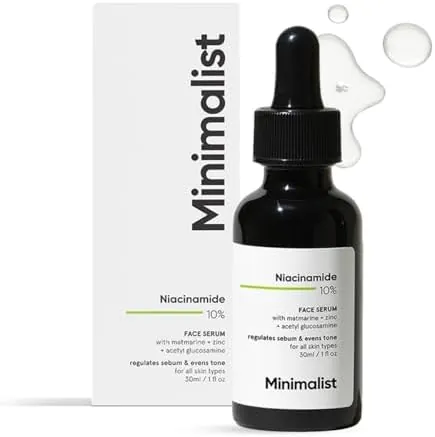
Minimalist 10% Niacinamide ...
Minimalis
|
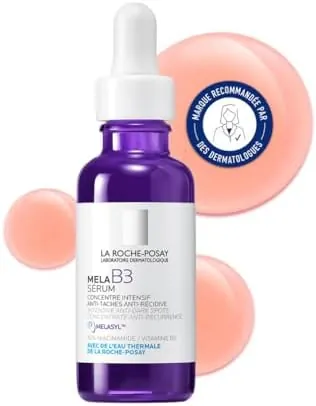
La Roche-Posay Mela B3 Seru...
La Roche-Posay
|
|
|---|---|---|
| Overall Score | 80.0 | 75.0 |
| Effectiveness |
75.0/100
Best
|
72.0/100 |
| Ingredient Quality | 80.0/100 |
81.0/100
Best
|
| Skin Compatibility | 77.0/100 |
82.0/100
Best
|
| Texture & UX |
84.0/100
Best
|
76.0/100 |
| Value for Money |
88.0/100
Best
|
64.0/100 |
| Best Price |
£11.68
Amazon UK →
Cheapest
|
£36.00 Amazon UK → |
| Form | N/A | N/A |
| Dose | N/A | N/A |
| Third-Party Tested | ✗ No | ✗ No |
| Reviews Analysed | 15 | 11 |
Minimalist 10% Niacinamide Face ...
Pros
- ✓10% niacinamide is the upper boundary of clinically studied concentrations for sebum control, pigmentation reduction, and barrier reinforcement
- ✓Zinc PCA synergises with niacinamide for enhanced sebum regulation and anti-inflammatory effect at the follicular level
- ✓Lightweight, fast-absorbing, non-sticky texture — one of the most consistently praised attributes across 15 reviews
- ✓Fragrance-free and alcohol-free formulation, minimising common irritation triggers for sensitised skin
Cons
- ✗Full INCI list unavailable for this listing, limiting complete formulation transparency and comedogenicity assessment
- ✗Ineffective as a standalone treatment for severe cystic, nodular, or hormonal acne — one reviewer documented worsening symptoms
- ✗At 10% concentration, niacinamide carries a low but real risk of transient skin flushing in niacin-sensitive individuals
- ✗Miscategorised under retinol/retinoids — contains no retinoids whatsoever, so anti-aging or cell-turnover expectations from that category will not be met
Best For
La Roche-Posay Mela B3 Serum, Da...
Pros
- ✓10% Niacinamide is a high, clinically validated concentration for brightening, pore minimisation, and barrier support
- ✓Melasyl (proprietary LRP molecule) targets melanin transfer — a mechanism distinct from most over-the-counter brighteners, adding genuine differentiation
- ✓Multiple reviewers confirm visible improvement in sun spots and post-acne marks within 4–12 weeks of consistent use
- ✓Lightweight, fast-absorbing texture layers well under moisturiser and SPF without pilling or stickiness
Cons
- ✗Results for true melasma are modest — users with chronic or hormonal melasma report only partial fading and may need prescription actives (tretinoin, tranexamic acid)
- ✗Overapplication causes a yellowish residue on skin — characteristic of high-percentage Niacinamide and can be off-putting
- ✗Distinctive non-cosmetic scent (raw ingredient odour noted) may be unpleasant for fragrance-sensitive users
- ✗Premium price point: some reviewers note comparable results may be achievable with lower-cost Niacinamide serums, reducing perceived value
Best For
What does the data say about Minimalist 10% Niacina... vs La Roche-Posay Mela B3...?
Both serums share 10% niacinamide — a clinically validated concentration for brightening and pore reduction — but diverge meaningfully after that. The Minimalist (£11.68, 80/100) pairs niacinamide with Zinc PCA, a combination specifically useful for sebum control and follicular inflammation, making it a functional choice for oily or acne-prone skin. La Roche-Posay's Mela B3 (£36.00, 75/100) swaps Zinc for Melasyl, a proprietary molecule targeting melanin transfer at a cellular level — a mechanism genuinely different from standard brighteners and more directly aimed at stubborn pigmentation.
If your main concern is congested, oily skin with post-acne marks and you're watching your budget, the Minimalist delivers the stronger overall score at a fraction of the price. The value score alone (88 vs 64) reflects how dramatically different that £24 gap feels in practice. For someone specifically targeting sun spots or age spots — and willing to invest more — the Mela B3's Melasyl adds something the Minimalist cannot replicate.
Neither is third-party tested, and both fall short for hormonal melasma or severe cystic acne, which typically require prescription-strength actives regardless of price point.
Minimalist's 10% Niacinamide + Zinc serum delivers a clinically relevant dose of Vitamin B3 alongside Zinc PCA and Aloe Vera, targeting sebum regulation, post-acne hyperpigmentation, and pore congestion in a clean, unfragranced base.
What are the key differences?
Frequently Asked Questions
Which is better, Minimalist 10% Niacinamide Face Serum for Acne Marks, Blemishes & Oil Balancing with Zinc or La Roche-Posay Mela B3 Serum, Dark Spot Corrector With Anti-Aging Melasyl + 10% Niacinamide, Discoloration Correcting Serum for Sun Spots, Age Spots & Post-Acne Marks, Long-Lasting Results, 30ML? ▼
Is Minimalist 10% Niacinamide Face Serum for Acne Marks, Blemishes & Oil Balancing with Zinc worth the price compared to La Roche-Posay Mela B3 Serum, Dark Spot Corrector With Anti-Aging Melasyl + 10% Niacinamide, Discoloration Correcting Serum for Sun Spots, Age Spots & Post-Acne Marks, Long-Lasting Results, 30ML? ▼
Related Product Comparisons
Naturium Retinaldehyde Cream Serum 0.05%, Advanced Anti-Ageing & Smoothing Face & Skin Care
vs Minimalist 10% Niacinamide Face Serum for Acne Marks, Blemishes & Oil Balancing with Zinc
Naturium Retinaldehyde Cream Serum 0.05%, Advanced Anti-Ageing & Smoothing Face & Skin Care
vs La Roche-Posay Mela B3 Serum, Dark Spot Corrector With Anti-Aging Melasyl + 10% Niacinamide, Discoloration Correcting Serum for Sun Spots, Age Spots & Post-Acne Marks, Long-Lasting Results, 30ML
Minimalist 10% Niacinamide Face Serum for Acne Marks, Blemishes & Oil Balancing with Zinc
vs Medik8 Crystal Retinal 3 - Age-Defying Night Serum - Improves Wrinkles & Skin Firmness- 0.03% Retinal Strength - 11x Faster than Retinol - For New Vitamin A Users - 30ml
Minimalist 10% Niacinamide Face Serum for Acne Marks, Blemishes & Oil Balancing with Zinc
vs The Ordinary Granactive Retinoid 2% Emulsion, Advanced Retinoid Alternative for Anti-Aging and Skin Texture Improvement, 30ml
Minimalist 10% Niacinamide Face Serum for Acne Marks, Blemishes & Oil Balancing with Zinc
vs La Roche-Posay Retinol B3 Anti-wrinkles Anti-Ageing Serum With Retinol And Vitamin B3 Suitable For Sensitive Skin 30ml
Minimalist 10% Niacinamide Face Serum for Acne Marks, Blemishes & Oil Balancing with Zinc
vs Paula's Choice CLINICAL 1% Retinol Treatment - Anti Aging & Skin Firming Serum for Face - Fights Wrinkles - with Vitamin C & Peptides - All Skin Types - 5 ml
What the Data Says
Retinol vs retinaldehyde: which actually scores higher?
Retinaldehyde leads by 17.2 points on effectiveness. Across 42 retinol/retinoid products we scored, the 3 retinaldehyde products average 78.3 on effectiveness versus 61.1 for 31 retinol products.
The retinaldehyde products in our database:
- Naturium Retinaldehyde Cream Serum 0.05% — 80 effectiveness, 83 overall
- Paula's Choice CLINICAL Pro Retinaldehyde — 74 effectiveness, 64 overall
- Medik8 Crystal Retinal 3 — 81 effectiveness, 79 overall (uses retinaldehyde despite the name)
All three beat the retinol average on effectiveness. The biological reason: retinaldehyde sits one conversion step closer to retinoic acid, the form your skin actually uses. Retinol requires two conversions; retinaldehyde requires one.
The honest caveat: 3 products is a small sample. The gap is wide enough to take seriously, but we'd want more retinaldehyde products on the market before calling it definitive. For now, the data favours retinaldehyde — but your options are limited.
Why do most retinol products score below average?
31 retinol products average 61.1 on effectiveness. Most land in mediocre territory. The molecule works — but the average product doesn't deliver it well.
The top retinol performers prove it can be done right:
- Paula's Choice CLINICAL 1% Retinol — 82 effectiveness, 76 overall
- Indeed Labs Retinol Reface — 80 effectiveness, 75 overall
- The Ordinary Retinol 0.5% in Squalane — 75 effectiveness, 74 overall
Three factors separate winners from the rest:
- Concentration. Products with clearly stated, meaningful percentages (0.5%–1%) score higher. Many products list retinol without disclosing how much.
- Stability. Retinol degrades with light and air exposure. Good packaging (airless pumps, opaque tubes) and encapsulation technology keep the molecule intact.
- Supporting ingredients. Top scorers pair retinol with stabilisers, squalane, or delivery systems that protect it until it reaches your skin.
The average retinol product fails on one or more of these. A retinol label doesn't guarantee results — the formulation behind it determines whether you're getting active retinol or degraded filler.
Disclaimer: AIScored provides data-driven comparisons based on publicly available reviews. This is not medical advice. Affiliate links may earn us a commission at no extra cost to you.
Feedback & Suggestions
Spotted an issue? Wrong price, incorrect data, or something else off? Let us know and we'll fix it.
Missing a product you'd like us to review? Tell us the product name and we'll consider adding it.