Two-a-Day Multivitamin, 120 Tablets vs Two-a-Day Multivitamin, 120 Capsules
Side-by-side comparison of scores, ingredients, prices and real customer feedback for Two-a-Day Multivitamin, 120 Tablets and Two-a-Day Multivitamin, 120 Capsules.
Last verified: 07 Apr 2026 · Based on 99 reviews
Two-a-Day Multivitamin, 120 Tablets scores 81.0/100 vs Two-a-Day Multivitamin, 120 Capsules at 80.0/100. Two-a-Day Multivitamin, 120 Tablets wins on effectiveness, ingredient quality, side effects.
Which is better: Two-a-Day Multivitamin, 120 Tablets or Two-a-Day Multivitamin, 120...?
The tablet version edges ahead with a higher ingredient quality score (93 vs 90) and a £1 lower price, making it the better pick for most. Those who struggle with larger tablets or prefer capsules will find the capsule formula equally effective with a marginally better effectiveness score.
— AIScored Editorial Team
How Do the Scores Compare?
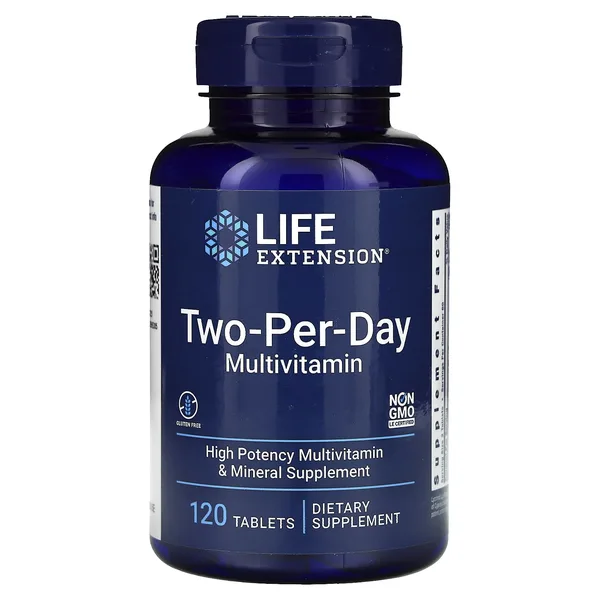
Two-a-Day Multivitamin, 120 Tablets
Life Extension
|
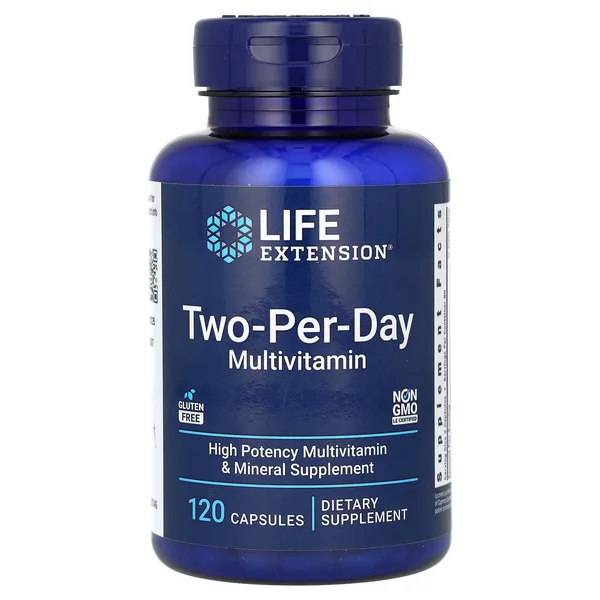
Two-a-Day Multivitamin, 120...
Life Extension
|
|
|---|---|---|
| Overall Score | 81.0 | 80.0 |
| Effectiveness |
83.0/100
Best
|
82.0/100 |
| Ingredient Quality |
88.0/100
Best
|
84.0/100 |
| Value for Money |
76.0/100
Best
|
76.0/100
Best
|
| Side Effects |
80.0/100
Best
|
72.0/100 |
| Certifications |
55.0/100
Best
|
50.0/100 |
| Best Price |
£15.66
iHerb →
Cheapest
|
£16.67 iHerb → |
| Form | None | None |
| Dose | None | None |
| Third-Party Tested | ✗ No | ✗ No |
| Reviews Analysed | 49 | 50 |
Two-a-Day Multivitamin, 120 Tablets
Pros
- ✓Active B vitamin forms: methylcobalamin, 5-MTHF, and P-5-P improve absorption over standard synthetic versions
- ✓Energy improvement and reduced fatigue reported repeatedly across reviews
- ✓Phytosomal quercetin included — an antioxidant not found in most comparable multivitamins
- ✓120 tablets gives 60 days at full dose; many reviewers stretch it to 3-4 months at one tablet daily
Cons
- ✗Tablet size is large — several reviewers mention it as a drawback, particularly for men
- ✗Bright yellow urine from high-dose riboflavin surprises first-time users
- ✗One reviewer reported dizziness, headaches, and vertigo — potentially from high-potency B vitamins
- ✗No third-party certification (NSF, USP, or equivalent); 'LE Certified' is the brand's own mark
Best For
Two-a-Day Multivitamin, 120 Capsules
Pros
- ✓Active B-vitamin forms (methylfolate, methylcobalamin, P5P) improve uptake, especially for people with MTHFR variants
- ✓Includes lutein, zeaxanthin, lycopene, and quercetin — phytonutrients absent from most basic multivitamins
- ✓Omits calcium and iron by design, reducing mineral competition and making it easy to tailor those separately
- ✓Consistent reports of reduced fatigue and improved energy, with multiple reviewers noting effects within two to four weeks
Cons
- ✗High vitamin B6 dose — one reviewer reported peripheral numbness in extremities from sustained full-dose daily use
- ✗No vitamin K2, which matters for those relying on the formula's vitamin D3 long-term
- ✗Magnesium partly supplied as oxide, which has lower bioavailability than citrate or glycinate forms
- ✗Not independently third-party tested for purity or label accuracy despite premium brand positioning
Best For
What does the data say about Two-a-Day Multivitamin... vs Two-a-Day Multivitamin...?
These two Life Extension multivitamins are almost identical on paper, which makes choosing between them harder than it should be. The tablet version scores 81/100 against the capsule's 80/100, with the real gap sitting in ingredient quality — 88/100 versus 84/100. Both use the same active B-vitamin forms: methylcobalamin, 5-MTHF, and P-5-P, which matter most for anyone with an MTHFR variant. The tablet version includes phytosomal quercetin; the capsule version includes lutein, zeaxanthin, and lycopene alongside its quercetin. So the capsule actually gives you broader phytonutrient coverage, while the tablet scores higher overall. The capsule also deliberately omits calcium and iron, which lets you manage those minerals separately if needed.
Who should pick which comes down to specific gaps in your diet and how you take supplements. If you want a multivitamin that covers antioxidant bases — lutein, lycopene, zeaxanthin — without adding calcium or iron, the capsule at £16.67 is the stronger fit. If you want the higher ingredient quality score and are less bothered about those phytonutrients, the tablet at £15.66 makes sense. People with MTHFR variants are well-served by either formula.
On practicalities, the tablet form draws complaints about size — several reviewers flagged it as uncomfortably large. Both products will turn your urine bright yellow from high-dose riboflavin; that's normal, not a cause for concern. The capsule carries a meaningful caution: one user reported peripheral numbness from sustained use at full dose, linked to the high vitamin B6 level. Neither product contains vitamin K2, but only the capsule version suffers for it, given its inclusion of vitamin D3 without that pairing.
Life Extension Two-Per-Day uses genuinely premium B vitamin forms — methylcobalamin for B12, 5-MTHF for folate, and pyridoxal-5-phosphate for B6 — which matter for anyone with absorption issues or MTHFR variants.
What are the key differences?
Frequently Asked Questions
Which is better, Two-a-Day Multivitamin, 120 Tablets or Two-a-Day Multivitamin, 120 Capsules? ▼
Is Two-a-Day Multivitamin, 120 Tablets worth the price compared to Two-a-Day Multivitamin, 120 Capsules? ▼
Which has fewer side effects? ▼
Related Product Comparisons
Life Extension Two-Per-Day Multivitamin - 120 Tablets
vs Two-a-Day Multivitamin, 120 Tablets
Life Extension Two-Per-Day Multivitamin - 120 Tablets
vs Two-a-Day Multivitamin, 120 Capsules
Two-Per-Day Multivitamin, V2, 120 Tablets
vs Two-a-Day Multivitamin, 120 Tablets
Two-Per-Day Multivitamin, V2, 120 Tablets
vs Two-a-Day Multivitamin, 120 Capsules
Two-a-Day Multivitamin, 60 Tablets
vs Two-a-Day Multivitamin, 120 Tablets
Two-a-Day Multivitamin, 60 Tablets
vs Two-a-Day Multivitamin, 120 Capsules
Disclaimer: AIScored provides data-driven comparisons based on publicly available reviews. This is not medical advice. Affiliate links may earn us a commission at no extra cost to you.
Feedback & Suggestions
Spotted an issue? Wrong price, incorrect data, or something else off? Let us know and we'll fix it.
Missing a product you'd like us to review? Tell us the product name and we'll consider adding it.