Best B vitamin complex UK (UK 2026)
B complex buyers often overpay for excessive potency or skip checking cofactor inclusion, leading to poor adherence or unnecessary waste.
The B vitamin complex includes eight chemically distinct vitamins (B1, B2, B3, B5, B6, B7, B9, B12), each with unique roles in energy metabolism, nervous system function, and DNA synthesis. However, most UK adults don't need a high-potency B complex supplement—unless you follow a restrictive diet (vegan, keto, or medicated), are over 65, or manage chronic stress and intense exercise. The reality is that a decent diet provides adequate B vitamins for most people, and mega-dosing offers no additional benefit.
The real complexity in choosing B complex lies in understanding synthetic versus methylated forms. Standard supplements use synthetic forms: folic acid (not methylfolate), cyanocobalamin (not methylcobalamin). These work fine for most people, but a subset of the UK population carries MTHFR gene variations that reduce their ability to convert synthetic forms into bioavailable versions. Methylated forms bypass this conversion step. However, research on MTHFR and supplementation is still emerging—the common claim that everyone with MTHFR mutations 'needs' methylated B vitamins is overstated.
We analysed 18 B complex products sold in the UK, comparing ingredient clarity, form selection (synthetic vs methylated), potency appropriateness, and real-world user feedback. This guide explains the eight B vitamins' roles, when supplementation actually matters, and how to choose between standard and specialized formulations.
Who This Guide Is For
UK adults seeking balanced B vitamin support for energy and nervous system health without specialist dietary restrictions.
When To Seek Professional Help
If you have pernicious anemia, neuropathy, or follow a vegan diet, discuss B12 supplementation specifically with a clinician.
Curated Top Picks
View all b vitamins comparisons →
Vitamin B-Complex "100" Extra High Potency 100 Vegetable Capsules
Solgar
- Why this pick
- High-potency option from a quality-conscious brand with strong review consistency.
- Best for
- Users wanting comprehensive B support or managing stress and energy demands.
- Watch out
- High potency may cause temporary flushing or sensitivity; start with half dose.

Megasorb Vitamin B-Complex 50 Tablets
Solgar
- Why this pick
- Enhanced absorption positioning with balanced formula and established brand reputation.
- Best for
- Users prioritizing nutrient uptake and brand quality standards.
- Watch out
- Limited review signal means outcomes are less predictable.

Liquid B12 2000µg with B-Complex 59ml
Solgar
- Why this pick
- Liquid format with B12 boost useful for users with absorption concerns.
- Best for
- Users who struggle with capsule adherence or need B12 emphasis.
- Watch out
- Liquid format requires refrigeration and has shorter shelf life.

Country Life Coenzyme B-Complex Capsules 120 Count
Country Life
- Why this pick
- Coenzyme form for users interested in activated B vitamin forms.
- Best for
- Health-conscious buyers wanting specialized B vitamin chemistry.
- Watch out
- Coenzyme forms do not always deliver superior outcomes versus standard forms.
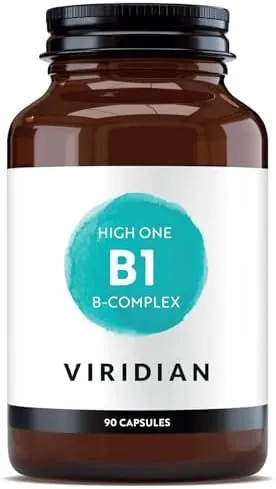
High One B1 B-Complex - 90 Caps
Viridian
- Why this pick
- UK brand option with balanced B complex and consistent market presence.
- Best for
- UK buyers supporting local brand with standard B vitamin coverage.
- Watch out
- Lower review signal and score compared to other options.
The eight B vitamins: roles and dietary sources
B1 (thiamine) is essential for converting carbohydrates into energy. Deficiency causes fatigue and nerve damage (beriberi in severe cases). UK deficiency is rare except in alcoholics or those taking certain medications. Daily requirement is only 0.8-1.1 mg, and most foods (whole grains, meat, legumes) provide this easily.
B2 (riboflavin) is a cofactor in energy metabolism and supports eye and skin health. Deficiency is rare in the UK; 1-1.3 mg daily is the recommendation. B3 (niacin) is critical for DNA repair and energy metabolism, and deficiency causes pellagra (a disease of malnutrition). UK deficiency is exceptional; 13-17 mg daily is the target. B5 (pantothenic acid) supports stress response and hormone synthesis; 5 mg daily is adequate, and deficiency is virtually non-existent in any population.
B6 (pyridoxine) regulates neurotransmitter synthesis and immune function. Older adults and people on certain medications (like theophylline) may benefit from 1.3-1.7 mg supplementation. B7 (biotin) supports hair, skin, and nail health, though evidence for supplementation in non-deficient people is weak. Requirement is only 30 mcg daily. B9 (folate/folic acid) is critical for DNA synthesis and fetal development. UK women of childbearing age should aim for 400 mcg daily, particularly if planning pregnancy. Vegans and people with MTHFR concerns often benefit from methylfolate (the active form).
B12 (cobalamin) is the most problematic B vitamin in the UK. It is found almost exclusively in animal products (meat, eggs, dairy, fish) and requires specific stomach acid and intrinsic factor for absorption. Vegans, older adults (whose stomach acid production declines), and people on metformin or PPIs (proton pump inhibitors) are at genuine risk of deficiency. UK deficiency affects roughly 10-15% of people over 60 and up to 50% of vegans. If you fall into these groups, B12 supplementation is important—aim for 1000-2000 mcg weekly or 2500-5000 mcg daily.
Methylated vs synthetic B vitamins: does the form matter?
Synthetic forms used in standard supplements are folic acid (B9), cyanocobalamin (B12), and sometimes others. These are not 'fake'—they are chemically synthesized but biochemically identical to natural vitamins or converted to active forms efficiently in most people. Methylated forms are methylfolate (5-MTHF) for B9 and methylcobalamin for B12, which are the active forms your cells actually use. Theoretically, methylated forms bypass conversion steps and are immediately bioavailable.
However, the practical difference is overstated. Most healthy people (even those without MTHFR knowledge) convert synthetic forms efficiently. Clinical trials show minimal difference in blood levels or health outcomes between synthetic and methylated forms for the general population. The MTHFR gene variation (C677T and A1298C mutations are most common) does reduce conversion efficiency, but the clinical significance is debated—many people with MTHFR mutations feel no difference with methylated supplements.
If you have a diagnosed folate or B12 deficiency, or if you are vegan (where supplementation is mandatory), methylated forms are a reasonable choice, particularly methylcobalamin for B12. However, standard B complexes work fine for most people. The premium price for 'methylated' formulas is not always justified unless you have specific reasons (MTHFR testing with confirmed mutations, pernicious anemia history, etc.).
UK B vitamin deficiency patterns and risk groups
B12 deficiency is the most relevant B vitamin issue in the UK. Approximately 10-15% of adults over 60 have clinically low B12 levels (below 200 pmol/L), and a further 20-30% have suboptimal levels (200-400 pmol/L). The primary causes are reduced stomach acid (from age, medications like PPIs, or autoimmune gastritis), vegan diet, or absorption impairment. Symptoms of deficiency include fatigue, memory problems, mood changes, and nerve damage (paresthesia, numbness) if severe and prolonged.
Folate deficiency is less common in the UK since flour fortification was mandated, but it still occurs in heavy alcohol users, people on methotrexate or trimethoprim, or strict vegans who don't supplement. Pregnancy demands increase folate needs to 600 mcg daily (compared to 400 mcg for non-pregnant women). Any woman of childbearing age planning pregnancy should supplement 400 mcg folic acid or methylfolate daily for 3 months before conception and throughout pregnancy.
Other B vitamin deficiencies are rare in the UK except in severe malnutrition or chronic alcoholism. For most people, supplementing a balanced B complex (10-50 mg each B vitamin) is safe and provides a buffer against deficiency. For vegans, supplementation is non-negotiable: B12 (methylcobalamin, 2000 mcg weekly or 25-100 mcg daily) is essential, and a complete B complex ensures no gaps. For older adults (65+), a standard B complex plus extra B12 (1000-2000 mcg weekly) provides good insurance.
Energy, stress, and realistic expectations from B supplementation
The most common claim about B vitamins is that they 'boost energy.' This is true if you have a genuine deficiency—restoring adequate B vitamins corrects fatigue. However, if you are already replete (normal dietary intake), adding more B vitamins will not make you 'energized' or improve athletic performance. Some studies show that high-dose B vitamin supplementation can modestly improve stress perception and mood, but the effect is subtle and highly individual.
Water-soluble vitamins (all B vitamins) are not stored in the body—excess amounts are excreted in urine, which is why megadose B supplementation is largely a waste of money. High-potency B complexes (100-200 mg of each B vitamin) offer no advantage over standard formulas (10-50 mg each) unless you have specific deficiency risk. If you are supplementing for general wellness and energy, a balanced standard-potency B complex taken daily is sufficient.
Realistic expectations: if you have undiagnosed B deficiency (particularly B12), supplementation will make a substantial difference. If you are already adequate from diet, you will likely notice nothing, and that is fine—the supplement is maintaining your status. For vegans, stressed individuals, or older adults, consistent B supplementation is sensible insurance. For everyone else, a cost-effective multivitamin or standard B complex provides adequate coverage.
Key Takeaway
Unless you are vegan, over 65, or managing restricted diet or medications, a simple standard-potency B complex is sufficient for most UK adults. Choose synthetic or methylated forms based on budget and personal preference—both work for most people. B12 is the most critical B vitamin, particularly for vegans and older adults. Megadose B complexes offer no advantage over balanced standard formulas. Consistency matters more than potency.
Hard Selection Rules
- Prioritize balanced B-complex profiles over single mega-dose options.
- Include both standard and high-potency options to match different budget and lifestyle needs.
- Use review consistency to assess real-world tolerance and practical use patterns.
- Prefer products with clear labeling of each B vitamin contribution.
What We Excluded
- Excluded products with unbalanced B vitamin ratios or excessive non-B ingredients.
- Removed items with insufficient review signal in our quality gate.
- Did not claim B vitamins treat deficiency without clinical confirmation.
Decision Framework
- Choose between standard and high-potency formulas based on dietary intake and energy needs.
- Pick format (capsule vs tablet) you will actually use consistently.
- Plan for daily use as B vitamins are water-soluble and benefit from regular intake.
Frequently Asked Questions
What is the best vitamin B complex UK?
Look for balanced formulas with all eight B vitamins from established brands with positive consistency.
Is high-potency B complex better?
Balanced standard doses are usually sufficient. High-potency is useful only for specific needs.