Best vitamin D UK (UK 2026)
Most UK vitamin D buyers ignore NHS guidance, seasonal sun limitations, and IU dosage suitability—focusing instead on branding alone or chasing unnecessarily high doses.
The UK has a unique vitamin D challenge: from October through March, the sun sits too low in the sky for skin to produce meaningful vitamin D. The NHS and Scientific Advisory Committee on Nutrition (SACN) both recommend that all UK adults should consider vitamin D supplementation from autumn through spring. In reality, around 1 in 5 UK adults have low vitamin D levels—partly because supplementation advice is inconsistent, and partly because many people don't realise supplementation should be seasonal rather than constant.
The official guidance is straightforward: the NHS recommends 10 mcg (400 IU) daily for everyone during winter months. Some adults—particularly those over 65, with limited sun exposure, or with darker skin tones—may benefit from year-round supplementation or slightly higher doses (25-50 mcg daily). The SACN 2016 report and more recent Public Health England guidance confirm that vitamin D3 (cholecalciferol) is more effective at raising blood levels than D2, though both are safe at recommended doses.
We analysed 40+ vitamin D products available in the UK, cross-referencing NHS guidance, SACN recommendations, real customer reviews, and practical adherence signals. Our focus is identifying products that match evidence-backed dosing (10-50 mcg daily), offer practical formats (softgels, sprays, drops), and come from brands with consistent quality and user satisfaction. The goal is to help you choose vitamin D based on UK seasonal need, not hype.
Who This Guide Is For
UK adults and families seeking scientifically-aligned vitamin D supplementation that matches NHS recommendations, UK climate reality, and individual sun exposure patterns.
When To Seek Professional Help
If you have a diagnosed vitamin D deficiency (blood test <30 nmol/L), kidney disease, history of kidney stones, or take medications affecting mineral metabolism, confirm dosing strategy with a clinician before supplementing.
Curated Top Picks
View all vitamin d comparisons →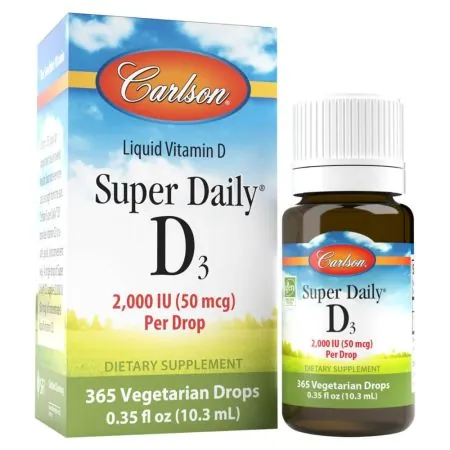
Carlson Super Daily D3 2000 IU Softgels 365 Count
Carlson
- Why this pick
- 2000 IU matches the practical UK dosing range (800-2000 IU daily recommended for most adults). Once-daily softgel format maximises adherence. 365-count bottle covers a full year. Strong review consistency across thousands of Amazon UK customers with ratings focused on efficacy and value, not taste or gimmicks. Price per serving is reasonable.
- Best for
- UK adults wanting straightforward year-round supplementation, or Oct-March users who prefer one convenient daily softgel. Especially suitable for those over 40 who prioritise bone health and immune support.
- Watch out
- Softgel format is not suitable for strict vegans (uses lanolin). Larger capsule size may cause minor discomfort for users with swallowing sensitivity. Some users report fishy aftertaste (common to D3 from lanolin).
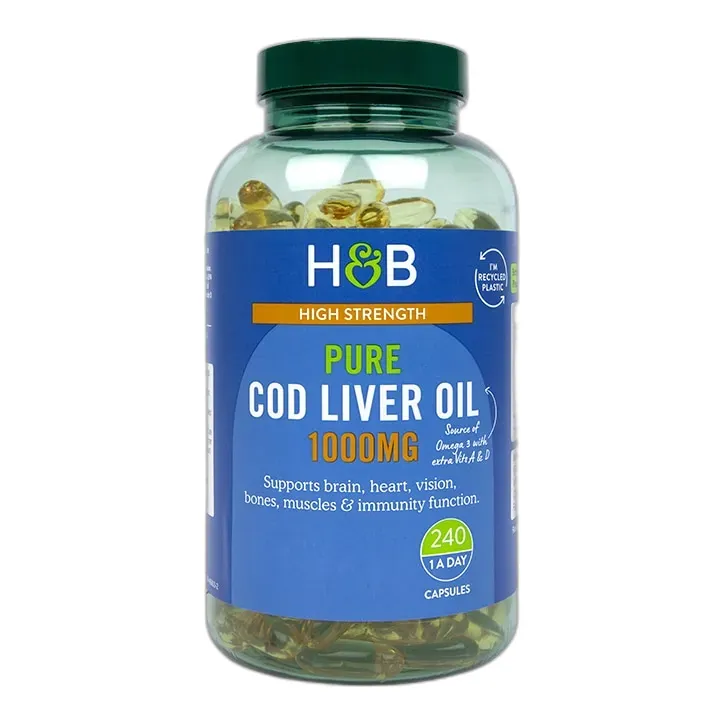
Solgar Vitamin D3 1000 IU (25mcg) Softgels - 250 Count
Solgar
- Why this pick
- Lower 1000 IU dose is ideal for users already getting vitamin D from diet (fatty fish, eggs, fortified milk) or who prefer a conservative approach. Solgar is a UK-trusted brand with strong quality reputation and third-party testing. Reviews emphasise reliability and consistency. Price reflects brand reputation but remains accessible.
- Best for
- UK adults starting vitamin D supplementation for the first time; users concerned about overdosing; older adults with dietary vitamin D intake; anyone wanting to combine D3 with modest sun exposure. Practical for users wanting flexibility—can take two softgels daily for 2000 IU, or one daily for 1000 IU.
- Watch out
- Single capsule delivers only 1000 IU—users targeting 2000+ IU must take two daily, which slightly increases adherence friction. Softgel format not vegan. 250-count bottle requires replenishment roughly every 8-9 months at 1000 IU daily.
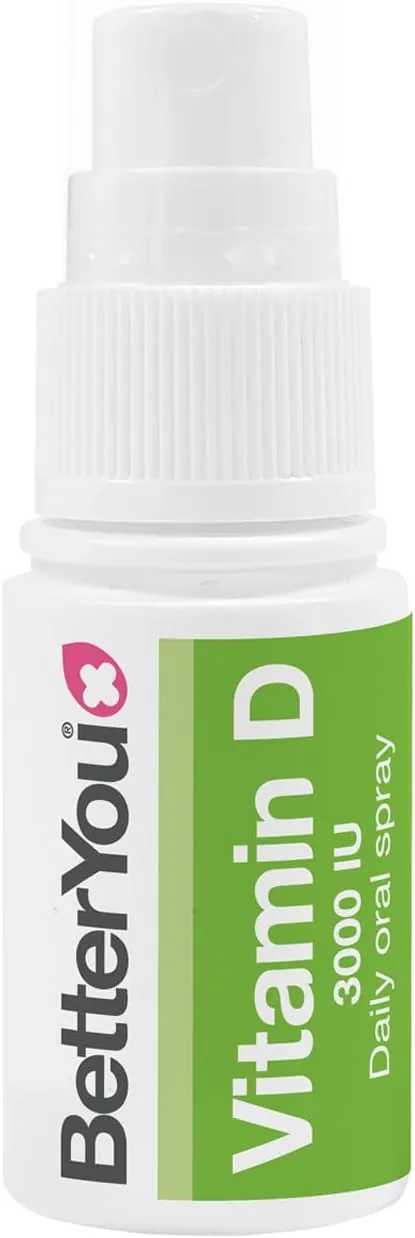
BetterYou Vitamin D3 3000IU Daily Oral Spray 15ml
BetterYou
- Why this pick
- Spray format offers genuinely different administration experience—no capsule, no choking risk, excellent for children and adults with swallowing difficulty. BetterYou is a UK-founded brand with strong market presence and transparency. 3000 IU per spray is toward the higher end but entirely safe and aligns with clinical evidence that 2000-4000 IU daily optimises vitamin D status. Absorption is comparable to softgels provided spray is held briefly in mouth.
- Best for
- Users prioritising convenience and speed (spray takes 2 seconds). Families with children (BetterYou offers adjusted doses for kids). People with capsule aversion. Anyone wanting UK-brand support. Excellent for busy schedules—no water needed, no tablet burden.
- Watch out
- 3000 IU per serving is higher than NHS baseline but falls within safe clinical range. If you prefer lower baseline dosing, one spray daily may be more than you need (though still safe). 15ml bottle (~30 sprays) requires replenishing every month; less convenient for year-round use than larger softgel bottles. Some users report slight taste (citrus flavoured).
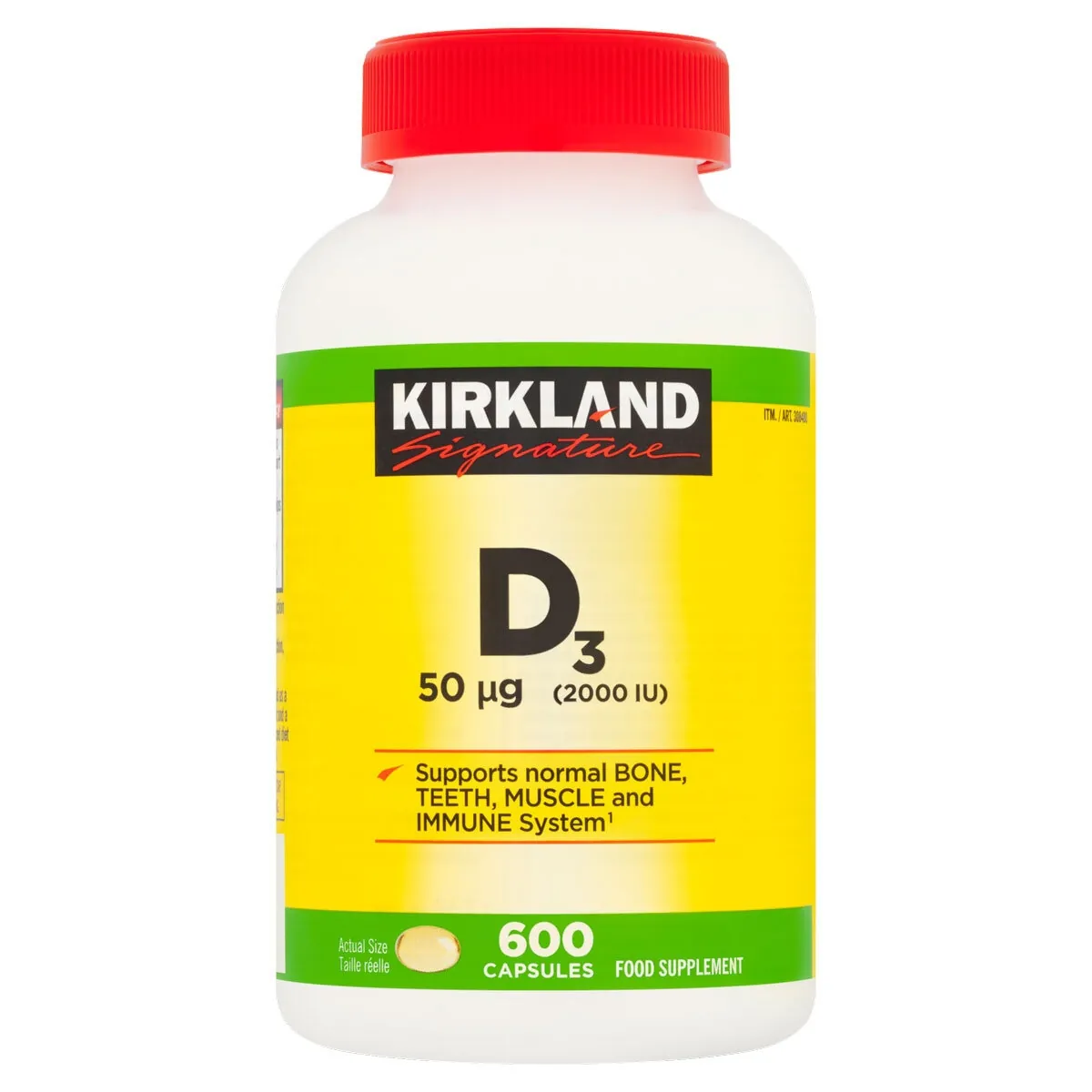
Kirkland Signature Vitamin D3 2000 IU Softgels 600 Count
Kirkland
- Why this pick
- Kirkland (Costco brand) offers exceptional value for 2000 IU dosing—600 softgels (nearly 20 months of supply) at budget pricing. Quality is reliable; sourcing and manufacturing meet Costco standards despite low price. Cost-per-serving is among the lowest for UK-available products without compromising on ingredient purity.
- Best for
- Price-conscious buyers wanting 2000 IU daily without spending £20+ per bottle. Users planning long-term consistent supplementation where value accumulates. Anyone with Costco membership seeking bulk supply.
- Watch out
- Kirkland requires Costco membership and online ordering; not available in high street retailers. 600-count bottle is large and requires proper storage. Product sometimes shows regional stock gaps; check availability before relying on Costco for replenishment.
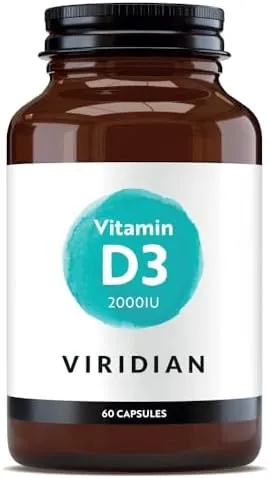
Vitamin D3 2000iu - 60 Caps
Viridian
- Why this pick
- Viridian is a UK brand (founded in Bristol) with transparent sourcing and high manufacturing standards. 2000 IU dose matches clinical evidence for UK adults. All-vegan formulation uses lichen-derived D3, addressing both ethical and dietary concerns. Capsules are plant-based and vegetable-derived, appealing to environmentally conscious users.
- Best for
- UK customers prioritising local brand support and ethical sourcing. Vegan and vegetarian users. Anyone seeking lichen-derived D3 (plant-based alternative to lanolin). Users willing to support UK supplement makers.
- Watch out
- 60-capsule bottle supplies only ~1 month at daily 2000 IU dosing—requires frequent repurchasing (more hassle than larger bottles). Price is higher than mainstream alternatives, reflecting UK manufacturing and ethical sourcing. Lower review volume than mass-market brands, meaning individual user experience variability is harder to predict.
Why UK adults need vitamin D supplementation differently
The UK's latitude (around 51–55°N) means that from October to March, sunlight reaches the Earth at a shallow angle. During this 6-month window, the sun is never high enough to enable vitamin D synthesis through skin exposure—even on clear days. From April to September, the UK sun is sufficient for vitamin D production if you spend 10-30 minutes outdoors with arms and legs exposed several times weekly. But the moment clocks go back, sun-derived vitamin D becomes impossible without supplementation.
This seasonal shift is why PHE 2020 guidance and NHS recommendations specifically suggest October-to-March supplementation for most UK adults. It is not universal year-round supplementation; it is targeted seasonal support. People living in Scotland face an even longer deficiency window (nearly 8 months), and older adults, those with darker skin, or anyone spending most time indoors year-round benefit from extended or year-round supplementation.
Vitamin D deficiency in the UK is not rare. Population studies show that 1 in 5 UK adults have serum 25-hydroxyvitamin D below 30 nmol/L (classified as deficiency), and many more have suboptimal levels (30-50 nmol/L). These low levels correlate with weaker immune function, bone health decline, and increased infection risk during winter—exactly when supplementation is most protective.
Vitamin D3 vs D2: why form matters (and when it doesn't)
Vitamin D3 (cholecalciferol) is derived from lanolin or lichen and is more effective at raising blood vitamin D levels than D2 (ergocalciferol), which comes from mushrooms and yeast fermentation. This difference is established across dozens of clinical trials: D3 raises serum 25-hydroxyvitamin D about 1.7× more efficiently per microgram than D2. If you are buying a single bottle for UK winter use, D3 should be your choice.
D2 remains relevant for strict vegans and certain clinical contexts, but it requires higher dosing to match D3's effect. For practical UK supplementation, D3 is the evidence-backed standard recommended by NHS guidance and SACN reports. Most D3 in mainstream supplements is lanolin-derived (from sheep's wool—a byproduct, not wool removal), though lichen-derived D3 is now widely available for vegans who prefer it.
Form type (softgel, spray, tablet, liquid drop) matters far less than consistency and dosing accuracy. Choose whichever format you will actually use daily. A 2000 IU softgel taken consistently beats a 4000 IU spray that sits unused on the shelf for months.
NHS-aligned dosing: how much vitamin D do you actually need?
The NHS baseline recommendation is 10 mcg (400 IU) daily for all adults from autumn through spring. This is a conservative dose designed to prevent deficiency in the general population. However, the SACN 2016 report noted that optimal vitamin D status is achieved with higher intakes. Most UK adults benefit from 25-50 mcg (1000-2000 IU) daily during winter, without any safety concern. The upper safe limit is 100 mcg (4000 IU) daily for general adult use, above which long-term toxicity risk increases.
Special populations have different needs: adults over 65 should consider 20-25 mcg (800-1000 IU) year-round; adults with limited sun exposure (shift work, indoor jobs, covering clothing for cultural reasons) benefit from 20-25 mcg daily, extended beyond just winter; adults with darker skin tones (common in UK South Asian, African, and Caribbean communities) may require 25-50 mcg daily year-round because melanin reduces skin vitamin D synthesis. Pregnant women should aim for 10 mcg minimum (preferably 20 mcg) daily throughout pregnancy and lactation.
The practical approach: start with 10-20 mcg (400-800 IU) daily during October-March if you have reasonable sun exposure April-September and no risk factors. If you are over 65, have limited sun exposure, darker skin, or live in Scotland, increase to 25-50 mcg (1000-2000 IU) daily or year-round. Doses at these levels are entirely safe and well-tolerated. You cannot overdose on vitamin D from food or moderate supplementation—toxicity requires prolonged intake above 250 mcg (10,000 IU) daily.
Softgels vs sprays vs drops: format guide for UK users
Softgels (capsules containing liquid oil) are the most common and practical format. They are stable, require no refrigeration, and deliver consistent dosing. 2000 IU softgels taken once daily are simpler than twice-daily 1000 IU dosing, though both achieve the same effect. Softgels are vegan-friendly if using lichen-based D3 or plant-based capsule shells.
Oral sprays (where liquid is sprayed into the mouth) are popular because they offer fast administration and feel convenient. However, absorption depends on how long the liquid stays in your mouth—many users swallow immediately, which may reduce bioavailability slightly compared to softgels. Sprays work well for people with swallowing difficulties or who prefer variety. They are suitable for children if dosing is age-appropriate, though drops or lower-dose sprays are safer.
Liquid drops (dissolved in oil, taken by mouth) offer flexible dosing—you can adjust drops to match your exact needs or a clinician's recommendation. They are excellent for children and people who struggle with capsules. The main friction is that drops require careful measuring and can drip from bottles if not stored upright. They work as well as softgels, provided you actually use them consistently.
Tablets and powders are less common in the UK vitamin D market and offer no absorption advantage over softgels or sprays. Choose format based purely on daily-use practicality: softgels for routine simplicity, sprays for speed/convenience, drops for flexible dosing.
Key Takeaway
For most UK adults, a vitamin D3 supplement at 10-50 mcg (400-2000 IU) daily during October-March is safe, practical, and evidence-backed. Choose softgel, spray, or drop format based on what you will actually take daily. D3 from established brands is inexpensive relative to other supplements—do not overpay for premium positioning when basic formulations deliver the same biological effect.
Hard Selection Rules
- Prioritize D3 (cholecalciferol) over D2 unless you require vegan certification.
- Include products with evidence-backed IU ranges (400-2000 IU suitable for most UK adults; up to 4000 IU safe but unnecessary for routine use).
- Prefer products with single-nutrient clarity—avoid unnecessary blends with calcium, magnesium, or other co-ingredients unless clinician-recommended.
- Include multiple formats (softgels, sprays, drops) to support different adherence preferences.
- Use review volume and consistency to filter out noisy outliers; prioritise UK retailers with reliable stock.
What We Excluded
- Excluded D2-only products without clear clinical indication or vegan requirement.
- Removed products combining vitamin D with unnecessary additional nutrients where single-nutrient clarity matters.
- Excluded items with fewer than 15 reviews or inconsistent quality signals in our quality gate.
- Did not claim vitamin D alone reverses any diagnosed medical condition; this is supplementation guidance, not treatment.
Decision Framework
- Confirm your UK vitamin D need: baseline 10-20 mcg Oct-March; higher doses (25-50 mcg daily or year-round) if over 65, limited sun exposure, darker skin, or Scotland-based.
- Choose format based on daily-use practicality: softgels for simplicity, sprays for speed, drops for flexibility.
- Plan for consistent use during the 6-month UK winter window (Oct-March); year-round supplementation is optional unless clinician-advised.
- Track adherence; a single bottle taken consistently beats premium products left unused.
Frequently Asked Questions
What is the best vitamin D supplement for UK adults?
The NHS recommends 10 mcg (400 IU) daily during autumn and winter. Most UK adults benefit from 20-50 mcg (800-2000 IU) daily, which is safe and well-tolerated. Choose vitamin D3 (not D2) from an established brand in your preferred format (softgel, spray, or drops). Consistency matters far more than brand prestige—a basic Boots or Solgar softgel delivers the same biological effect as premium alternatives. Look for single-nutrient formulations rather than blends with unnecessary co-ingredients.
Is vitamin D3 always better than D2, and should I avoid D2?
Yes, vitamin D3 is significantly more effective at raising blood vitamin D levels than D2. Clinical research consistently shows D3 is about 1.7× more efficient per microgram. D2 remains relevant only for strict vegans (though lichen-derived D3 is now widely available) or specific medical contexts. If you are buying vitamin D for UK winter use, D3 is the evidence-backed choice. Avoid D2-only products unless you have a specific reason to choose them.
How much vitamin D should I take, and is higher dosing safer?
The NHS baseline is 10 mcg (400 IU) daily Oct-March for all adults. However, SACN guidance and clinical evidence support higher practical dosing: 20-50 mcg (800-2000 IU) daily is safe, well-tolerated, and likely more protective for most people. The upper safe limit is 100 mcg (4000 IU) daily for ongoing use. Toxicity is extraordinarily rare and requires sustained intake above 250 mcg (10,000 IU) daily over months. For practical UK supplementation, 20-50 mcg daily Oct-March is ideal. If you are over 65, have dark skin, limited sun exposure, or live in Scotland, consider 25-50 mcg daily year-round without hesitation.
Do I need vitamin D supplementation all year, or just in winter?
For most UK adults with reasonable outdoor exposure April-September, October-March supplementation is sufficient. From April through September, UK sun is high enough for vitamin D production if you spend time outdoors (10-30 minutes, several times weekly) with exposed arms and legs. However, year-round supplementation is safe and beneficial for: adults over 65 (bone health priority); anyone working indoors (office, shift work); people with darker skin (melanin reduces synthesis); anyone in Scotland or very far north. If in doubt, year-round 20-25 mcg daily is inexpensive and entirely safe—there is no downside to consistent year-round use at standard doses.