Brand Trust Index 2026
Ranking the UK's top 30 supplement brands by average AI quality score, consistency, and certification coverage.
Key Finding
Of 53 supplement brands with 3+ products, Garden of Life tops our Trust Index at 87/100 — combining quality, consistency, and certification coverage.
The Brand That Won by Doing Less
Garden of Life, a brand represented by just three products in this analysis, holds the highest Trust Index of any supplement brand selling in the UK market. Its score of 87.4 places it 13.6 points ahead of Solgar — a brand with 67 products analysed and decades of household-name recognition. That gap is the central finding of the first Brand Trust Index for the UK supplement sector, and it reframes how consumers ought to think about brand credibility in a crowded market.
The analysis covered 781 supplement products across 53 brands with three or more products evaluated — a threshold set to ensure statistical significance. The Trust Index combines four weighted measures: average overall product score (40%), ingredient quality (25%), third-party certification (20%), and cross-product consistency (15%). Together these components produce a composite figure that rewards both peak performance and sustained reliability across a brand's full range.
The results reveal a market divided into distinct tiers. Seven brands achieved a Trust Index of 80 or above — a group dominated by American and Canadian names that have invested heavily in third-party testing infrastructure. Below them sits a cluster of well-regarded British brands facing a credibility gap, partly of their own making. And at the bottom of the top 20 sit two of the market's most recognised household names, their reputations undermined by ranges too large to manage consistently. The supplement aisle, it turns out, rewards discipline over ambition.
| Rank | Brand | Products | Trust Index | Avg Overall | Consistency |
|---|---|---|---|---|---|
| 1 | Garden of Life | 3 | 87.4 | 78.0 | 99.0 |
| 2 | Thorne | 10 | 86.0 | 79.6 | 95.2 |
| 3 | Life Extension | 11 | 83.5 | 81.0 | 96.0 |
| 4 | NOW Foods | 22 | 82.0 | 79.2 | 93.9 |
| 5 | California Gold Nutrition | 13 | 81.8 | 82.2 | 95.8 |
| 6 | Dymatize | 6 | 80.9 | 77.2 | 92.2 |
| 7 | Carlson | 3 | 80.0 | 77.0 | 91.1 |
| 8 | PINK SUN | 8 | 79.6 | 77.5 | 95.7 |
| 9 | BetterYou | 4 | 77.1 | 73.2 | 96.0 |
| 10 | Wild Nutrition | 4 | 75.4 | 70.2 | 96.4 |
| 11 | Viridian | 5 | 75.2 | 71.8 | 92.8 |
| 12 | Aduna | 6 | 73.9 | 71.5 | 95.3 |
| 13 | Solgar | 67 | 73.8 | 73.1 | 93.3 |
| 14 | Time Health | 4 | 73.5 | 72.8 | 97.9 |
| 15 | CLAV | 3 | 72.7 | 69.3 | 93.6 |
When Size Becomes a Liability
Two brands share an identical product footprint in this analysis: both Solgar and Optimum Nutrition have 67 products evaluated — the joint-largest range in the dataset. Both rank in the lower half of the top 20. Solgar achieves a Trust Index of 73.8 (rank 13); Optimum Nutrition reaches only 70.0 (rank 18). The pairing offers an uncomfortable lesson for consumers who associate range breadth with expertise.
Solgar's average overall score of 73.1 and Optimum Nutrition's 73.3 are almost indistinguishable — two brands with nearly identical product quality, both trailing Life Extension's 81.0 by roughly eight points despite offering six times as many products. The conclusion is not that Solgar and Optimum Nutrition make bad supplements. Many individual products from both brands score respectably. The issue is consistency across the range. When a brand produces 67 products, some will be exceptional, many will be average, and the aggregate pulls the brand's composite trust score towards the mean.
The data suggests a quality cliff somewhere in the 20–25 product range. Below this threshold, the top brands in this ranking consistently deliver average overall scores above 77. Above it — with NOW Foods as the notable exception at 22 products — quality scores drop sharply. Dymatize manages six products with a Trust Index of 80.9. Carlson manages three with 80.0. The brands that have been most disciplined about what they bring to market are, almost without exception, the brands that score most highly.
For British consumers, this has a practical implication. Solgar is one of the most widely stocked supplement brands in the UK, available at Boots, Holland & Barrett, and online. Its prominence on the shelf does not reflect its position in this ranking. A consumer reaching for the most familiar name may not be reaching for the most trustworthy one.
Average Quality vs Certification Score by Brand
Range Size and Quality
Both Solgar and Optimum Nutrition have 67 products analysed — the largest ranges in the dataset — yet both rank in the bottom half of the top 20. Life Extension, with 11 products, achieves an average overall score of 81.0 versus Solgar's 73.1. The data consistently shows that brands with fewer, more carefully selected products score higher on every measure used in the Trust Index.
Britain's Brands and the Certification Gap
The highest-ranked British brand in this analysis is BetterYou, a Barnsley-based company that pioneered transdermal magnesium supplementation in the UK market. It ranks ninth overall with a Trust Index of 77.1 and a consistency score of 96.0, the joint-highest consistency figure in the entire ranking alongside Life Extension. BetterYou's average overall score of 73.2 is pulled down by its relative lack of formal third-party certification — a pattern that recurs across most UK-native brands in this dataset.
Wild Nutrition (rank 10, Trust Index 75.4) and Viridian (rank 11, Trust Index 75.2) occupy a credible middle ground. Both brands emphasise bioavailability and clean formulation — Wild Nutrition through food-grown nutrients, Viridian through a commitment to minimal additives and disclosed ingredient sourcing. Wild Nutrition achieves the highest consistency score of any brand in the ranking at 96.4, meaning its products are remarkably uniform in quality across the range. Yet its average overall score of 70.2 reflects the same tension: a brand that delivers reliably but whose individual products rarely reach the peak scores achieved by the American brands in the top five.
The more surprising British performer is PINK SUN. Ranking eighth overall with a Trust Index of 79.6 and a consistency score of 95.7, it outperforms all three of the better-known domestic brands and sits just below the premium tier threshold of 80. Its average overall score of 77.5 compares favourably with BetterYou (73.2) and Wild Nutrition (70.2), suggesting that PINK SUN's focused, no-frills product range achieves more per product than brands with greater marketing presence.
The gap between the top British brand, BetterYou (77.1), and the leading overall brand, Garden of Life (87.4), stands at 10.3 Trust Index points. A portion of this gap reflects genuine differences in formulation quality. A larger portion, the data suggests, reflects the UK market's slower adoption of the formal third-party certification infrastructure — NSF, USP, Informed Sport — that American brands have embedded into their supply chains over decades. Until British brands close that verification gap, they will continue to rank below their American counterparts on any trust metric that weights certification seriously.
Consistency Is a Floor, Not a Ceiling
Time Health records the highest consistency score of any brand in the ranking: 97.9. It ranks 14th overall, with a Trust Index of 73.5. The apparent paradox — most consistent brand, 14th place — illuminates a frequently misunderstood aspect of quality assessment. Consistency measures the predictability of a brand's products, not their absolute quality. A brand can be uniformly mediocre and score 100 on consistency. What the Trust Index rewards is the combination of high peak quality and reliable delivery of that quality across the full range.
Time Health's average overall score of 72.8 is respectable but unremarkable. Its products are almost indistinguishably similar in quality to one another — the standard deviation of its scores is essentially zero — but that uniformity is in service of a quality level that sits well below the premium tier. Wild Nutrition presents the same dynamic at a slightly higher quality level: consistency 96.4, average overall 70.2, Trust Index 75.4. Predictable, but not exceptional.
The brands that combine both dimensions are the ones that dominate the ranking. Life Extension pairs a consistency score of 96.0 with an average overall of 81.0. Thorne pairs 95.2 with 79.6. California Gold Nutrition pairs 95.8 with 82.2. In each case, consistency amplifies already-strong product quality rather than compensating for its absence. This dual test — can a brand produce excellent products, and can it do so again and again — is what the Trust Index is designed to measure.
For consumers, the practical lesson is to treat consistency scores as a minimum-quality indicator. A high consistency score from a mid-ranking brand means you are unlikely to encounter a spectacularly bad product from that brand, but you are also unlikely to encounter a spectacularly good one. A high consistency score from a top-ranking brand is the strongest possible quality signal: you can buy any product in the range with confidence.
The Dual Quality Test
Time Health has the highest consistency score in the ranking (97.9) yet finishes 14th overall. The brands that dominate the Trust Index combine high consistency and high average quality — Life Extension (96.0 consistency, 81.0 average overall), Thorne (95.2, 79.6), and California Gold Nutrition (95.8, 82.2). Consistency is necessary but not sufficient for brand trust.
What This Means for Shoppers
The most uncomfortable takeaway from this ranking: the brands most visible in UK high street pharmacies and supermarkets do not, as a group, score highest on the measures that matter most. Solgar (rank 13), Optimum Nutrition (rank 18), and A.Vogel (rank 20) are fixtures of the British supplement aisle. None of them reaches a Trust Index of 75. Their prominence reflects marketing investment and retail relationships, not the quality of their products relative to the full market.
Then there is value. Seven of the top ten brands in this ranking are available in the UK primarily through iHerb or Amazon, often at prices substantially below equivalent UK high street alternatives. Life Extension, ranked third overall, typically prices products at £15–£25 on iHerb — comparable to mid-range British alternatives that score 10–12 Trust Index points lower. NOW Foods, ranked fourth, is similarly competitive on price while outperforming most of the domestic market on quality measures.
And brand strategy matters too. A consumer selecting a brand rather than individual products — purchasing the full range of a single trusted name rather than picking product by product — should concentrate on the upper tier. The seven brands scoring above 80 have demonstrated the ability to maintain quality standards across meaningfully sized ranges. Below that threshold, average overall scores and consistency figures diverge sufficiently that individual product research becomes necessary rather than optional.
Certification deserves particular weight for specific consumer groups. Athletes subject to competition testing, parents purchasing supplements for children, and anyone in a regulated profession should prioritise brands with formal NSF or Informed Sport certification across their range. In this ranking, that criterion points clearly towards Thorne and a subset of NOW Foods products. Certification is not a proxy for overall quality — California Gold Nutrition scores higher on average overall than either — but it provides an independent verification that other quality measures cannot replicate.
Finally, the data offers a modest but meaningful rehabilitation of several less-discussed brands. PINK SUN's eighth-place finish (Trust Index 79.6) is likely to surprise many consumers who have never encountered the brand. Dymatize's sixth-place position (80.9) will similarly challenge the assumption that sports nutrition brands trade on marketing rather than formulation. The Trust Index, unlike shelf placement or brand recognition, is indifferent to advertising spend.
How This Analysis Was Conducted
The Brand Trust Index is derived from AI-powered analysis of 781 supplement products sold in the UK market, conducted by AIScored. Each product receives individual scores across five dimensions: effectiveness, ingredient quality, value for money, side effects profile, and certifications. These are combined into an overall product score on a 0–100 scale.
Brand-level scores are calculated only for brands with three or more products in the dataset, yielding 53 brands eligible for the ranking. The Trust Index formula weights four components: average overall score across all a brand's products (40%), average ingredient quality score (25%), average certification score (20%), and a consistency measure (15%). The consistency figure is calculated as 100 minus the standard deviation of overall scores across the brand's product range — a higher figure indicates more uniform quality across products.
The 40% weighting on overall score reflects the primacy of product quality in consumer decision-making. The 25% ingredient quality weighting captures formulation decisions — bioavailability, form selection, absence of unnecessary fillers — that are not always visible in headline efficacy claims. The 20% certification weighting reflects the practical importance of third-party verification in a category where label accuracy is not guaranteed by regulation. The 15% consistency weighting rewards brands that maintain standards across their full range rather than concentrating investment in flagship products.
Product data was sourced from iHerb, Amazon UK, Holland & Barrett, and manufacturer websites. AI analysis was conducted using Claude (Anthropic). The analysis reflects data as at March 2026. Brand rankings will be updated as new products are added to the dataset. Readers should note that brands with smaller product counts in this analysis — Garden of Life at three products, Carlson at three — have Trust Index scores that carry higher statistical uncertainty than brands with ten or more products evaluated. The minimum three-product threshold was chosen to balance inclusion with reliability; a higher threshold would exclude several notable brands from the ranking entirely.
Our Top Picks
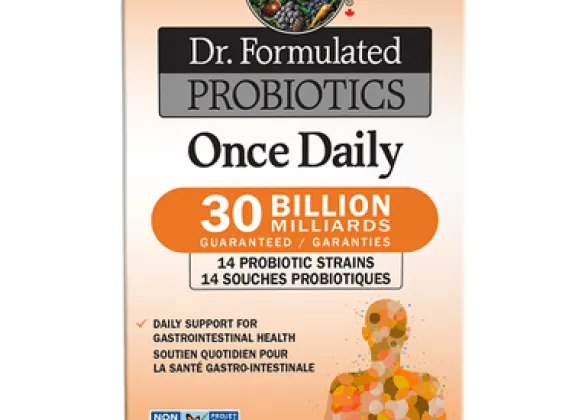
Garden of Life Dr. Formulated Probiotics Once Daily 30 Billion
Garden of Life — Trust Index: 87.4/100
View →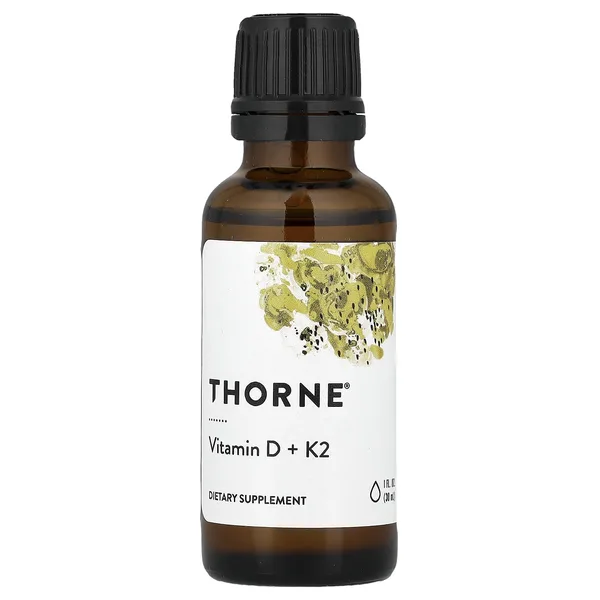
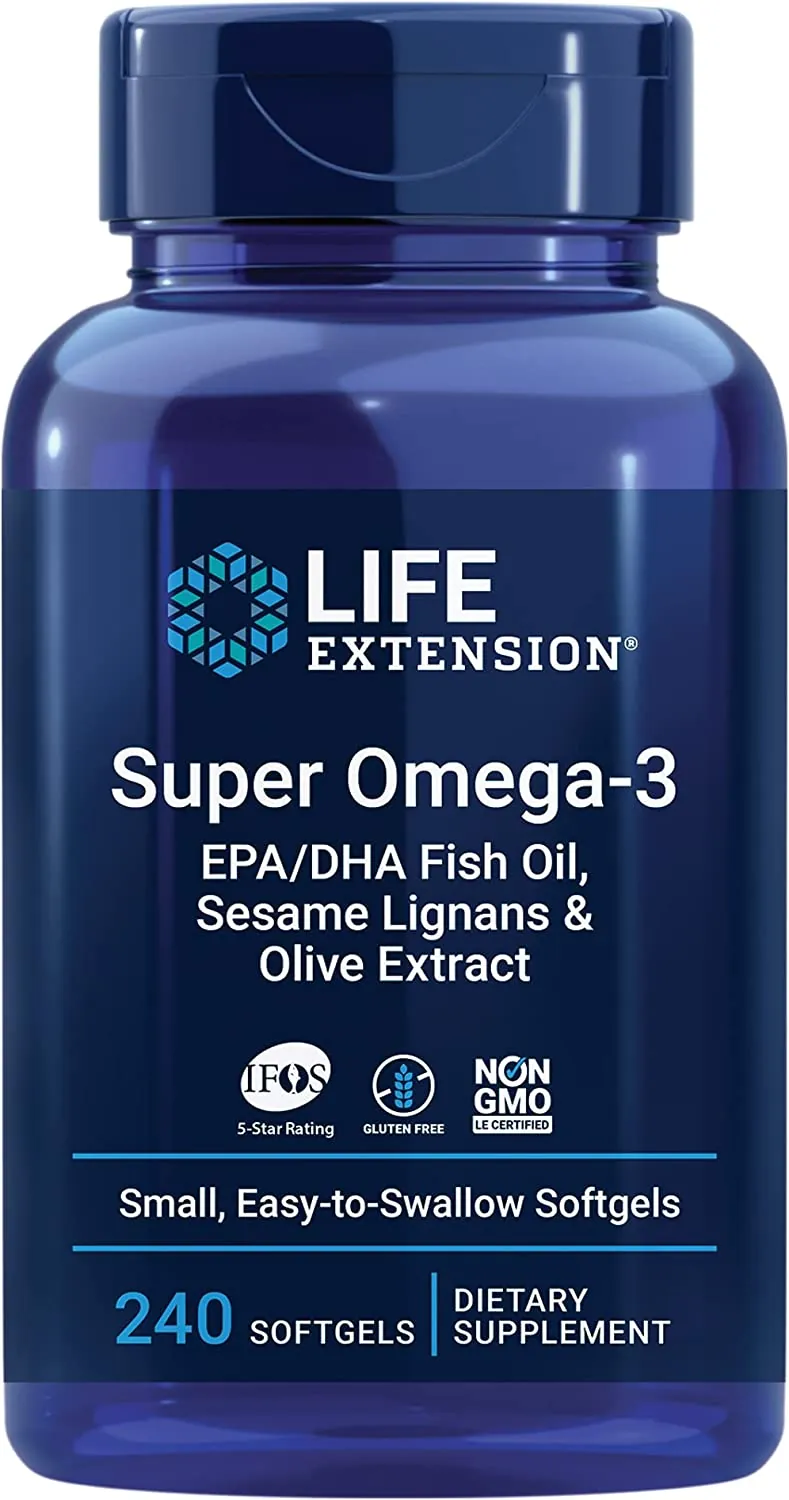
Life Extension Super Omega-3 EPA/DHA Fish Oil
Life Extension — Trust Index: 83.5/100
View →