Transparency Report: What's Really in Your Pet Food?
Dog food and cat food brands ranked by ingredient transparency — named meats vs mysterious 'derivatives'.
Key Finding
Cat food averages just 37.0/100 on transparency — 29.8 points lower than dog food (66.8/100). 16 pet food products score well overall despite poor transparency.
Cat Owners Are Flying Blind
The most striking finding from analysing 328 UK pet food products isn't which brands perform worst. It's how dramatically different the standards are between dogs and cats. Dog food scores an average transparency of 66.8 out of 100. Cat food scores just 37.0. That 29.8-point gap represents a systemic failure in how feline nutrition is communicated to pet owners, and it has a single root cause: UK labelling regulations that permit manufacturers to describe ingredients in terms so vague as to be functionally meaningless.
This analysis examined 236 dog food products and 92 cat food products across eleven categories, scoring each on whether it disclosed named meat sources, clear percentage breakdowns, and honest ingredient listings — rather than hiding behind terms like meat and animal derivatives or cereals. What emerged was a two-tier market in which premium independent brands have largely embraced transparency, while mass-market labels — particularly in the cat food sector — continue to exploit every loophole available.
The consequences are not merely aesthetic. A cat owner whose pet suffers from chicken hypersensitivity has no way to determine whether poultry derivatives in a given product contains chicken, duck, or turkey. A dog owner seeking to manage their pet's weight cannot do so effectively if a senior food lists cereals without specifying whether those are oats, wheat, or maize. Vague labelling is not just opaque — it is actively obstructive to informed pet care.
| Rank | Product | Brand | Transparency | Overall | Type |
|---|---|---|---|---|---|
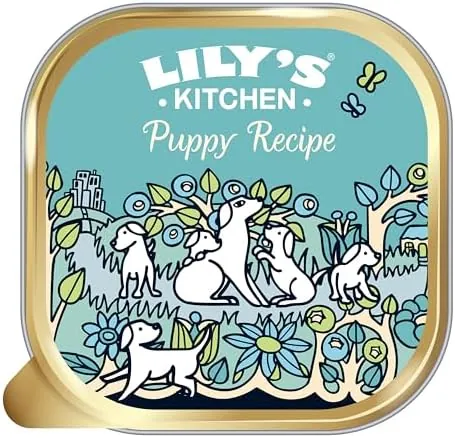
| 1 | Lily's Kitchen | 92.0 | 85/100 | Dog | |
| 2 | COOKHOUSE | 91.0 | 83/100 | Dog | |
| 3 | Lily's Kitchen | 91.0 | 81/100 | Dog | |
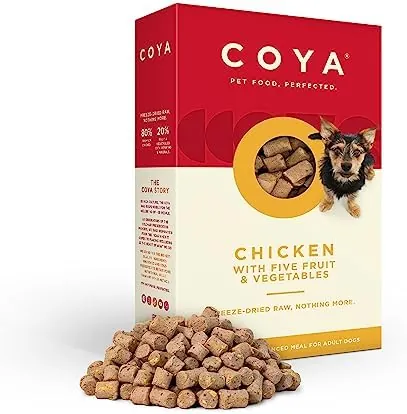
| 4 | COYA | 91.0 | 79/100 | Dog | |
| 5 | Lily's Kitchen | 90.0 | 73/100 | Dog | |
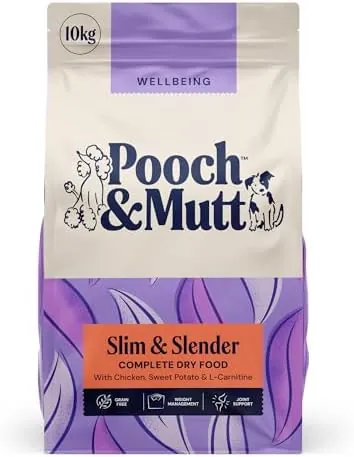
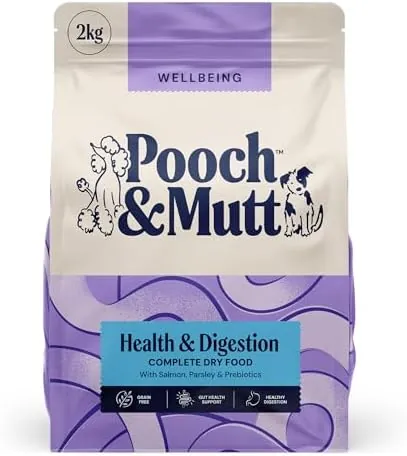
| 6 | Pooch & Mu | 90.0 | 80/100 | Dog | |
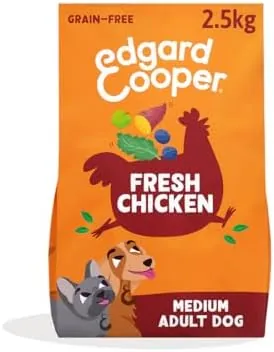
| 7 | Edgard Coop | 89.0 | 77/100 | Dog | |
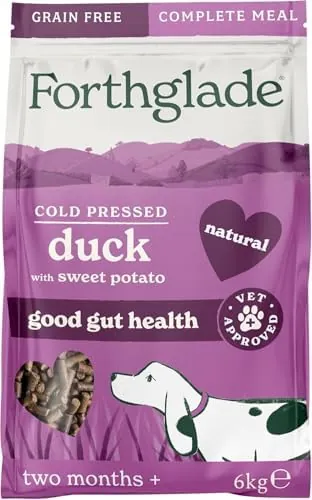
| 8 | Forthglad | 89.0 | 82/100 | Dog | |
| 9 | Pooch & Mu | 89.0 | 81/100 | Dog | |
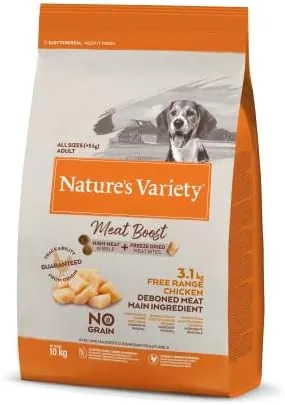
| 10 | Nature's Variety | 89.0 | 83/100 | Dog |


By the Numbers
37.0/100 — average cat food transparency score across 92 products analysed. 66.8/100 — average dog food score across 236 products. 32.7/100 — kitten food, the least transparent category in the entire dataset. 74.9/100 — grain-free dog food, the most transparent. 16 products achieve decent overall quality scores despite low transparency ratings, meaning owners have no reliable way to verify what those products actually contain.
Two Species, Two Standards
The 29.8-point gap between dog and cat food transparency is consistent across every sub-category examined. Wet cat food averages 37.9/100, dry cat food manages a marginally better 39.2, cat treats score 35.2, and kitten food — designed for the most nutritionally vulnerable animals in the dataset — scores just 32.7. By contrast, every dog food category outperforms the best-performing cat food category.
The kitten food figure deserves particular attention. At 32.7/100, the category designed for animals in the most critical nutritional development window is the least transparent in the entire analysis. Kittens between four weeks and twelve months are building skeletal structure, immune systems, and cognitive function. Owners selecting food for this life stage deserve to know whether meat derivatives means quality muscle meat or low-grade processing by-products. Currently, the data suggests they largely cannot tell.
Why does this gulf exist? The answer lies partly in market structure and partly in consumer demand. The premium dog food segment has expanded dramatically over the past decade, with independent brands positioning themselves explicitly on ingredient transparency as a commercial differentiator. The cat food market remains more heavily dominated by mass-market multinationals whose cost structures and longstanding formulations have not adapted to the transparency expectations of modern pet owners. The result is a market where dogs eat better — or at least more transparently — than cats.
| Rank | Product | Brand | Transparency | Overall | Type |
|---|---|---|---|---|---|
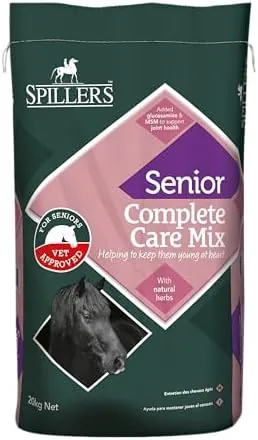
| 1 | SPILLER | 10.0 | 10/100 | Dog | |
| 2 | Bakers | 20.0 | 36/100 | Dog | |
| 3 | Felix | 28.0 | 57/100 | Cat | |
| 4 | Felix | 28.0 | 57/100 | Cat | |
| 5 | Felix | 28.0 | 48/100 | Cat | |
| 6 | Felix | 28.0 | 57/100 | Cat | |
| 7 | Felix | 28.0 | 50/100 | Cat | |
| 8 | Felix | 28.0 | 56/100 | Cat | |
| 9 | Felix | 28.0 | 50/100 | Cat | |
| 10 | Morrisons | 28.0 | 44/100 | Dog |


The Regulation That Fails Pet Owners
UK pet food labelling is governed by retained EU Regulation 767/2009, which permits manufacturers to list ingredients by category name rather than by specific identification. Meat and animal derivatives is the most widely exploited of these categories. It can encompass anything from prime-cut chicken breast to rendered by-products from multiple species — yet it requires no further disclosure. Cereals can mean anything from whole oats to highly processed wheat fragments. Various sugars need not be identified individually.
This regulatory latitude has measurable consequences. Among the ten least transparent products in this analysis, seven are Felix products — all scoring 28.0/100 — spanning wet cat food, treats, and kitten food. Felix is not breaking any rules. It is exploiting all of them. The commercial logic is straightforward: category-name labelling allows manufacturers to reformulate products without changing packaging, swap protein sources based on commodity prices, and maintain the same label regardless of what goes into the can on any given production run. For the manufacturer, this flexibility has real economic value. For the cat owner attempting to manage a food allergy or monitor their animal's protein intake, it is an obstacle with no consumer-facing solution.
One anomaly in the dataset underlines how far labelling ambiguity can extend: a Spillers horse feed product appeared in the senior dog food category with a transparency score of 10.0/100 — the lowest in the entire dataset. This appears to be a retail categorisation error rather than a product genuinely marketed for dogs. But it does show a wider problem: when labelling standards are weak and retail categorisation is loose, consumers cannot rely on packaging or online listings alone to understand what they are buying. The lowest transparency score for an actual dog food is 20.0/100, awarded to Bakers Superfoods Puppy — a food explicitly marketed to owners of the most developmentally sensitive animals in the category.
Average Transparency: Dog Food vs Cat Food
Brands That Set the Standard
The brands at the top of the transparency ranking take a completely different approach. Wild Pet Food leads with an average of 85.7/100 across three products, followed by Edgard & Cooper at 85.3 and Forthglade at 83.0. Pooch & Mutt achieves 81.4 across twelve products — the largest sample in the top fifteen — making it the most consistently transparent brand by breadth of range. Burns completes the top tier at 80.3 across ten products, a strong result at scale.
Lily's Kitchen holds the highest individual product score in the dataset: its Natural Dog Treats Multipack achieves 92.0/100 with an overall quality score of 85.0. The brand appears twice in the top three individual products and maintains an average of 81.1 across sixteen products — the broadest transparent range in the dataset. COOKHOUSE's 100% Natural Luxury Wet Dog Food and COYA's Freeze-Dried Dog Food both score 91.0, with COYA combining high transparency with an explicit claim of 80% meat content.
Several structural factors distinguish these transparent brands. They are predominantly independent or challenger labels that have built market position on ingredient quality as a commercial argument — they have financial incentive to be specific rather than evasive. The Edgard & Cooper Grain Free Dry Dog Food for Medium Breed Adult Dogs explicitly lists fresh chicken, apple, sweet potato, kale, and blueberry, and specifies that it contains never meat meal. Forthglade's Cold Pressed Duck & Vegetables achieves 89.0/100 while also holding an 82.0 overall quality score — evidence that transparency and nutritional quality travel together more often than not.
What is notably absent from the top transparency rankings is any cat food brand. Not one cat food brand appears in the top fifteen by brand average, and not one cat food product appears in the top ten individual products. Transparent cat food does exist, but the category hasn't yet developed the same premium-segment momentum that has driven transparency in dog food over the past decade.
Pet Food Brand Transparency Rankings
Where Transparency Breaks Down
The breakdown by product category reveals patterns that extend beyond the dog-cat divide. Within dog food, grain-free products lead at 74.9/100, outperforming standard dry kibble at 69.5 and wet food at 69.1. That's no accident: grain-free marketing has required brands in that segment to lead on ingredient specificity to justify both their premium price positioning and their departure from conventional formulation. Naming the protein source is, in effect, part of the product proposition.
Raw dog food scores 61.0/100 — lower than might be expected given that the raw feeding movement is typically associated with whole-food provenance and ingredient integrity. The score reflects genuine diversity within the category: minimally processed whole-meat products sit alongside more opaque blended formulations where sourcing is less clear. The category average conceals significant variance that warrants product-level scrutiny.
Senior dog food at 59.5/100 and puppy food at 63.8/100 represent the most troubling dog food figures. Both are life-stage formulations chosen by owners with specific, often medically informed, nutritional objectives. An owner selecting senior food to manage kidney function or joint health needs to verify protein sources and mineral levels; at 59.5, a substantial proportion of the category does not provide this information in usable form. Dog treats score 58.8/100 — the lowest dog food category — partly because treat formulations face less stringent complete-nutrition requirements. However, for owners using treats with high frequency in training regimens, opacity in ingredient sourcing is a meaningful concern rather than a minor inconvenience.
Transparency vs Overall Score
What Pet Owners Should Do
For dog owners, the outlook is relatively encouraging. The presence of Wild Pet Food, Edgard & Cooper, Lily's Kitchen, Pooch & Mutt, and Forthglade in the mainstream market means transparent alternatives exist across wet, dry, grain-free, and treat categories. Grain-free products average 74.9/100 as a category floor, and the leading brands all exceed 80.
For cat owners, the task is considerably harder. With a category average of 37.0/100, the majority of cat food products available in the UK do not meet basic transparency expectations. Owners should prioritise products that name the meat species and cut — chicken breast, salmon fillet — rather than meat and animal derivatives; state percentage inclusions clearly; list vegetables and carbohydrates individually rather than as cereals or vegetables; and avoid products listing various sugars without individual specification. At present, this level of disclosure is the exception in cat food rather than the norm.
Price is an imperfect but meaningful proxy: in this dataset, the cheapest products are disproportionately represented at the bottom of the transparency ranking. However, price alone is not sufficient — several mid-price products achieve strong transparency scores, and premium pricing guarantees nothing. The brand transparency rankings provide a more reliable guide: Wild Pet Food, Edgard & Cooper, Forthglade, and COYA represent consistently strong performers. Felix, Bakers, and value-tier supermarket own-brands consistently occupy the lower transparency rankings across multiple product lines.
Owners managing pets with food hypersensitivities — estimated to affect a significant proportion of both dogs and cats — should treat any product using meat and animal derivatives, poultry derivatives, or animal by-products without further species-level specification as incompatible with reliable allergen management. The regulatory framework permits this ambiguity indefinitely; consumer behaviour — specifically, buying pressure towards transparent brands — is currently the most effective lever available to change it.
How This Analysis Was Conducted
This analysis examined 328 pet food products available in the UK market, comprising 236 dog food products across seven categories (grain-free, dry, wet, puppy, raw, senior, and dog treats) and 92 cat food products across four categories (dry, wet, cat treats, and kitten food), for eleven categories in total.
Each product was assigned a transparency score out of 100 based on three primary criteria: whether meat sources were identified by species and cut rather than by permitted category descriptor; whether percentage inclusions were disclosed on pack or in product listings; and whether ingredient listings used specific individual names rather than aggregated category terms such as meat and animal derivatives, cereals, or various sugars. Products using specific named ingredients throughout with clear percentage breakdowns scored in the 80–100 range; products relying primarily on category descriptors scored in the 10–40 range. Overall quality scores are composite ratings that include additional criteria beyond transparency, including nutritional profile, ingredient quality, and value assessment.
Brand averages were calculated from all products in the dataset attributed to each brand. Category averages represent mean transparency scores for all products within each sub-category. The dataset reflects products listed on major UK retail platforms including Amazon UK and specialist independent retailers. One product — a Spillers horse feed miscategorised under senior dog food — was identified as a retail categorisation error. Its transparency score of 10.0/100 is retained in overall statistics for completeness but noted as an anomaly that does not reflect a product genuinely positioned for canine consumption. Analysis was conducted by AIScored using its proprietary pet food evaluation framework.
Our Top Picks

Lily's Kitchen Natural Dog Treats Multipack - Beef Mini Burgers, Duck and Venison Sausages, Chicken Bites & Chicken Jerky (8 x 70 g)
Transparency: 92.0/100
View →
Lily's Kitchen Natural Dog Treats Multipack - Beef Mini Burgers, Duck and Venison Sausages, Chicken Bites & Chicken Jerky (8 x 70 g)
Transparency: 92.0/100
View →
Felix Soup Fish Selection with Plaice, Tuna & Cod Adult Wet Cat Food 48x48g
Transparency: 55.0/100
View →