The Puppy Premium Tax
Do 'Puppy Food' products genuinely score higher on ingredient quality, or is it just more expensive marketing?
Key Finding
Puppy food scores 1.8 points lower on average than adult dog food, but costs 3.1% more.
- Adult Dog Food Outscores Puppy Food
- The Price Premium Is Almost Nothing
- Where Adult Food Consistently Wins
- The Labelling Problem in Puppy Food
- Not All Brands Are Created Equal
- The Puppy Foods Worth Buying
- The Core Finding for New Owners
- What This Means for Puppy Owners
- How This Analysis Was Conducted
Adult Dog Food Outscores Puppy Food
Here is the finding that should concern every new puppy owner: across an analysis of 164 UK dog food products, adult dog food outperforms puppy-specific food on ingredient quality, overall score, value for money, and transparency. The 32 puppy food products analysed average an overall score of 69.7 out of 100; the 132 adult products average 71.5. Puppy food is, on the evidence, slightly worse food sold at a slight premium.
The price gap is narrower than most owners would expect — £27.39 average for puppy food versus £26.57 for adult, a 3.1% difference — but the direction of travel on quality is clear and consistent across four of five scored dimensions. Only palatability, a measure of real-world acceptance and digestibility, tilts fractionally in puppy food's favour: 82.9 versus 82.0, a difference that is barely meaningful at this scale of analysis.
The UK pet food market has long sold puppy food on an implicit premium proposition: that the specialised nutritional needs of young dogs justify both higher prices and higher quality ingredients. This analysis, drawing on AI-scored evaluations of ingredient lists, labelling transparency, and nutritional profiles, finds that proposition largely unsupported by the data available. The puppy label, in many cases, is doing more work for the brand than for the dog.
Puppy Food vs Adult Dog Food: Average Scores
The Price Premium Is Almost Nothing
Received wisdom in pet food retail holds that puppy food commands a 20–40% price premium over adult equivalents. The reality, across the 164 products analysed here, is much smaller. The average price gap is just 82 pence: £27.39 for puppy food, £26.57 for adult. That 3.1% premium is so small as to be almost statistically irrelevant — well within the range of ordinary product variability.
Some context, though. The sample skews towards products available on Amazon UK and mainstream pet retail, where budget and mid-tier products are well represented. Premium raw and freeze-dried segments, where puppy-specific formulations do carry steeper premiums, may be underrepresented. What the data captures well is the mainstream market that most owners actually shop.
The 3.1% gap isn't alarming on its own. The problem is the direction: puppy food costs more while delivering less across most quality dimensions. The value-for-money score, which accounts for price relative to quality, confirms this: puppy food averages 65.9 versus 67.7 for adult food. Owners are paying a premium — small though it is — and receiving below-average returns on that investment by the measures that matter.
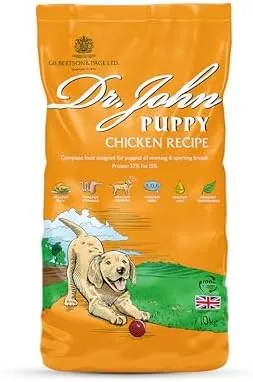
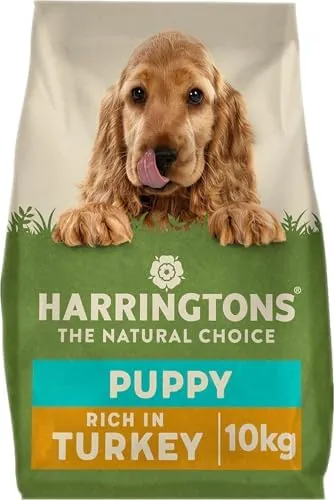
The budget end of the puppy market does offer genuine value exceptions. Harringtons Complete Puppy Turkey & Rice 10kg scores 76.0 overall with a value-for-money score of 84.0 — among the highest in the entire puppy category. Dr John Dry Puppy Food 10kg similarly scores 76.0 overall with 81.0 for value. Both show that decent puppy nutrition doesn't have to cost more.
| Rank | Product | Brand | Overall | Ingredients | Value |
|---|---|---|---|---|---|
| 1 | Pooch & Mu | 80/100 | 80.0 | 70.0 | |
| 2 | Pro Plan | 79/100 | 78.0 | 65.0 | |
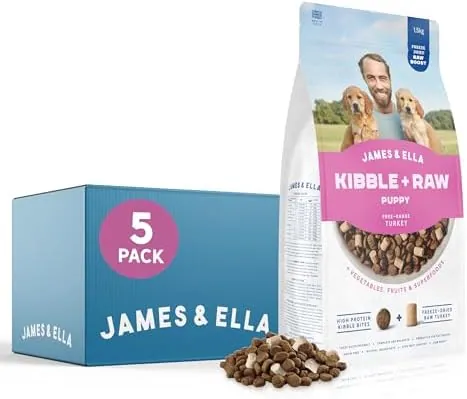
| 3 | JAMES & ELLA | 79/100 | 86.0 | 58.0 | |
| 4 | James Wellbeloved | 78/100 | 80.0 | 70.0 | |
| 5 | Lily's Kitchen | 78/100 | 83.0 | 60.0 | |
| 6 | Wellness CORE | 78/100 | 84.0 | 73.0 | |
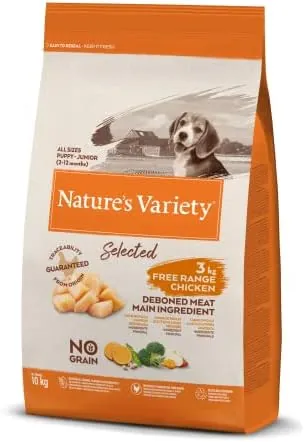
| 7 | Nature's Variety | 78/100 | 82.0 | 68.0 | |
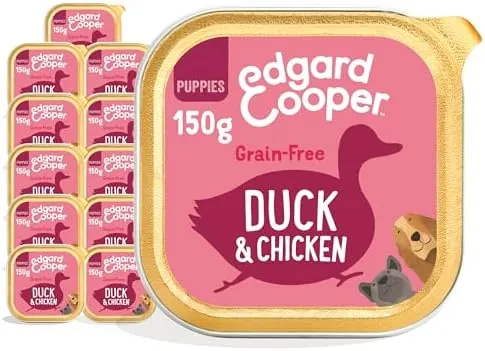
| 8 | Edgard Coop | 77/100 | 82.0 | 76.0 | |
| 9 | Gilbertson & Pag | 76/100 | 73.0 | 81.0 | |
| 10 | HARRINGTON | 76/100 | 68.0 | 84.0 |


Where Adult Food Consistently Wins
The quality gap shows up across almost every dimension. Adult food outscores puppy food on four of the five metrics, and the biggest gaps appear where they matter most.
Ingredient quality is the starkest gap: adult food averages 72.4 versus puppy food's 69.0 — a 3.4-point difference. This score rewards named and identified meat sources (chicken, lamb, salmon), penalises vague derivatives and meat meals of unspecified origin, and reflects the proportion of whole food components. Many adult dog foods contain more identifiable, higher-grade protein sources than their puppy-labelled equivalents.
Nutritional value is the closest comparison: 69.9 for adult food versus 69.1 for puppy food, a 0.8-point gap. This is the one dimension where manufacturers' claims of puppy-specific fortification might be expected to show most clearly — added DHA, adjusted calcium-to-phosphorus ratios, higher protein densities for growth — and it is where the gap is narrowest. The data suggests that puppy nutritional profiles are marginally more optimised for developmental needs, but only marginally.
Palatability is the one area where puppy food leads: 82.9 versus 82.0. No real surprise there — younger dogs may be catered to with richer flavour profiles and softer textures — but a 0.9-point advantage across a 100-point scale is a thin foundation for a category premium.
The scorecard tells a consistent story: adult dog food is, on average, made from better-identified ingredients, labelled more clearly, and better value for money.
Price vs Overall Score: Puppy vs Adult
The Labelling Problem in Puppy Food
The most troubling gap in this analysis is not price — it is transparency. Puppy food averages 63.8 on the transparency dimension, compared to 68.4 for adult food: a 4.6-point difference that represents the largest single divergence across all five scoring categories.
The transparency score evaluates how clearly a product communicates what it contains — specifically whether ingredient percentages are declared, whether meat sources are individually named and quantified, and whether the label provides sufficient information for an informed purchasing decision. A score below 65 indicates meaningful gaps in disclosure.
At 63.8, the average puppy food sits in territory where labelling cannot be described as generous. Think about that: products in this category routinely make developmental claims — brain health, immune support, bone development — while providing less ingredient clarity than the adult food sold on the shelf beside them.
The commercial logic is not difficult to identify. Parents of puppies — particularly first-time dog owners — are anxious purchasers who rely heavily on brand trust and front-of-pack claims. The data suggests that manufacturers in this category are exploiting that anxiety: investing in claims-led marketing while delivering less ingredient transparency than the category norm.
Not All Brands Are Created Equal
Brand performance within the puppy food category varies a lot. The gap between the best and worst-performing brands in this analysis spans more than 15 points on an overall basis — a difference that dwarfs the gap between puppy and adult food averages.
Pro Plan leads the puppy brand table at 77.0 average overall score, reflecting consistent ingredient quality and reasonably clear labelling across its range. Its Medium Puppy Healthy Start 3kg, ranked second overall in this analysis at 79.0, scores 78.0 on ingredient quality — well above the puppy food average of 69.0. Pro Plan's pricing is not budget, but the quality scores provide genuine justification for the spend.
Lily's Kitchen follows at 74.0, with its Puppy Recipe Chicken Wet Tray scoring 78.0 overall and 83.0 on ingredient quality — the third-highest ingredient score in the entire top ten. The brand's premium positioning is more defensible than most: ingredient quality is genuinely above average, though a value-for-money score of 60.0 reflects a price point that few owners on a budget could sustain long-term.
Skinners at 72.0 and Butcher's at 68.5 occupy the mid-table. Butcher's is a mainstream supermarket brand where price accessibility is the primary value proposition, and its score reflects that trade-off.
Most striking is the performance of Royal Canin, which averages 67.0 — below the puppy food category average of 69.7, and 10 points below Pro Plan. Royal Canin occupies a premium price position and benefits from substantial veterinary endorsement. Its ingredient quality scores, however, do not match that positioning. The brand's formulations lean heavily on ingredients that score poorly for named-meat content and transparency. Owners following a vet's recommendation to feed Royal Canin should understand that the endorsement reflects clinical familiarity and digestibility research rather than ingredient quality leadership.
Wainwright's, at 61.5, sits at the bottom of the brand table and below the overall puppy food average by more than 8 points. As a Pets at Home own-label brand, it competes primarily on price, and the quality scores reflect that positioning clearly.
The Puppy Foods Worth Buying
The top ten puppy foods in this analysis show some real contrasts. Here's what jumped out.
Pooch & Mutt Puppy Superfood ranks first overall at 80.0, with an ingredient quality score of 80.0 and a value score of 70.0 — a combination that suggests genuine quality at a price that does not completely punish the owner. Its grain-free, named-meat formulation is the key driver of its ingredient score.
James & Ella's Kibble + Raw Turkey achieves the highest ingredient quality score in the top ten at 86.0 and a joint second-place overall of 79.0. It is also the product most clearly making a case for the premium end of the market — freeze-dried raw nuggets blended with kibble, free-run turkey, essential oils and minerals, grain and gluten free. Its value score of 58.0 is the second-lowest in the top ten, reflecting a price that places it out of reach for many owners. For those who can afford it, the ingredient credentials are the strongest in the category.
James Wellbeloved Puppy Hypoallergenic Turkey & Rice is worth a closer look. At 78.0 overall with 80.0 for ingredient quality and 70.0 for value, it combines above-average quality with relative accessibility. Its hypoallergenic formulation — single animal protein, no artificial additives — suits puppies with sensitivities and represents one of the more defensible premium purchases in the category.
Wellness CORE Puppy 10kg achieves 78.0 overall with 84.0 for ingredient quality and a value score of 73.0 — the best balance of quality and value among the premium options. At 10kg it offers reasonable cost-per-kilo economics that make a high-quality formulation more financially accessible over a puppy's first year.
At the budget end, the case made by Harringtons Puppy Turkey & Rice 10kg (76.0 overall, value score 84.0) and Dr John Dry Puppy Food 10kg (76.0 overall, value score 81.0) is significant. Both score within 4 points of the category leader on overall quality while offering materially better value. The ingredient quality scores are lower — 68.0 and 73.0 respectively — reflecting less premium sourcing, but the gap from the top performers is narrower than price differences would suggest.
The Core Finding for New Owners
Adult dog food outscores puppy food on ingredient quality (72.4 vs 69.0), overall score (71.5 vs 69.7), value for money (67.7 vs 65.9), and transparency (68.4 vs 63.8). The 3.1% price premium for puppy food is not justified by quality outcomes in the aggregate. Brand selection matters more than the puppy label itself — the gap between the best and worst puppy food brands (Pro Plan at 77.0 versus Wainwright's at 61.5) is more than four times larger than the gap between the average puppy and adult food scores.
What This Means for Puppy Owners
None of this analysis argues that owners should feed puppies adult dog food. The nutritional requirements of young dogs are distinct and well-established: higher protein density to support rapid muscle development, elevated DHA and EPA for neural and retinal development, and calcium-to-phosphorus ratios calibrated for bone growth. Products formulated and labelled for puppies — or carrying FEDIAF or AAFCO 'all life stages' certification — do address these needs in ways that standard adult maintenance formulations may not.
But the data is clear on one point: the puppy label is a poor proxy for quality. The difference between a 61.5-scoring Wainwright's puppy food and an 80.0-scoring Pooch & Mutt is not a small refinement — it represents a fundamentally different approach to ingredient sourcing and labelling. Owners who assume that any puppy-labelled product represents an appropriate premium purchase are likely to be disappointed by what they are actually buying.
So what should you actually do? Prioritise products where the ingredient quality score exceeds 75 and the transparency score exceeds 65 — these are the products that disclose what they contain and contain ingredients worth disclosing. And don't assume veterinary-adjacent brands (Royal Canin averaging 67.0) represent quality leadership; they represent clinical familiarity, which is a different proposition. Also, bulk formats — Wellness CORE 10kg at 78.0 overall, Nature's Variety Selected 10kg at 78.0 — frequently offer better value-for-money than smaller premium packages while maintaining quality scores in the top tier.
The puppy premium tax, as this analysis frames it, is real — but it is measured in quality withheld rather than price extracted. The extra 82 pence per purchase is almost nothing. The ingredient quality gap of 3.4 points, and the transparency gap of 4.6 points, are not.
How This Analysis Was Conducted
This report is based on an analysis of 164 UK dog food products — 32 puppy-specific and 132 adult — scored using AIScored's proprietary evaluation model. Products were sourced from Amazon UK and mainstream pet retail channels active in the UK market as of early 2026.
Each product was scored across five dimensions on a 0–100 scale. Ingredient quality evaluates the specificity and grade of protein sources, the proportion of whole food ingredients, and the presence of artificial additives or low-grade fillers. Nutritional value assesses declared macro and micronutrient profiles against established guidelines for the relevant life stage. Value for money combines price-per-kilo with overall quality score to produce a relative value index. Transparency measures the completeness of ingredient declaration, including whether percentages are stated and protein sources individually identified. Palatability draws on available consumer review data and formulation characteristics associated with acceptance rates.
Brand averages are calculated across all products in this dataset bearing that brand name within the puppy food category only. The adult food dataset was not disaggregated by brand for this report; only category-level averages are presented for adult food comparisons.
This analysis has limitations. The sample is not exhaustive of the UK market — raw complete, subscription-only, and veterinary prescription diets are underrepresented. Price data reflects listed retail prices and does not account for subscription discounts, loyalty schemes, or bulk pricing variability. Scores represent a point-in-time evaluation; product formulations change without notice. The analysis should be read as indicative of category-level patterns rather than definitive rankings of individual products.
All affiliate links in associated product listings use the Amazon Associates UK tag (aiscored-21). This report was produced independently of any brand relationships.
Our Top Picks
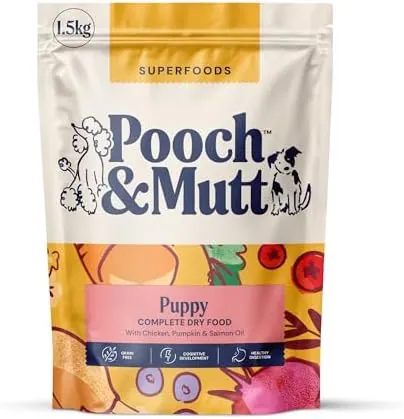
Pooch & Mutt - Puppy Superfood Complete Dry Dog Food Grain Free (Regular Sized Kibble), Chicken, 1.5kg
Overall score: 80.0/100
View →
Morrisons Puppy Food Meat Chunks In Jelly, 6 x 400g
£4.40 — strong quality at a fair price
View →
PRO PLAN Medium Puppy Healthy Start up to 12-15 Months Dry Dog Food Chicken 3kg Pack
Overall score: 79.0/100
View →