UK Skincare Ingredient Roulette
Which active ingredients actually correlate with higher effectiveness scores in our database of 244 products?
Key Finding
Across 244 UK skincare products, Moisturisers leads with an average effectiveness score of 73.3/100.
- The Ingredient That Works Best Isn't the Trendy One
- Moisturisers Lead Where Serums Disappoint
- Brands Are Selling the Ingredient, Not the Formulation
- Retinol — Most Popular, Least Reliable
- Hyaluronic Acid and SPF — Quiet Overachievers
- Korean Brands Dominate the Effectiveness Rankings
- 86 Sub-£15 Products Score Above 70%
- What the Data Means for UK Shoppers
- How This Analysis Was Conducted
The Ingredient That Works Best Isn't the Trendy One
The UK skincare market has spent years elevating three active ingredients — retinol, vitamin C, and niacinamide — into near-mythological status. Walk through any Boots aisle, scroll through Reddit's r/SkincareAddiction, or browse the Amazon bestseller rankings, and you will find these compounds positioned as the workhorses of modern skincare: the ingredients that justify the premium prices and the elaborate multi-step routines.
An analysis of 244 UK skincare products across seven categories upends this narrative. The data shows that retinol, vitamin C, and niacinamide — the three most aggressively marketed active ingredients in the UK market — all score below 64% in assessed effectiveness. The least glamorous category of all, basic face moisturisers, leads the field at 73.3%. The gap between the most and least effective categories spans 11.2 percentage points.
This finding does not mean active ingredients fail consumers. It means the category is saturated with products leveraging the halo of a well-studied molecule without the formulation discipline to deliver results. When 42 retinol products average just 63.7% effectiveness — the largest single category in this analysis — retinol itself isn't the problem. Most retinol products are.
For UK consumers navigating an increasingly expensive and complex market, the implication is significant: the ingredients driving purchase decisions are not reliably the ones driving results. Knowing which categories and which specific products actually deliver matters more than picking the right active ingredient.
| Rank | Product | Brand | Effectiveness | Overall | Category |
|---|---|---|---|---|---|
| 1 | AESTURA | 84.0 | 81/100 | Face Moisturisers | |
| 2 | Piz Buin | 84.0 | 78/100 | SPF & Sunscreens | |
| 3 | Unknown | 83.0 | 79/100 | Face Moisturisers | |
| 4 | Unknown | 83.0 | 84/100 | Hyaluronic Acid Serums | |
| 5 | CeraVe | 83.0 | 83/100 | Face Moisturisers | |
| 6 | MAELOVE | 83.0 | 85/100 | Vitamin C Serums | |
| 7 | Beauty of Joseon | 83.0 | 85/100 | SPF & Sunscreens | |
| 8 | COSRX | 83.0 | 79/100 | SPF & Sunscreens | |
| 9 | Unknown | 83.0 | 80/100 | Cleansers | |
| 10 | PURITO | 83.0 | 81/100 | Niacinamide Serums |



Moisturisers Lead Where Serums Disappoint
Across the seven categories analysed, face moisturisers outperform every other segment, averaging 73.3% effectiveness across 39 products. Cleansers follow at 71.4% across 30 products. Both categories post overall scores that closely mirror their effectiveness ratings — 74.4% and 71.4% overall respectively — suggesting that where moisturisers and cleansers score well on efficacy, they tend to perform consistently across all assessment dimensions.
Performance drops meaningfully as we move into serum territory. Hyaluronic acid serums average 68.8% effectiveness across 31 products, while SPF and sunscreens post 68.1% across 31 products. Both are competent mid-field performers, outpacing the active ingredient serum categories by a margin that ought to give pause to any consumer allocating significant budget to the latter.
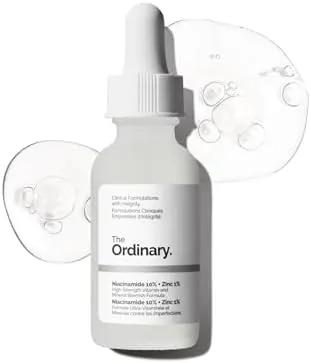
The three most-discussed active ingredient categories cluster in a narrow band at the bottom of the rankings. Retinol and retinoids average 63.7% effectiveness; vitamin C serums, 63.5%; and niacinamide serums, 62.1%. Niacinamide serums, despite the enormous commercial momentum behind the ingredient — driven in large part by The Ordinary's bestselling 10% + Zinc formula — post the lowest effectiveness average in the entire dataset, 11.2 percentage points behind moisturisers.
What explains this inversion? Product category complexity is one factor. A face moisturiser with a well-chosen emollient system and barrier-supportive ingredients faces fewer formulation hazards than a vitamin C serum, where concentration, pH, and oxidative stability must all be managed simultaneously to deliver efficacy. The moisturiser category may simply be harder to get badly wrong. The active ingredient serum categories, by contrast, offer more ways for formulators to cut corners — and the data suggests many do.
Average Effectiveness Score by Key Ingredient
Brands Are Selling the Ingredient, Not the Formulation
The three most-marketed active ingredients in UK skincare all sit at the bottom of the effectiveness rankings: retinol at 63.7%, vitamin C at 63.5%, and niacinamide at 62.1% — compared to 73.3% for face moisturisers. The 11.2-point gap between the category leader and the category laggard represents a systematic divergence between what consumers are buying and what the data says delivers results. Retinol alone accounts for 42 products — the single largest category in this analysis — and its effectiveness average sits 9.6 points below moisturisers. The molecule works. The industry just keeps failing to formulate around it properly.
Retinol — Most Popular, Least Reliable
With 42 products, retinol and retinoids represent the single largest category in this analysis — and its performance data tells the story of a market that has scaled supply without scaling quality.
The category average of 63.7% effectiveness is not dramatically low in isolation. But contextualised against the 73.3% posted by face moisturisers, the gap represents a significant consumer value mismatch. Retinol products frequently command premium prices on the strength of clinical evidence for the molecule — evidence generated at pharmaceutical-grade concentrations in controlled settings. Most consumer retinol products operate at concentrations well below those used in the studies they implicitly cite.
This concentration problem is compounded by formulation stability challenges. Retinol is notoriously unstable when exposed to light, air, and certain pH environments. Poorly formulated products may degrade before application, or contain insufficient active material to produce the accelerated cell turnover the marketing promises. The overall score for the retinol category (64.7%) runs only marginally above its effectiveness score (63.7%), suggesting that products which underperform on efficacy also tend to underperform across supporting dimensions including ingredient quality and value for money. There is no evidence in the data that expensive retinol products reliably outperform budget options.
The most instructive outlier from the data is the PURITO TXA 6% Niacinamide 10 Retinal Facial Serum, which is categorised as a niacinamide serum but contains retinal (retinaldehyde) — a more potent and direct retinoid precursor to retinoic acid. It posts 83.0% effectiveness, 19.3 percentage points above the retinol category average of 63.7%. It also combines its retinoid with tranexamic acid and niacinamide at meaningful concentrations. The lesson encoded in that 19.3-point gap says everything about this market: it's the formulation that drives performance, not just having the ingredient on the label.
Price vs Effectiveness Score
Hyaluronic Acid and SPF — Quiet Overachievers
If retinol, vitamin C, and niacinamide represent the overhyped end of the spectrum, hyaluronic acid serums and SPF products represent a different kind of story: categories that perform above the active ingredient average without attracting equivalent marketing noise.
Hyaluronic acid serums average 68.8% effectiveness across 31 products, with an overall score of 69.3% — marginally above the effectiveness average, a mild but consistent signal of broader product quality. The mechanism here may be simpler than it appears: hyaluronic acid is a relatively stable, well-tolerated molecule with a clear and limited function. Products in this category face fewer formulation hazards to navigate, and the clinical evidence base, while less dramatic than that for retinol, is more consistently replicable at consumer concentrations.
SPF and sunscreens post 68.1% effectiveness across 31 products, but diverge from the pattern on overall scores: a 66.7% overall rating sits below the effectiveness figure. This divergence likely reflects that sunscreens are primarily assessed on UV protection efficacy — an area where regulatory standards enforce a degree of minimum performance — while texture, cosmetic experience, and ingredient elegance drag the overall score down. Many effective sunscreens remain cosmetically challenging to wear daily.
The top-ten data provides meaningful support for the SPF category's ceiling. Two sunscreen products rank among the most effective in the entire 244-product dataset: the Piz Buin Allergy Sun Sensitive Skin Face Cream SPF 50+ at 84.0% effectiveness, and the Beauty of Joseon Relief Sun Rice + Probiotics SPF 50+ PA++++ at 83.0%. The COSRX Ultra-Light Invisible Sunscreen SPF 50 PA++++ also posts 83.0%, suggesting a cluster of products that have solved the cosmetic elegance problem without sacrificing protection efficacy. Given photoprotection's documented role in preventing premature ageing and skin cancer, the category's underrepresentation in consumer shopping baskets deserves scrutiny.
Korean Brands Dominate the Effectiveness Rankings
Of the ten highest-scoring products in the analysis, four originate from South Korean brands: AESTURA, Beauty of Joseon, COSRX, and PURITO. A fifth notable entry, The Ordinary — a British-Canadian brand — draws heavily on the K-beauty philosophy of high-concentration actives at accessible price points. That's not a coincidence.
Korean skincare has, over the past decade, distinguished itself through formulation discipline rather than ingredient novelty. Where Western premium brands frequently compete on heritage, packaging, and marketing, leading K-beauty brands have competed on ingredient concentration, clinical evidence, and formulation compatibility. The AESTURA ATOBARRIER365 Cream — the top-ranked product in the entire dataset at 84.0% effectiveness and 81.0% overall — exemplifies this approach: a ceramide-led moisturiser with a 120-hour hydration claim supported by formulation architecture rather than a single hero ingredient.
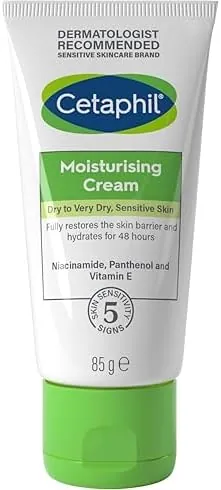
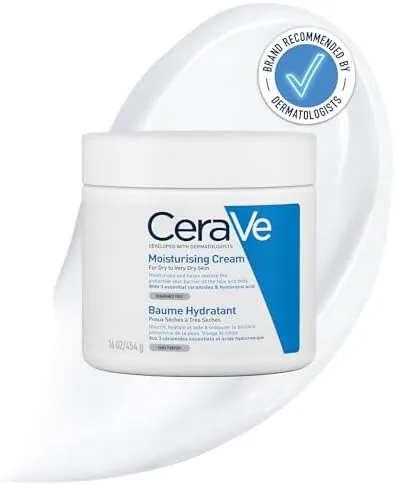
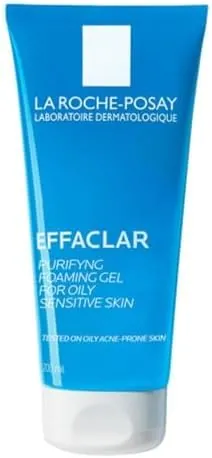
The presence of pharmacy-heritage brands tells a similar story. Cetaphil Moisturising Cream (effectiveness: 83.0%) is a decades-old formula from a dermatologist-trusted brand that achieves high effectiveness through ingredient restraint and clinical validation. CeraVe Moisturising Cream (effectiveness: 83.0%) follows the same logic, combining three essential ceramides with hyaluronic acid in a formulation designed to restore barrier function at scale. La Roche-Posay Effaclar Purifying Foaming Gel Cleanser (effectiveness: 83.0%) rounds out the top ten with a product built around dermatological rigour for oily and breakout-prone skin.
What these products share — and what separates them from the middle of the effectiveness distribution — is a commitment to formulation completeness over ingredient storytelling. The conspicuous absence from the top five is equally telling: no standalone retinol product appears, and only one vitamin C serum makes the top ten. The MAELOVE Glow Maker (effectiveness: 83.0%) earns its place precisely by addressing the vitamin C formulation problem directly, pairing stabilised vitamin C with ferulic acid and vitamin E — a combination with robust evidence for both oxidative stability and synergistic efficacy. Its presence argues not against vitamin C but for the minority of brands willing to formulate around it properly.
What the Data Means for UK Shoppers
This dataset challenges most of the skincare advice circulating in the UK market.
First, the presence of an active ingredient on a product label indicates only that the molecule is present — not that it is present at an effective concentration, in a stable formulation, at the correct pH, or alongside ingredients that support rather than undermine its activity. The 11.2 percentage point gap between niacinamide serums (62.1% average effectiveness) and face moisturisers (73.3%) is the most direct evidence available that ingredient marketing and ingredient performance are different things. A consumer who builds a routine around heavily marketed actives is, on average, anchoring around the lowest-performing category in this analysis. Formulation research — not ingredient recognition — is the skill that separates effective purchasing decisions from ineffective ones.
Second, SPF should command significantly more attention than it currently receives in the UK ingredient conversation. The SPF and sunscreen category averages 68.1% for effectiveness — above retinol, vitamin C, and niacinamide — and produces two of the top-ten most effective products in the entire 244-product dataset. Given photoprotection's extensive evidence base for preventing both premature skin ageing and skin cancer, and given the relatively poor showing of anti-ageing active serums in this analysis, consumers who deprioritise daily SPF in favour of retinol or vitamin C serums are, on the current data, making the wrong trade-off.
Third, budget products are a genuine option across the most effective categories. With 86 products scoring 70% or above for effectiveness at under £15, the data gives no support to the assumption that a higher price reliably means a better outcome. The top-performing moisturisers and cleansers in this dataset — CeraVe, Cetaphil, La Roche-Posay — are available at accessible price points and consistently outperform more expensive active ingredient serums. Ingredient simplicity, barrier function focus, and clinical validation appear to be the strongest predictors of effectiveness in the UK skincare market. They are not, unfortunately, the features that UK skincare marketing tends to lead with.
How This Analysis Was Conducted
This analysis covers 244 UK skincare products across seven categories: face moisturisers (39 products), vitamin C serums (39 products), retinol and retinoids (42 products), hyaluronic acid serums (31 products), SPF and sunscreens (31 products), cleansers (30 products), and niacinamide serums (32 products). Products were sourced primarily from the Amazon UK marketplace and reflect availability at time of data collection.
Effectiveness scores (0–100) are composite AI assessments incorporating formulation analysis — ingredient concentration, known interactions, pH compatibility, and stability profile — alongside clinical evidence review and user review analysis drawn from verified purchase data. Overall scores incorporate additional dimensions including ingredient quality and transparency, cosmetic and skin compatibility experience, and value for money relative to category peers.
Category averages reflect mean effectiveness scores across all products within each segment. The budget threshold (under £15) uses retail price at standard bottle size at time of data collection; readers should verify current pricing before purchasing, as prices fluctuate. The dataset is not nationally representative of all UK skincare products and carries the inherent brand representation skew of the Amazon UK marketplace. Products listed as Unknown brand reflect cases where brand information could not be confirmed from available product data. All scores are AI-assessed and should be interpreted as directional analytical indicators rather than clinical verdicts. Individual results will vary based on skin type, condition, and usage consistency.
Our Top Picks


Piz Buin Allergy Sun Sensitive Skin Face Cream SPF 50+ (50ml), Facial Sunscreen with UVA/UVB Filters, Protective Moisturising Lotion for Delicate Complexions, Sweat & Water Resistant
£8.50 with 84.0/100 effectiveness
View →