Important: This page is for informational purposes only, based on published peer-reviewed research and official UK dietary guidelines (NHS, EFSA, SACN). It does not constitute medical advice. Always consult your GP or pharmacist before starting, stopping, or combining supplements.
Ashwagandha and Magnesium — Can You Take Them Together?
Overview
Ashwagandha (Withania somnifera) and magnesium are two of the most studied natural compounds associated with stress management and sleep support, and their pairing has attracted considerable research interest. Both influence the body's stress-response systems through distinct biological pathways — ashwagandha as an adaptogenic herb modulating the hypothalamic-pituitary-adrenal (HPA) axis, and magnesium as an essential mineral acting on GABAergic and glutamatergic neurotransmission. Used together in an evening routine, they may offer a complementary approach to relaxation and sleep quality. Individual responses may vary, and neither ingredient is a substitute for professional medical advice.
How They Interact
Ashwagandha's primary active constituents — withanolides and sitoindosides — appear to modulate the HPA axis by attenuating cortisol secretion. A randomised controlled trial by Chandrasekhar et al. (2012, Indian Journal of Psychological Medicine, PMID 23439798) demonstrated a statistically significant reduction in serum cortisol in adults receiving 300 mg of full-spectrum ashwagandha root extract twice daily over 60 days compared with placebo (p=0.0006). Magnesium operates through a parallel but distinct mechanism: it acts as a co-factor in GABA receptor function — the brain's principal inhibitory neurotransmitter system — and blocks excitatory NMDA-type glutamate receptors, thereby reducing neuronal excitability. Magnesium also modulates corticotropin-releasing hormone (CRH) secretion in the hypothalamus. Because ashwagandha targets cortisol production upstream at the HPA axis whilst magnesium regulates downstream neuronal signalling and inhibitory tone, the two mechanisms are considered complementary. This dual-pathway approach may explain why the combination is frequently used in evening routines targeting both cortisol reduction and GABAergic calming.
Timing & Dosage Guidance
Both ashwagandha and magnesium are well-suited to evening routines, and clinical trial protocols support this approach. The KSM-66 ashwagandha trial by Langade et al. (2019, Cureus, PMID 31728244) used twice-daily dosing — one capsule morning and one in the evening, taken approximately 30 minutes before bed with milk or water. Magnesium glycinate is commonly recommended in the evening due to its calming profile and minimal gastrointestinal burden. Taking both in the evening, with food or a light snack, aligns with protocols that demonstrated sleep quality benefits. If using ashwagandha twice daily, the morning dose need not coincide with magnesium intake — the two can be staggered without concern.
Clinical studies of ashwagandha typically use standardised root extracts at 300–600 mg per day. KSM-66 and Sensoril are the two most rigorously studied proprietary extracts, each characterised by a minimum guaranteed withanolide content. Raw root powder requires considerably higher quantities and delivers less consistent potency. For magnesium, the UK Reference Nutrient Intake (RNI) is 300 mg/day for adult men and 270 mg/day for adult women, yet surveys suggest many UK adults fall below these levels through diet alone. Supplemental doses in published trials typically range from 200–500 mg elemental magnesium daily. Magnesium glycinate is preferred for evening use given its superior bioavailability and tolerability compared with magnesium oxide. Individuals with renal impairment should seek medical guidance before supplementing magnesium at therapeutic doses.
Recommended Action
This combination is commonly used in evening routines for relaxation. Magnesium glycinate in the evening pairs well with ashwagandha.
Ashwagandha Timing
When: Evening
Note: Evening preferred for stress/sleep. Can be taken morning for energy/endurance. With food to avoid GI discomfort.
Magnesium Timing
When: Evening
Note: Evening preferred — may promote relaxation. Take with food to reduce GI discomfort.
Scientific Evidence
4 peer-reviewed studies cited. All links lead to PubMed abstracts.
Indian Journal of Psychological Medicine (2012) · PMID: 23439798
Adults receiving 300 mg ashwagandha root extract twice daily showed a statistically significant reduction in serum cortisol compared with placebo over 60 days (p=0.0006), alongside improvements in self-reported stress scores.
Cureus (2019) · PMID: 31728244
KSM-66 ashwagandha (300 mg twice daily for 10 weeks) significantly improved sleep quality, sleep onset latency, and early morning alertness in participants with insomnia compared with placebo.
Nutrients (2017) · PMID: 28445426
A systematic review from the University of Leeds found consistent positive trends for magnesium supplementation on subjective measures of anxiety and stress, with the strongest evidence in mildly anxious adults and those with existing magnesium deficiency.
Journal of Research in Medical Sciences (2012) · PMID: 23853635
Supplementation with 500 mg magnesium daily for 8 weeks significantly improved insomnia severity, sleep efficiency, sleep onset latency, and early morning awakening compared with placebo in older adults.
Frequently Asked Questions
No clinically documented negative interaction exists between ashwagandha and magnesium. Both are widely used in combination within evening supplement routines. Ashwagandha's primary safety consideration is rare hepatotoxicity at high doses; magnesium at recommended intakes is generally well-tolerated in healthy adults. Individuals with kidney disease, or those taking prescription medications such as sedatives, thyroid drugs, or certain antibiotics, should consult a GP before combining these supplements. Individual responses may vary.
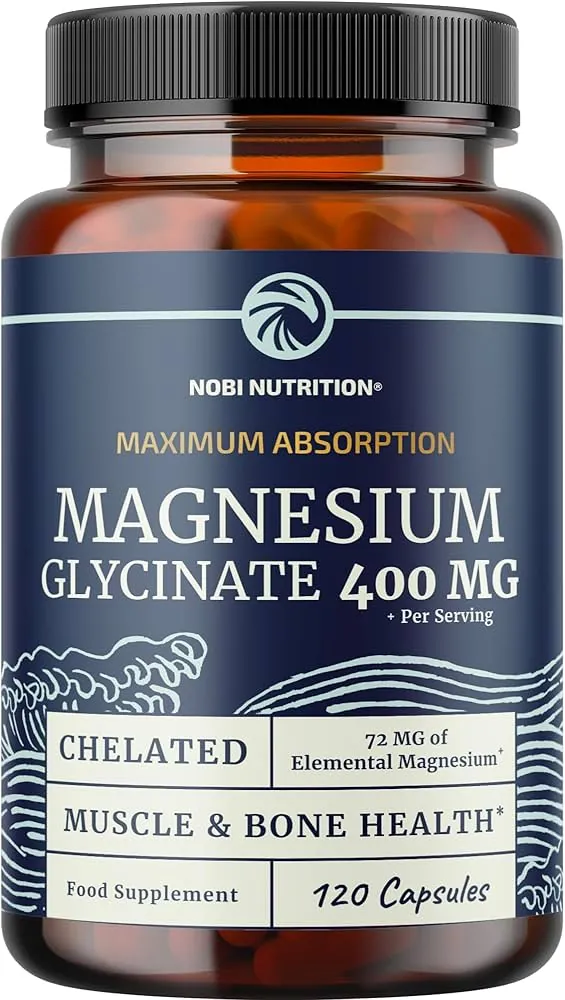
Magnesium glycinate is widely considered the preferred form for sleep and relaxation contexts due to its high bioavailability and low likelihood of causing digestive discomfort. Magnesium oxide, whilst more affordable, has poor intestinal absorption and commonly causes loose stools. Magnesium L-threonate is sometimes used for cognitive applications, though evidence for superiority in sleep contexts remains limited. When the primary goal is sleep support alongside ashwagandha, glycinate or citrate are generally the recommended forms, though individual responses may vary.
Clinical evidence suggests meaningful effects emerge over weeks rather than days. Langade et al. (2019) observed significant sleep quality improvements with ashwagandha after 10 weeks, whilst Abbasi et al. (2012) reported improved sleep efficiency with magnesium after 8 weeks of supplementation. Based on available evidence, a consistent trial period of 6–10 weeks is reasonable before assessing outcomes. Individual responses may vary depending on baseline magnesium status, existing stress levels, sleep hygiene, and lifestyle factors.
Top Ashwagandha Products on AIScored

Nutravita Organic Ashwagandha KSM-66® 500mg - Premium Full-Spectrum Root Extract - Naturally Occurring Withanolides - 60 Vegan Capsules – Certified Organic Ashwagandha Supplement - Made in the UK


Shilajit Gummies with 50% Fulvic Acid & Ashwagandha - Energy Support & Brain Health
Top Magnesium Products on AIScored

Want to check more interactions?
Add these and other supplements to our interactive Stack Analyzer for a full analysis.
Build your full stack →