Important: This page is for informational purposes only, based on published peer-reviewed research and official UK dietary guidelines (NHS, EFSA, SACN). It does not constitute medical advice. Always consult your GP or pharmacist before starting, stopping, or combining supplements.
Ashwagandha and Melatonin — Can You Take Them Together?
Overview
Ashwagandha (Withania somnifera) and melatonin are both widely used for sleep and relaxation support, making their combination one of the more commonly encountered pairings in evening supplement routines. Because each substance influences sleep-wake regulation through distinct yet overlapping pathways, their concurrent use warrants careful consideration. Research suggests that the sedative-leaning effects of each may reinforce one another — advantageous at low doses, but potentially producing stronger-than-anticipated drowsiness when standard doses of both are taken simultaneously. Individual responses may vary considerably depending on sensitivity, timing, and formulation choice.
How They Interact
Ashwagandha's sleep-promoting properties appear to stem primarily from its withanolide glycosides, which have been shown in in vitro and animal studies to modulate GABA-A receptors — the same receptor class targeted by benzodiazepines — producing calming, anxiolytic effects (Candelario et al., 2015, Journal of Ethnopharmacology). In parallel, ashwagandha root extract has been demonstrated to significantly reduce serum cortisol levels in chronically stressed adults, as shown in a double-blind randomised controlled trial by Chandrasekhar et al. (2012, Indian Journal of Psychological Medicine). Reduced evening cortisol supports the natural physiological transition into sleep. Melatonin, by contrast, acts directly on MT1 and MT2 receptors in the suprachiasmatic nucleus — the brain's circadian pacemaker — signalling sleep onset by lowering core body temperature and facilitating sleep-stage transitions. When both compounds are taken concurrently, GABAergic modulation, cortisol suppression, and direct melatonin receptor activation converge simultaneously on the sleep-wake axis, potentially amplifying sedation beyond what either compound achieves in isolation. The evidence base for this combined mechanism remains emerging, with most data drawn from single-compound trials rather than head-to-head combination studies.
Timing & Dosage Guidance
Both ashwagandha and melatonin are best suited to evening use. Research into ashwagandha's sleep benefits — including Langade et al. (2019, Cureus) — administered extract approximately one hour before bedtime, which aligns with the cortisol-reduction timeline. Melatonin is most effective when taken 30–60 minutes before the desired sleep time, coinciding with the natural rise in endogenous melatonin secretion in dim-light conditions. When combining the two, taking both together approximately 45–60 minutes before bed appears consistent with the available evidence. Daytime use of this combination is not advisable given the compounding relaxation effects, which could meaningfully impair alertness and cognitive performance during waking hours.
Standard clinical doses of ashwagandha root extract range from 300–600 mg daily of a concentrated extract (such as KSM-66 or Sensoril). Melatonin dosing in the UK context warrants particular attention: the MHRA classifies melatonin above 1 mg as a prescription-only medicine, and EFSA's authorised health claim for melatonin relates specifically to doses of 0.5 mg or 1 mg taken shortly before sleep. Research suggests low-dose melatonin (0.5–1 mg) is frequently sufficient for sleep-onset support. When combining with ashwagandha, using the lower end of the ashwagandha dose range (300 mg) alongside 0.5–1 mg melatonin represents a more cautious approach. Individual responses may vary; those new to either supplement are advised to introduce them separately before combining.
Recommended Action
If combining for sleep support, using lower doses of each is a prudent strategy. Both can be taken in the evening.
Ashwagandha Timing
When: Evening
Note: Evening preferred for stress/sleep. Can be taken morning for energy/endurance. With food to avoid GI discomfort.
Melatonin Timing
When: Evening
Note: Take 30-60 minutes before bed in dim light. Lower doses (0.5-1 mg) are often more effective than high doses. In UK, doses above 2 mg are prescription only (Circadin).
Scientific Evidence
4 peer-reviewed studies cited. All links lead to PubMed abstracts.
Cureus (2019) · PMID: 31728244
KSM-66 ashwagandha root extract (300 mg twice daily) significantly improved sleep quality, sleep onset latency, and morning alertness in adults with sleep difficulties over a 10-week period.
Indian Journal of Psychological Medicine (2012) · PMID: 23439798
Ashwagandha root extract (300 mg twice daily) significantly reduced serum cortisol levels by 27.9% compared to placebo in chronically stressed adults, supporting its role in stress-related sleep disruption.
Journal of Ethnopharmacology (2015) · PMID: 25796577
Withania somnifera extracts demonstrated direct positive allosteric modulation of GABA-A receptors, providing mechanistic evidence for the herb's calming and sleep-promoting properties.
PLOS ONE (2013) · PMID: 23691095
Melatonin significantly reduced sleep onset latency and improved total sleep time across 19 randomised trials, with effects most consistent at lower physiological doses.
Frequently Asked Questions
Current research does not identify serious safety concerns with concurrent use at typical doses, though long-term combination studies are limited. Langade et al. (2019) found ashwagandha root extract was well-tolerated over 10 weeks. Melatonin at doses up to 1 mg is considered low-risk for short-term use by UK regulatory standards. Given the additive sedation potential, daily combination use warrants a cautious approach, and it is sensible to reassess the need periodically. Individual responses may vary significantly.
The two compounds act through distinct mechanisms and are not straightforwardly interchangeable. Melatonin directly cues the circadian system, making it particularly useful for jet lag or shift-work disruption. Ashwagandha addresses stress-related sleep impairment through cortisol reduction and GABAergic modulation (Chandrasekhar et al., 2012). For general sleep quality in otherwise healthy adults, ashwagandha may be sufficient as a standalone. The appropriate choice depends on the underlying cause of disrupted sleep, and individual responses may vary considerably.
Morning grogginess — sometimes termed sleep inertia — is a reported side effect of melatonin, particularly at higher doses. A meta-analysis by Ferracioli-Oda et al. (2013, PLOS ONE) noted that melatonin's sleep-onset effect is generally short-lived, though residual effects may occur in sensitive individuals. Ashwagandha's cortisol-lowering action could potentially prolong this feeling. Starting with low doses of each — 300 mg ashwagandha and 0.5 mg melatonin — and timing intake 45–60 minutes before bed helps minimise next-morning carryover.
Top Ashwagandha Products on AIScored

Nutravita Organic Ashwagandha KSM-66® 500mg - Premium Full-Spectrum Root Extract - Naturally Occurring Withanolides - 60 Vegan Capsules – Certified Organic Ashwagandha Supplement - Made in the UK


Shilajit Gummies with 50% Fulvic Acid & Ashwagandha - Energy Support & Brain Health
Top Melatonin Products on AIScored

Sleep PAQ Natural Sleep Aid – 60 Vegan Capsules – Magnesium, L-Theanine, Passion Flower, Cherry – Non-Habit Forming, No Melatonin – Clinically Dosed for Sleep, Recovery & Relaxation

The Sleep Optimiser Sleeping Capsules - Non Melatonin Tablets Sleep Supplement for Adults with Magnesium Glycinate, L Theanine, Apigenin & Zinc - Nutrient-Based Sleeping Aid Suitable for Long Term Use
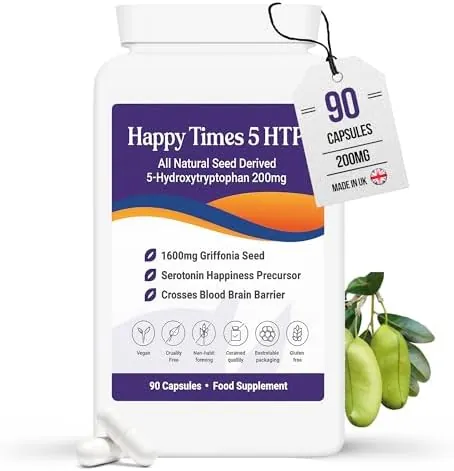
Happy Times Double Strength 5-HTP Supplement (200mg) Amino Acid 5 Hydroxytryptophan -Serotonin Melatonin Happiness Hormone Precursor Natural Griffonia Seed Extract Herbal Healthy Sleeping
Want to check more interactions?
Add these and other supplements to our interactive Stack Analyzer for a full analysis.
Build your full stack →