Important: This page is for informational purposes only, based on published peer-reviewed research and official UK dietary guidelines (NHS, EFSA, SACN). It does not constitute medical advice. Always consult your GP or pharmacist before starting, stopping, or combining supplements.
Biotin and Collagen — Can You Take Them Together?
Overview
Biotin (vitamin B7) and collagen peptides are among the most widely sold supplements in the UK beauty category, both targeting hair, skin, and nail health. Despite being frequently marketed together, they work through entirely distinct biological mechanisms — biotin supports keratin protein infrastructure, whilst collagen supplies the structural amino acids needed to rebuild dermal connective tissue. This complementary action means combining the two may address the same aesthetic goals through parallel pathways, and evidence supports classifying this pairing as a moderate synergy. Individual responses may vary depending on baseline nutritional status and diet.
How They Interact
Biotin functions as an essential cofactor for four carboxylase enzymes — acetyl-CoA carboxylase, propionyl-CoA carboxylase, 3-methylcrotonyl-CoA carboxylase, and pyruvate carboxylase. These enzymes are critical for fatty acid synthesis and branched-chain amino acid catabolism, processes that underpin keratin biosynthesis. Keratin is the primary structural protein of hair shafts and nail plates; insufficient biotin activity impairs normal keratin formation, contributing to brittle nails and hair fragility as observed clinically by Colombo et al. (1990, PMID 2273113), who recorded a 25% increase in nail thickness following biotin supplementation. Collagen peptides operate through a separate mechanism. When ingested as hydrolysed peptides, they are absorbed in the small intestine as di- and tripeptides, transported to dermal fibroblasts, and stimulate endogenous production of type I collagen, elastin, and fibrillin. Proksch et al. (2014, PMID 23949208) demonstrated measurable increases in dermal matrix components following eight weeks of oral collagen supplementation. Because biotin acts on the keratin axis whilst collagen peptides act on the extracellular matrix and connective tissue axis, the two mechanisms are complementary rather than redundant.
Timing & Dosage Guidance
Research does not indicate any requirement to separate biotin and collagen peptide intake. Both can be taken simultaneously and are commonly co-formulated in beauty supplement blends. Collagen peptides are optimally supported alongside vitamin C, which serves as a cofactor for the prolyl hydroxylase enzyme involved in collagen cross-linking, so pairing your combined supplement with a vitamin C-containing food or drink is a practical consideration. Biotin is a water-soluble B-vitamin and can be consumed at any time of day, with or without food. There is no clinical evidence suggesting one must be taken apart from the other to preserve efficacy.
In published clinical trials, collagen peptides have typically been studied at 2.5 g to 10 g of hydrolysed peptides per day. Proksch et al. (2014) and Hexsel et al. (2017) both used 2.5 g daily and recorded statistically significant outcomes for skin and nail endpoints respectively. EFSA has not established an RDA for collagen as it can be synthesised endogenously. For biotin, the EU Adequate Intake is 40 mcg per day for adults; commercially available beauty supplements frequently contain 1,000–10,000 mcg, considerably above this. EFSA has not established an Upper Tolerable Intake Level for biotin due to its low acute toxicity, though high supplemental doses are known to interfere with certain thyroid and troponin immunoassay tests, a consideration worth discussing with a GP. Individual responses may vary.
Recommended Action
These can be taken together. Often combined in beauty supplement formulas.
Biotin Timing
When: Any
Note: Water-soluble. High doses (>5,000 mcg) can interfere with blood tests — inform your doctor.
Collagen Timing
When: Any
Note: Can be taken any time. Often mixed into coffee, smoothies, or water. Pair with vitamin C to support collagen synthesis.
Scientific Evidence
4 peer-reviewed studies cited. All links lead to PubMed abstracts.
Skin Pharmacology and Physiology (2014) · PMID: 23949208
Oral intake of 2.5 g or 5.0 g of collagen hydrolysate for 8 weeks significantly improved skin elasticity versus placebo in women aged 35–55, with effects persisting four weeks post-supplementation.
Skin Pharmacology and Physiology (2014) · PMID: 24401291
Daily 2.5 g bioactive collagen peptide supplementation for 8 weeks produced a 20% reduction in eye wrinkle volume and a 65% increase in procollagen type I content in skin biopsies compared to placebo.
Journal of Cosmetic Dermatology (2017) · PMID: 28786550
Twenty-four weeks of daily 2.5 g collagen peptide supplementation increased nail growth rate by 12% and reduced the frequency of broken nails by 42%, with 88% of participants reporting improvement.
International Journal of Trichology (2016) · PMID: 27601860
Biotin deficiency was identified in 38% of women presenting with hair loss, indicating that adequate biotin status is relevant to hair health outcomes and that supplementation should be targeted to those with confirmed deficiency.
Frequently Asked Questions
Research does not identify any interaction between biotin and collagen peptides that would make concurrent use problematic. The two nutrients have distinct absorption pathways — biotin is absorbed via a sodium-dependent multivitamin transporter in the small intestine, whilst collagen peptides are digested into small peptides and free amino acids prior to absorption. There is no known competition between these routes. Combined formulations are widely available and have been used in clinical studies without reported adverse interactions between these two ingredients.
Both have independent clinical support for nail health, though they address different aspects. Colombo et al. (1990, PMID 2273113) found biotin supplementation increased nail plate thickness by 25% in brittle nail sufferers. Hexsel et al. (2017, PMID 28786550) found 2.5 g daily collagen peptides reduced broken nail frequency by 42% over 24 weeks. Because the two nutrients support different structural proteins — keratin versus collagen — combining them may address nail integrity more broadly than either alone, though direct head-to-head comparisons are lacking.
Clinical studies offer useful reference points. Proksch et al. (2014, PMID 23949208) observed significant skin elasticity improvements after eight weeks of collagen supplementation, whilst Hexsel et al. (2017, PMID 28786550) noted nail growth improvements after 24 weeks. Biotin studies similarly report outcomes after weeks to months of consistent use. Hair and nail growth cycles are inherently slow, and most researchers suggest a minimum of eight to twelve weeks before assessing efficacy. Individual responses may vary considerably based on baseline nutrient status and diet.
Top Biotin Products on AIScored


Top Collagen Products on AIScored

Advanced Hydrolysed Marine Liquid Collagen Couples Supply (2x 28-Day Supply)
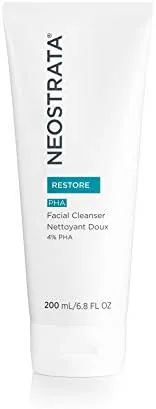
NEOSTRATA RESTORE PHA Hydrating Gel Facial Cleanser; Sensitive Skin Exfoliating Blackhead Remover; Pore Minimizer; Acne Face Wash Makeup Remover with Glycine for Collagen & Polyhydroxy Acid, 6.8 oz
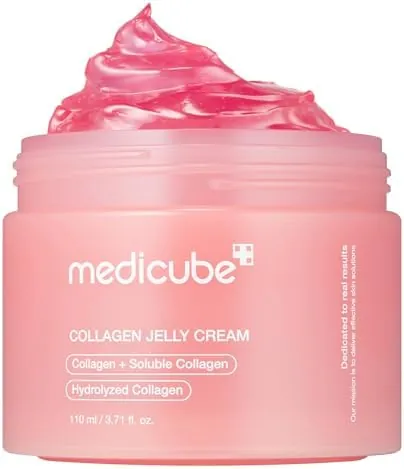
medicube Collagen Jelly Cream- Niacinamide & Freeze-Dried Hydrolyzed Collagen-Boosts skin barrier hydration & gives 24h Glow & Firmer looking skin
Want to check more interactions?
Add these and other supplements to our interactive Stack Analyzer for a full analysis.
Build your full stack →