Important: This page is for informational purposes only, based on published peer-reviewed research and official UK dietary guidelines (NHS, EFSA, SACN). It does not constitute medical advice. Always consult your GP or pharmacist before starting, stopping, or combining supplements.
Copper and Zinc — Can You Take Them Together?
Overview
Zinc and copper are both essential trace minerals that share intestinal absorption pathways, making their interaction one of the most clinically significant in nutritional science. Long-term supplementation with elevated zinc doses — particularly above 25mg daily — can progressively deplete copper stores, a relationship well-documented in peer-reviewed literature since the 1980s. For most people taking standard zinc doses aligned with UK Reference Nutrient Intakes (9.5mg for men, 7mg for women), this interaction poses little concern. However, those using higher therapeutic doses over extended periods should understand how these minerals compete for absorption, and why copper status may warrant attention. Individual responses may vary depending on dietary copper intake and baseline mineral status.
How They Interact
The primary mechanism centres on metallothionein (MT), a family of cysteine-rich intracellular proteins synthesised in intestinal enterocytes — the absorptive cells lining the gut wall. Zinc is a potent inducer of metallothionein gene expression: as zinc intake rises, enterocytes upregulate MT production to sequester the excess mineral. The critical issue is that metallothionein binds copper with significantly greater affinity than zinc. When enterocytes undergo their natural shedding cycle — typically every three to five days — the copper trapped within intracellular metallothionein is lost in faeces rather than entering systemic circulation. Fischer et al. (1981, American Journal of Clinical Nutrition) demonstrated in human subjects that progressively increasing dietary zinc reduced copper absorption via this mechanism. Over weeks to months of sustained elevated zinc intake, this process can deplete body copper stores. EFSA's 2014 scientific opinion on zinc acknowledged this interaction in its risk assessment, noting that high supplemental zinc intakes can compromise copper status. The depletion may ultimately manifest as copper deficiency anaemia, neurological changes, and impaired immune function — all documented as reversible upon reducing zinc and restoring copper levels.
Timing & Dosage Guidance
Research suggests that separating zinc and copper supplementation by at least two hours may partially attenuate competitive absorption at intestinal transporter sites, as this reduces the likelihood of both minerals simultaneously saturating shared pathways including the ZIP4 and CTR1 transporters. A practical approach noted in nutritional literature is to take zinc in the evening and copper in the morning, or vice versa. However, timing alone cannot fully counteract the metallothionein-mediated mechanism, which operates over a slower biological timescale than single-dose competition. Studies indicate that consistent daily separation is more protective than occasional timing adjustments. For those taking zinc above 25mg daily long-term, timing is a useful adjunct — not a substitute for monitoring copper status or appropriate co-supplementation.
The UK Expert Group on Vitamins and Minerals (EVM, 2003) established a Safe Upper Level for zinc of 25mg/day in adults, above which copper depletion risk becomes clinically meaningful. The NHS advises that taking more than 25mg of supplemental zinc daily may cause adverse effects including disruption to copper metabolism. For those using higher therapeutic doses (typically 15–40mg for immune support or skin health), nutritional literature commonly references a copper-to-zinc ratio of approximately 1mg copper per 10–15mg zinc as a guiding principle. UK dietary survey data (NDNS) indicates average adult dietary copper intake of approximately 1.3mg/day — close to the UK Reference Nutrient Intake of 1.2mg — meaning supplemental copper at 1–2mg may be warranted when zinc consistently exceeds 25mg daily. Individual responses may vary based on food sources and health status.
Recommended Action
If taking zinc above 25mg daily long-term, research supports monitoring copper status or taking a small copper supplement (1-2mg).
Copper Timing
When: Any
Note: Take with food. Must balance with zinc — high zinc intake depletes copper. Typical ratio: 15 mg zinc to 1-2 mg copper.
Zinc Timing
When: Morning
Note: Take with food to prevent nausea. Away from iron and calcium supplements.
Scientific Evidence
3 peer-reviewed studies cited. All links lead to PubMed abstracts.
American Journal of Clinical Nutrition (1981) · PMID: 7234738
Demonstrated in human subjects that progressively increasing dietary zinc reduced copper absorption, providing foundational mechanistic evidence for the zinc–copper antagonism mediated by metallothionein induction in intestinal enterocytes.
Gastroenterology (1988) · PMID: 3338302
Reported clinical cases of reversible copper deficiency — including anaemia and neurological symptoms — in patients taking high-dose zinc supplementation, which resolved upon zinc reduction and copper repletion.
American Journal of Clinical Nutrition (1995) · PMID: 7661126
Reviewed the dose-dependent relationship between zinc intake and copper status, highlighting that long-term supplemental zinc above physiological requirements poses a substantive risk of copper depletion in human populations.
Frequently Asked Questions
Research suggests that simultaneous intake is not optimal, as both minerals compete for the same intestinal absorption pathways. Separating intake by at least two hours is the approach most frequently cited in nutritional science literature. That said, if zinc doses consistently exceed 25mg daily over the long term, adding a small copper supplement (1–2mg) is likely more important than timing alone, based on findings from clinical studies of zinc-induced copper depletion. Individual responses may vary.
Clinical copper deficiency from excess zinc can present as fatigue, anaemia (often normocytic or microcytic and unresponsive to iron therapy), peripheral neuropathy, and impaired immune function. Hoffman et al. (1988, Gastroenterology) documented reversible copper deficiency in patients taking high-dose zinc, with recovery following zinc withdrawal and copper repletion. Serum copper and caeruloplasmin are the most reliable laboratory markers. Individual responses may vary — these symptoms are not diagnostic without formal clinical assessment by a healthcare professional.
For most people taking zinc within the UK Reference Nutrient Intake range (7–9.5mg/day) or standard supplement doses of 10–15mg for short periods, this interaction is unlikely to be clinically significant. Research indicates that sustained intake above 25mg/day — the EVM Safe Upper Level — is where copper depletion becomes a meaningful risk. Those using high-dose zinc over extended periods, such as for acne management, immune support, or hormonal health, represent the primary group for whom copper status monitoring may be relevant.
Top Copper Products on AIScored
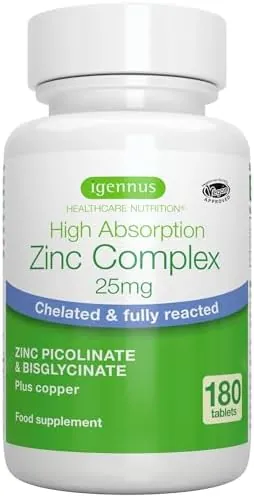
Igennus Clean Chelated Zinc Picolinate & Bisglycinate Complex 25mg with Copper, 6 Month Supply 180 Tablets, High Absorption & Lab Verified, Non-GMO, Supplement for Men & Women, Immune Support & Skin
Top Zinc Products on AIScored
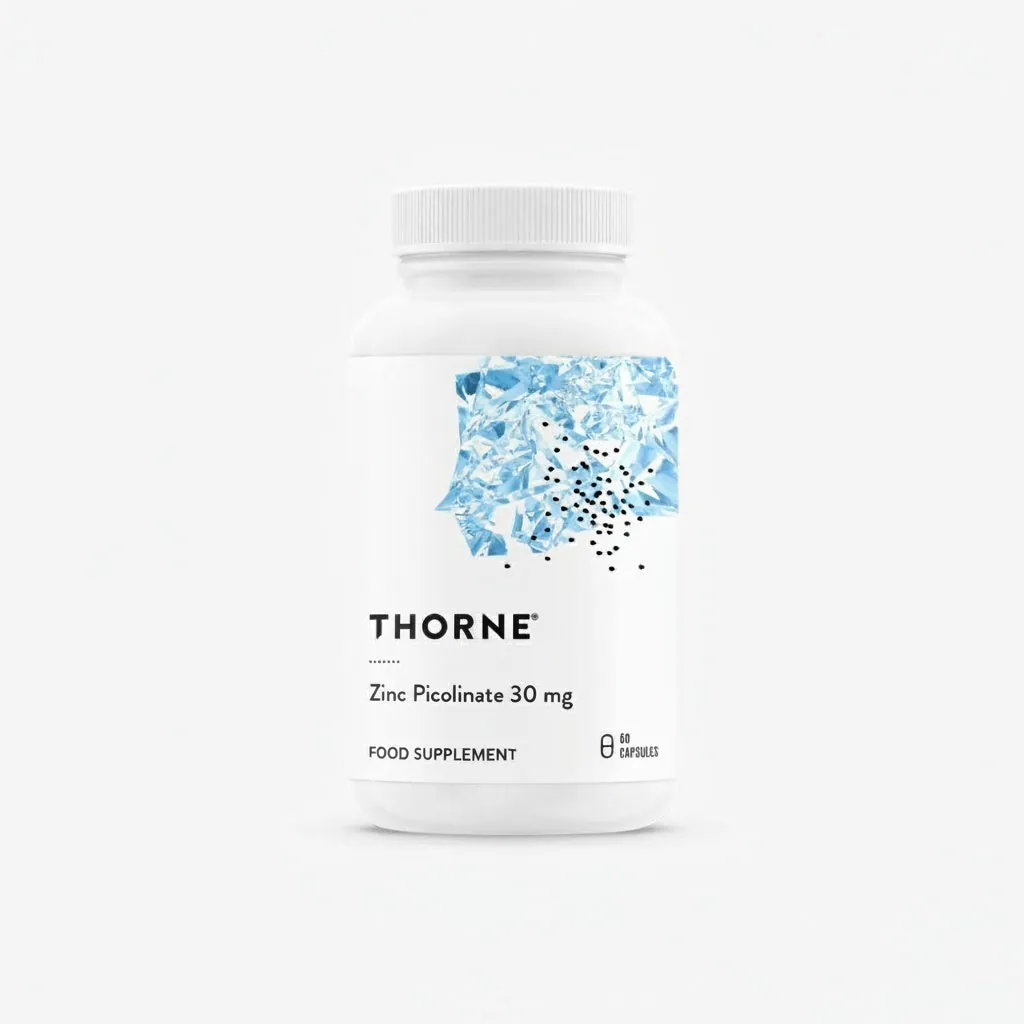
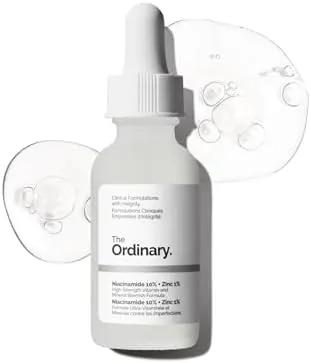
The Ordinary Niacinamide 10% + Zinc 1%, Brightening & Smoothing Serum for Blemish-Prone Skin, 30ml
Want to check more interactions?
Add these and other supplements to our interactive Stack Analyzer for a full analysis.
Build your full stack →