Important: This page is for informational purposes only, based on published peer-reviewed research and official UK dietary guidelines (NHS, EFSA, SACN). It does not constitute medical advice. Always consult your GP or pharmacist before starting, stopping, or combining supplements.
Ashwagandha — Forms, Dosage & Interactions
Also known as: withania somnifera, ksm-66, sensoril, indian ginseng, winter cherry
Overview
Ashwagandha (Withania somnifera) is a root herb native to India and North Africa, used in Ayurvedic medicine for over 3,000 years as a rasayana — a rejuvenating tonic intended to promote vitality and resilience. In the UK, it is sold under names including Indian ginseng and winter cherry, and has become one of the most commercially prominent herbal supplements in the market. It is classified as an adaptogen: a compound thought to help the body modulate its physiological response to stress rather than producing a single, targeted pharmacological effect. Unlike many botanical supplements where clinical evidence is sparse, ashwagandha has been evaluated in multiple randomised controlled trials. A landmark 2012 double-blind, placebo-controlled study (Chandrasekhar et al., Indian Journal of Psychological Medicine) found that 600 mg of a high-concentration root extract daily reduced serum cortisol by 27.9% and produced significant improvements on validated stress-assessment scales versus placebo at 60 days. Research also suggests benefits for sleep support, physical performance, and male reproductive health. The overall evidence base is considered strong relative to most botanical ingredients, though the majority of trials are 8–12 weeks in duration, and long-term data remain limited. Individual responses may vary.
UK Dosage Guidelines
| Guideline | Value | Source |
|---|---|---|
|
Reference Nutrient Intake (RNI)
The amount sufficient for most people |
No established RDA | NHS / SACN |
Forms Comparison
Ashwagandha is available in several supplemental forms. Bioavailability and suitability vary.
| Form Name | Bioavailability | Notes |
|---|---|---|
| KSM-66 (Root Extract) | high | Full-spectrum root extract, 5% withanolides, most clinically studied form |
| Sensoril (Root + Leaf Extract) | high | Standardised to 10% withanolides, more potent per mg, calming profile |
| Raw Root Powder | low | Unextracted, requires higher doses (3-6 g), less consistent potency |
When to Take Ashwagandha
Recommended Time
🌙 Evening — research suggests taking Ashwagandha in the evening
Additional Notes
Evening preferred for stress/sleep. Can be taken morning for energy/endurance. With food to avoid GI discomfort.
With or Without Food
Research suggests taking Ashwagandha with food for better absorption.
Known Interactions
7 known interactions with other supplements.
Ashwagandha and magnesium may have complementary effects on stress and sleep. Both are associated with cortisol reduction and relaxation through different pathways.
Action: This combination is commonly used in evening routines for relaxation. Magnesium glycinate in the evening pairs well with ashwagandha.
Read full analysis →Both are classified as adaptogens. Research suggests they may support stress resilience through complementary mechanisms — rhodiola primarily through stimulating pathways, ashwagandha through calming ones.
Action: Some practitioners combine a morning rhodiola dose (for energy/focus) with an evening ashwagandha dose (for relaxation/sleep).
Read full analysis →Both L-theanine and ashwagandha may support relaxation and stress reduction through different mechanisms. Research suggests they can be complementary in an anxiolytic stack.
Action: This combination is popular for daytime stress management without sedation. L-theanine provides calm focus while ashwagandha addresses cortisol.
Read full analysis →Both ashwagandha and valerian have sedating properties. Research suggests their combined use may enhance sedation, which is beneficial for sleep but may cause excessive drowsiness.
Action: If combining, evening use for sleep support is most appropriate. Individuals sensitive to sedation may want to start with one and assess tolerance before combining.
Read full analysis →Ginseng is a stimulating adaptogen while ashwagandha is calming. Research suggests they can be complementary if timed appropriately, but simultaneous use may produce conflicting effects.
Action: Some protocols use ginseng in the morning (for energy) and ashwagandha in the evening (for relaxation). Combining both at the same time may produce unpredictable results.
Read full analysis →Both ashwagandha and L-tryptophan may support serotonin-related pathways. Research suggests they can be complementary for mood and sleep support.
Action: This combination is sometimes used for evening relaxation and sleep support. Both can be taken in the evening.
Read full analysis →Both ashwagandha and melatonin can promote sleepiness. Research suggests their combined use may enhance sedation, which is beneficial for sleep but should be dosed carefully.
Action: If combining for sleep support, using lower doses of each is a prudent strategy. Both can be taken in the evening.
Read full analysis →Key Studies
1 peer-reviewed study cited. All links lead to PubMed abstracts.
Indian J Psychol Med (2012) · PMID: 23439798
300 mg KSM-66 twice daily reduced cortisol by 27.9% and significantly lowered stress scores vs placebo
Top Ashwagandha Products on AIScored
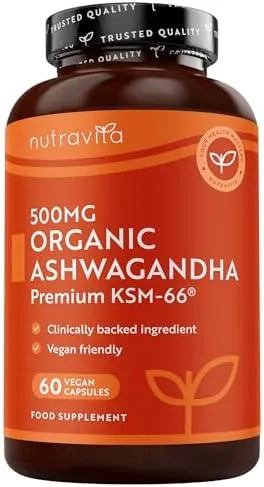
Nutravita Organic Ashwagandha KSM-66® 500mg - Premium Full-Spectrum Root Extract - Naturally Occurring Withanolides - 60 Vegan Capsules – Certified Organic Ashwagandha Supplement - Made in the UK


Shilajit Gummies with 50% Fulvic Acid & Ashwagandha - Energy Support & Brain Health

Check interactions with your other supplements
Add Ashwagandha to our interactive Stack Analyzer and see how it works with everything else you take.
Add Ashwagandha to your stack →Related Ingredients
Frequently Asked Questions
Most clinical trials report measurable outcomes after 8–12 weeks of consistent daily use. The 2012 Chandrasekhar et al. trial observed significant reductions in cortisol and validated stress scores at the 60-day mark. Some individuals report subjective changes earlier, but individual responses vary considerably. Ashwagandha is not a fast-acting supplement and is best assessed over a sustained period rather than after a few days.
Available trial data suggest ashwagandha is generally well tolerated for short-term use up to 12 weeks. Safety data beyond this window are limited. Rare cases of liver injury have been reported in published case reports, though direct causality has not been definitively established across all cases. Individuals with pre-existing liver conditions or those taking hepatotoxic medications should exercise particular caution. Any suspected adverse reactions should be reported to the MHRA via the Yellow Card scheme.
KSM-66 is derived solely from the root and standardised to a minimum of 5% withanolides; it has the most extensive clinical trial record for stress management and physical performance outcomes, typically dosed at 300–600 mg daily. Sensoril uses both root and leaf material, standardised to 10% withanolides, and is dosed lower (125–250 mg) due to its higher potency per milligram. Both forms exhibit good bioavailability; the appropriate choice may depend on target outcome and individual tolerability.