Important: This page is for informational purposes only, based on published peer-reviewed research and official UK dietary guidelines (NHS, EFSA, SACN). It does not constitute medical advice. Always consult your GP or pharmacist before starting, stopping, or combining supplements.
Collagen — Forms, Dosage & Interactions
Also known as: hydrolysed collagen, collagen peptides, marine collagen, bovine collagen, type i collagen, type ii collagen
Overview
Collagen is the most abundant protein in the human body, constituting approximately 30% of total protein mass and forming the structural framework of skin, bones, cartilage, tendons, and ligaments. At least 28 distinct types have been identified, though Types I, II, and III account for the vast majority present in human tissue. Research suggests endogenous collagen production declines at roughly 1% per year from early adulthood, with more pronounced loss occurring post-menopause, which has driven considerable interest in supplementation. Most commercial supplements use hydrolysed collagen peptides — enzymatically pre-digested fragments offering high bioavailability — sourced from marine (fish) or bovine (cow) tissue. UC-II, an undenatured Type II collagen, operates via a distinct immunological mechanism at a much lower dose and is studied primarily for joint-related outcomes. The evidence base is most robust for skin health. A 2019 systematic review in the Journal of Drugs in Dermatology (Choi et al., PMID 30681787) found consistent improvements in skin elasticity, hydration, and dermal collagen density across multiple randomised controlled trials using 2.5–10 g/day. Evidence for joint support, bone density, and muscle recovery exists but remains more preliminary. No UK health authority currently endorses collagen supplementation for any specific condition. Individual responses may vary.
UK Dosage Guidelines
| Guideline | Value | Source |
|---|---|---|
|
Reference Nutrient Intake (RNI)
The amount sufficient for most people |
No established RDA | NHS / SACN |
Forms Comparison
Collagen is available in several supplemental forms. Bioavailability and suitability vary.
| Form Name | Bioavailability | Notes |
|---|---|---|
| Hydrolysed Collagen Peptides | high | Broken down for absorption, versatile, dissolves in liquids |
| Marine Collagen | high | From fish, primarily Type I, smaller peptides for potentially better absorption |
| Bovine Collagen | high | From cows, Types I and III, well-studied |
| UC-II (Undenatured Type II) | high | Low-dose (40 mg) for joint health via immune modulation, different mechanism |
When to Take Collagen
Recommended Time
🕑 Any — can be taken at this time
Additional Notes
Can be taken any time. Often mixed into coffee, smoothies, or water. Pair with vitamin C to support collagen synthesis.
With or Without Food
Research suggests taking Collagen on an empty stomach for optimal absorption.
Known Interactions
4 known interactions with other supplements.
Vitamin C is an essential cofactor for collagen synthesis. Research indicates that without adequate Vitamin C, the body cannot properly hydroxylate proline and lysine residues needed for stable collagen formation.
Action: Taking collagen supplements alongside Vitamin C may support the body's ability to utilise the supplemental collagen peptides.
Read full analysis →Biotin and collagen are both commonly used for hair, skin, and nail health. Research suggests they support these tissues through different mechanisms.
Action: These can be taken together. Often combined in beauty supplement formulas.
Read full analysis →Zinc plays a role in collagen synthesis and wound healing. Research suggests adequate zinc is important for the body to effectively utilise supplemental collagen.
Action: These can be taken together for skin health and wound healing support.
Read full analysis →Certain amino acids in collagen (particularly glycine) may form complexes with iron that affect absorption. Research on this specific interaction is limited.
Action: If taking both, separating them by an hour may be prudent, though the clinical significance at typical doses is uncertain.
Read full analysis →Key Studies
1 peer-reviewed study cited. All links lead to PubMed abstracts.
J Drugs Dermatol (2019) · PMID: 30681787
Collagen peptides (2.5-10 g/day) improved skin elasticity, hydration, and dermal collagen density in RCTs
Top Collagen Products on AIScored

Advanced Hydrolysed Marine Liquid Collagen Couples Supply (2x 28-Day Supply)
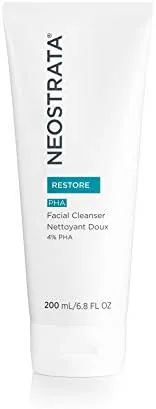
NEOSTRATA RESTORE PHA Hydrating Gel Facial Cleanser; Sensitive Skin Exfoliating Blackhead Remover; Pore Minimizer; Acne Face Wash Makeup Remover with Glycine for Collagen & Polyhydroxy Acid, 6.8 oz

medicube Collagen Jelly Cream- Niacinamide & Freeze-Dried Hydrolyzed Collagen-Boosts skin barrier hydration & gives 24h Glow & Firmer looking skin

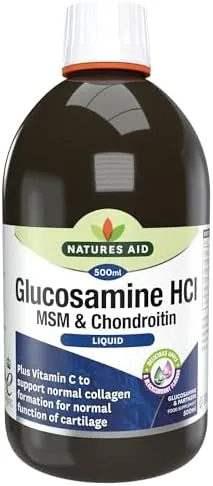
Natures Aid Glucosamine MSM & Chondroitin with Vitamin C Liquid 500ml - High Strength Joint Support - Mobility & Cartilage Health, Collagen Formation, Non-GMO, Gluten-Free Supplement
Check interactions with your other supplements
Add Collagen to our interactive Stack Analyzer and see how it works with everything else you take.
Add Collagen to your stack →Related Ingredients
Frequently Asked Questions
Marine collagen is sourced from fish skin and scales, primarily supplying Type I collagen with relatively small peptide sizes that may support efficient absorption. Bovine collagen, derived from cow hides and connective tissue, provides both Type I and Type III collagen and features in many published clinical trials. Both forms have demonstrated bioavailability in human studies. Marine collagen may suit pescatarians, while bovine is unsuitable for vegans or those with religious dietary restrictions. Individual responses may vary.
Research suggests some benefit, particularly from UC-II (undenatured Type II collagen) at approximately 40 mg/day. Unlike hydrolysed peptides, UC-II is thought to work via oral tolerisation — modulating immune responses in joint tissue rather than directly supplying collagen precursors. Studies of hydrolysed peptides for joint outcomes show more variable results. Evidence overall remains preliminary and most trials are short-duration. Collagen is not a substitute for prescribed treatments, and individual responses may vary considerably.
Most clinical trials demonstrating skin improvements ran for 8–12 weeks at doses of 2.5–10 g/day, with some extending to 24 weeks. Research by Proksch et al. (Skin Pharmacol Physiol, 2014) found measurable improvements in skin elasticity after 8 weeks of supplementation. Effects on bone density have been studied over 12-month periods (König et al., Nutrients, 2018). Given the slow turnover of structural proteins, shorter supplementation periods may be insufficient to produce detectable outcomes. Individual responses may vary.