Important: This page is for informational purposes only, based on published peer-reviewed research and official UK dietary guidelines (NHS, EFSA, SACN). It does not constitute medical advice. Always consult your GP or pharmacist before starting, stopping, or combining supplements.
CoQ10 — Forms, Dosage & Interactions
Also known as: coenzyme q10, ubiquinone, ubiquinol, coq-10
Overview
Coenzyme Q10 (CoQ10) is a fat-soluble, vitamin-like compound present in virtually every human cell, with the highest concentrations in energy-demanding tissues such as the heart, liver, and skeletal muscle. It exists in two interconvertible forms: ubiquinone (oxidised) and ubiquinol (reduced/active). While the body synthesises CoQ10 endogenously, production declines progressively from around the third decade of life, which has driven research interest into supplementation — particularly in the context of cardiovascular health and age-related energy metabolism. People supplement with CoQ10 for several reasons: to support cellular energy production, as a lipid-soluble antioxidant, to potentially offset statin-induced depletion of endogenous CoQ10, and for cardiovascular support. The strongest evidence concerns chronic heart failure, where the Q-SYMBIO trial (Mortensen et al., JACC Heart Fail, 2014; PMID 25282031) demonstrated a 43% reduction in cardiovascular mortality at 300 mg/day over two years. Evidence also exists for migraine prevention and blood pressure management, though effect sizes are more modest. There is no established UK Reference Nutrient Intake (RNI) for CoQ10, as it is not classified as an essential nutrient. The European Food Safety Authority (EFSA) has not approved any health claims for CoQ10. Nevertheless, it remains one of the most extensively researched specialty supplements, with a well-characterised safety profile at typical supplemental doses of 100–300 mg/day.
UK Dosage Guidelines
| Guideline | Value | Source |
|---|---|---|
|
Reference Nutrient Intake (RNI)
The amount sufficient for most people |
No established RDA | NHS / SACN |
Forms Comparison
CoQ10 is available in several supplemental forms. Bioavailability and suitability vary.
| Form Name | Bioavailability | Notes |
|---|---|---|
| Ubiquinone | moderate | Oxidised form, body must convert to ubiquinol, cheaper |
| Ubiquinol | high | Reduced/active form, better absorbed — especially for over-40s whose conversion declines |
When to Take CoQ10
Recommended Time
☀️ Morning — research suggests taking CoQ10 in the morning
Additional Notes
Fat-soluble — take with a meal containing fat. Morning preferred as it supports cellular energy production. Statin users should especially consider supplementation.
With or Without Food
Research suggests taking CoQ10 with food for better absorption.
Known Interactions
5 known interactions with other supplements.
CoQ10 and omega-3 fatty acids may have complementary cardiovascular benefits. Research suggests both support heart function through different mechanisms.
Action: Taking CoQ10 with omega-3 (or any fat source) may improve CoQ10 absorption, as it is fat-soluble.
Read full analysis →CoQ10 and Vitamin E work together in the mitochondrial membrane as antioxidants. Research suggests CoQ10 can regenerate Vitamin E, similar to Vitamin C's role.
Action: Both are fat-soluble and can be taken together with a meal containing fat for improved absorption.
Read full analysis →Both CoQ10 and magnesium are important for cellular energy production. Research suggests they support mitochondrial function through complementary mechanisms.
Action: These can be taken together with a meal. CoQ10 is fat-soluble, so a meal with some fat is preferred.
Read full analysis →Pantothenic acid (B5) is a precursor to Coenzyme A, which is involved in CoQ10 biosynthesis. Research suggests adequate B5 may support the body's CoQ10 production.
Action: These can be taken together. Both support energy metabolism.
Read full analysis →Both CoQ10 and creatine support cellular energy production through the ATP system. Research suggests they may have complementary benefits for mitochondrial function.
Action: Both can be taken together with a meal. CoQ10 benefits from a fat-containing meal for absorption.
Read full analysis →Key Studies
1 peer-reviewed study cited. All links lead to PubMed abstracts.
JACC Heart Fail (2014) · PMID: 25282031
CoQ10 (300 mg/day) reduced cardiovascular mortality by 43% in heart failure patients over 2 years
Top CoQ10 Products on AIScored
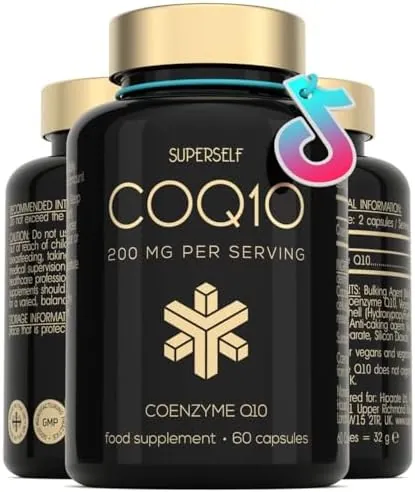
CoQ10 Supplement - Coenzyme Q10 High Strength 200mg - 60 Capsules - Vegan Naturally Fermented Ubiquinone - Co Enzyme CQ10 High Absorption - UK Made
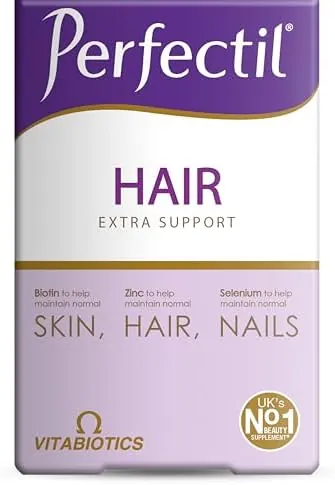
Perfectil Hair Beauty Supplement for Hair - Includes Biotin, CoQ10 & Collagen, 60 Tablets 30-Day Supply, by Vitabiotics
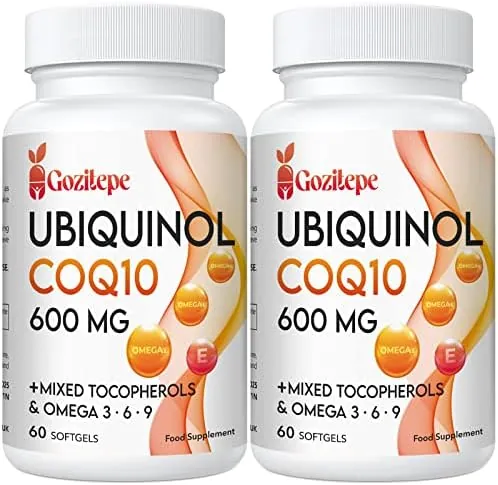
Ubiquinol CoQ10 600mg Softgels with Omega 3, 6, 9 & Vitamin E, 30 Servings Coenzyme Q10 (Active Antioxidant Form) for Higher Absorption, Heart & Energy Production, 60 Count(Pack of 2)
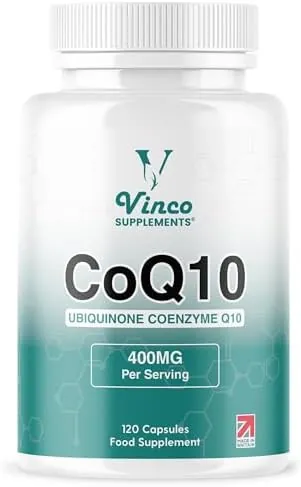
Vinco CoQ10 400mg - 120 High Strength Ubiquinone Coenzyme Q10 Capsules - Antioxidant for Heart & Cardio, Increased Energy & Focus - Naturally Fermented - Non-GMO & Gluten Free - UK Made
Check interactions with your other supplements
Add CoQ10 to our interactive Stack Analyzer and see how it works with everything else you take.
Add CoQ10 to your stack →Related Ingredients
Frequently Asked Questions
Ubiquinone is the oxidised form commonly found in supplements; the body must convert it to ubiquinol (the active, reduced form) before use. Research suggests this conversion becomes less efficient with age, leading to the view that ubiquinol may offer better bioavailability for adults over 40. That said, most large clinical trials — including Q-SYMBIO — used ubiquinone and demonstrated significant outcomes. Individual responses may vary, and ubiquinol supplements typically carry a higher price premium.
Statins inhibit HMG-CoA reductase, an enzyme involved in the endogenous synthesis of both cholesterol and CoQ10. Studies indicate that statin use is associated with reduced plasma CoQ10 levels. Whether supplementation reliably alleviates statin-associated muscle symptoms (myalgia) remains debated — some trials report benefit whilst others do not. If you are taking statins and experiencing muscle discomfort, speak with your GP before starting CoQ10, as this warrants clinical assessment.
As a fat-soluble compound, CoQ10 absorption is substantially improved when taken alongside a meal containing dietary fat. Research suggests that dividing the daily dose — for example, 100 mg twice daily rather than 200 mg in a single dose — may improve plasma levels, as absorption appears to plateau at higher single doses. Softgel or emulsified formulations generally demonstrate superior bioavailability compared to standard powder-filled capsules in comparative pharmacokinetic studies. Individual responses may vary.