Important: This page is for informational purposes only, based on published peer-reviewed research and official UK dietary guidelines (NHS, EFSA, SACN). It does not constitute medical advice. Always consult your GP or pharmacist before starting, stopping, or combining supplements.
Glucosamine — Forms, Dosage & Interactions
Also known as: glucosamine sulfate, glucosamine hcl, glucosamine hydrochloride
Overview
Glucosamine is a naturally occurring amino sugar found in cartilage, synovial fluid, and connective tissues throughout the body. It serves as a key precursor to glycosaminoglycans — the structural molecules that give cartilage its load-bearing and lubricating properties. Although the body can synthesise glucosamine endogenously from glucose and the amino acid glutamine, production appears to decline with age, which has driven interest in supplementation. Most commercial glucosamine is derived from shellfish shells (chitin), though synthetic and fermentation-derived sources exist for those with shellfish allergies. Supplemental glucosamine is primarily researched in the context of joint health, particularly osteoarthritis of the knee. The evidence base is extensive but mixed: Reginster et al. (2001, Lancet) and Pavelká et al. (2002, Archives of Internal Medicine) reported structural benefits with glucosamine sulfate over three-year periods, while the large GAIT trial (Clegg et al., 2006, New England Journal of Medicine) found more modest results overall. Individual responses may vary considerably, and glucosamine is not appropriate as a replacement for medical care.
UK Dosage Guidelines
| Guideline | Value | Source |
|---|---|---|
|
Reference Nutrient Intake (RNI)
The amount sufficient for most people |
No established RDA | NHS / SACN |
Forms Comparison
Glucosamine is available in several supplemental forms. Bioavailability and suitability vary.
| Form Name | Bioavailability | Notes |
|---|---|---|
| Glucosamine Sulfate | high | Most studied form, the only form recommended by NICE (UK) for osteoarthritis trials |
| Glucosamine HCl | moderate | Higher elemental glucosamine per mg, but less clinical evidence than sulfate form |
When to Take Glucosamine
Recommended Time
🕑 Any — can be taken at this time
Additional Notes
Take with food to reduce GI discomfort. Effects may take 4-8 weeks to become noticeable. Often combined with chondroitin.
With or Without Food
Research suggests taking Glucosamine with food for better absorption.
Known Interactions
2 known interactions with other supplements.
Glucosamine and chondroitin are commonly combined for joint health. The GAIT trial suggested the combination may be particularly beneficial for moderate-to-severe knee pain.
Action: Most joint health supplements combine these two ingredients. They can be taken together with food.
Read full analysis →Both glucosamine and omega-3 are used for joint health. Research suggests they may have complementary anti-inflammatory and structural benefits for joints.
Action: These can be taken together with a meal for joint support.
Read full analysis →Top Glucosamine Products on AIScored
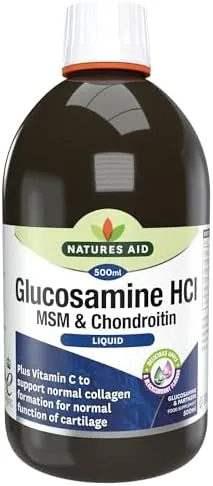
Natures Aid Glucosamine MSM & Chondroitin with Vitamin C Liquid 500ml - High Strength Joint Support - Mobility & Cartilage Health, Collagen Formation, Non-GMO, Gluten-Free Supplement
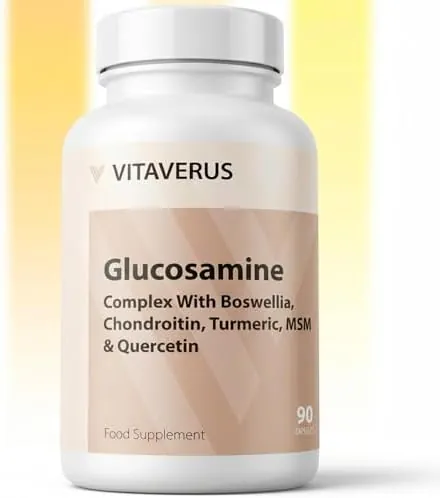
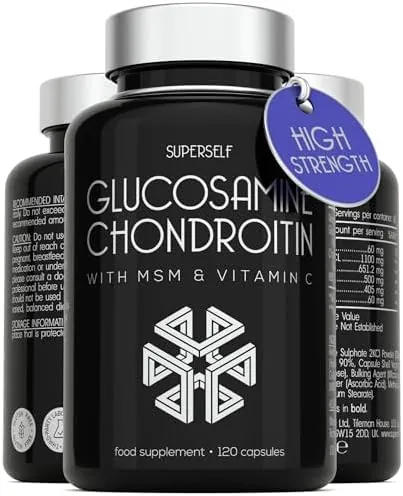
Glucosamine and Chondroitin High Strength - Glucosamine Sulphate with Chondroitin, MSM & Vitamin C - 120 Capsules - 1720mg Glucosamine Complex - Combination Joint Care Supplements for Men & Women
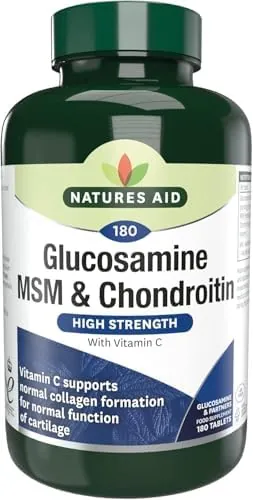
Natures Aid Glucosamine MSM & Chondroitin with Vitamin C - High Strength Joint Support - Mobility & Cartilage Health, Collagen Formation - Non-GMO, Gluten-Free Supplement - 180 Tablets
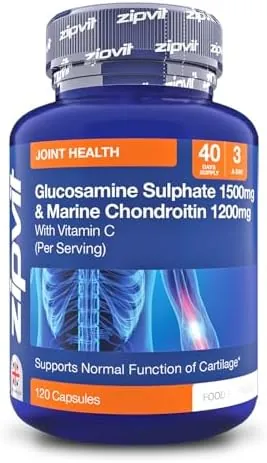
Zipvit Glucosamine and Chondroitin High Strength with Glucosamine Sulphate 1500mg, Marine Chondroitin 1200mg and Vitamin C, Joint Care Supplements for Men and Women, 120 Capsules
Check interactions with your other supplements
Add Glucosamine to our interactive Stack Analyzer and see how it works with everything else you take.
Add Glucosamine to your stack →Related Ingredients
Frequently Asked Questions
The most extensively studied dose is 1,500 mg of glucosamine sulfate per day, taken either as a single dose or divided into three 500 mg portions with meals. This regimen was used in the pivotal Reginster et al. (2001, Lancet) and Pavelká et al. (2002, Archives of Internal Medicine) trials. There is no established UK RDA or upper limit. Taking glucosamine with food may reduce the likelihood of mild gastrointestinal discomfort. Individual responses may vary.
Research suggests yes. Glucosamine sulfate is the only form that has demonstrated structural benefits — specifically, slowing radiographic joint space narrowing — in long-term randomised controlled trials. Glucosamine HCl contains a higher proportion of elemental glucosamine per milligram, but its clinical evidence base is considerably weaker. NICE's former guidelines specifically referenced the sulfate form. When choosing a supplement, the sulfate form is generally better supported by the available literature.
Studies indicate that symptomatic effects on joint comfort, where they occur, typically emerge after four to eight weeks of consistent supplementation. Structural changes to cartilage, as observed in Pavelká et al. (2002), were detected only after three years of continuous use. The GAIT trial (Clegg et al., 2006) found that a subgroup with moderate-to-severe pain showed more meaningful response. Individuals who notice no benefit after three months of supplementation may be non-responders — individual responses vary considerably.