Important: This page is for informational purposes only, based on published peer-reviewed research and official UK dietary guidelines (NHS, EFSA, SACN). It does not constitute medical advice. Always consult your GP or pharmacist before starting, stopping, or combining supplements.
Milk Thistle — Forms, Dosage & Interactions
Also known as: silymarin, silybum marianum, silybin, milk thistle extract
Overview
Milk thistle (Silybum marianum) is a flowering herb native to the Mediterranean, used in traditional medicine for over 2,000 years primarily for liver and gallbladder complaints. The plant's seeds contain silymarin — a complex of bioactive flavonolignans, principally silybin (silibinin), silydianin, and silychristin — which are credited with the herb's hepatoprotective properties. Research suggests silymarin exerts antioxidant, anti-inflammatory, and antifibrotic effects on liver tissue, making it one of the most studied herbal supplements in hepatology. It is commonly used by individuals concerned about liver health, including those with alcohol-related liver strain, non-alcoholic fatty liver disease (NAFLD), or exposure to environmental toxins. Studies indicate potential benefits for liver enzyme normalisation and protection against oxidative damage, though evidence quality varies considerably across trials and individual responses may vary. Standardised extracts (80% silymarin) represent the most studied form, while newer phytosome complexes such as Siliphos offer substantially improved bioavailability. It is available without prescription in the UK as a food supplement or, in licensed form, as a traditional herbal remedy.
UK Dosage Guidelines
| Guideline | Value | Source |
|---|---|---|
|
Reference Nutrient Intake (RNI)
The amount sufficient for most people |
No established RDA | NHS / SACN |
Forms Comparison
Milk Thistle is available in several supplemental forms. Bioavailability and suitability vary.
| Form Name | Bioavailability | Notes |
|---|---|---|
| Standardised Extract (80% silymarin) | moderate | Standard extract, most common |
| Siliphos (Silybin-Phosphatidylcholine) | high | Phytosome complex, 4.6x better absorption than standard silymarin |
When to Take Milk Thistle
Recommended Time
🕑 Any — can be taken at this time
Additional Notes
Take with meals. Silymarin is poorly absorbed — phospholipid complexes (Siliphos) improve bioavailability significantly.
With or Without Food
Research suggests taking Milk Thistle with food for better absorption.
Known Interactions
1 known interaction with other supplements.
Both milk thistle (silymarin) and NAC support liver health and glutathione production. Research suggests they may have complementary hepatoprotective effects.
Action: This combination is commonly used for liver support. Both can be taken together, ideally on an empty stomach for NAC.
Read full analysis →Top Milk Thistle Products on AIScored
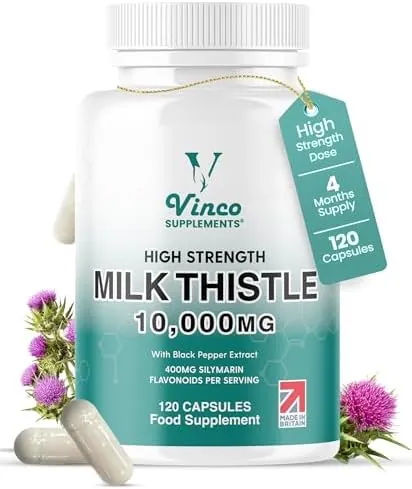
Milk Thistle Extract 10000mg - High Potency 400mg Silymarin per Capsule - 120 Capsules (Not Tablets) with Black Pepper Extract - Vegan Liver Support Supplement - 4-Month Supply - Made in UK
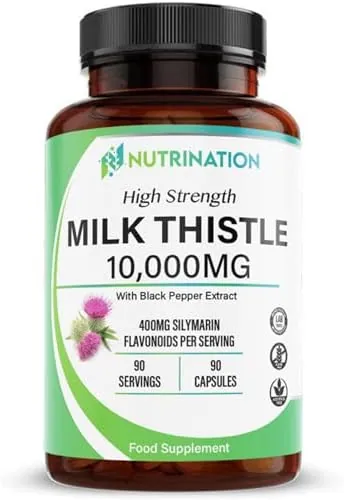

Milk Thistle Detox Complex (38:1) 6840mg with Artichoke, Choline, NAC, and More. Liver Cleanse Detox and Repair, with, Vitamin B, Selenium and Burdock. 90 Capsules. Vegan. CE. N2 Natural Nutrition
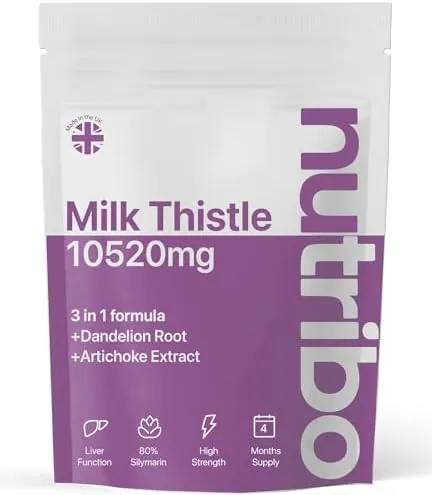
Milk Thistle High Strength 10,520mg with Dandelion Root and Artichoke

Organic Milk Thistle & Artichoke Extract Complex - Rich in Silymarin & Bitters - 120 Capsules = 60 Days Supply - Vegan - Non-GMO - Made in Germany
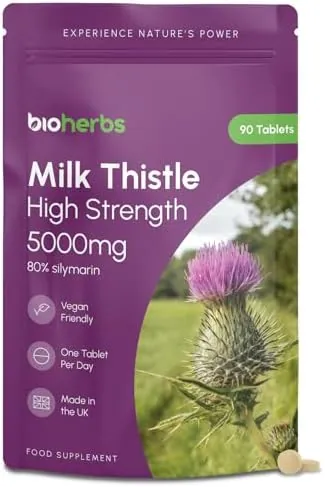
Milk Thistle High Strength 5000mg - 80% Silymarin (125mg Extract) by BioHerbs
Check interactions with your other supplements
Add Milk Thistle to our interactive Stack Analyzer and see how it works with everything else you take.
Add Milk Thistle to your stack →Related Ingredients
Frequently Asked Questions
Most clinical research has used doses of 140–800 mg of standardised extract (70–80% silymarin) daily, generally divided across two or three doses taken with food. A common maintenance dose is 200–400 mg silymarin equivalents per day. Phytosome formulations such as Siliphos may deliver comparable effects at lower doses due to approximately 4.6-fold greater absorption than conventional extracts. No official UK guideline exists; individual responses may vary.
Research suggests silymarin may influence cytochrome P450 enzymes (particularly CYP3A4 and CYP2C9) involved in hepatic drug metabolism, potentially altering plasma concentrations of certain medications. Drugs of particular concern include anticoagulants such as warfarin, statins, some immunosuppressants, and antiviral agents used in HIV and hepatitis C management. Anyone taking prescription medicines should consult their GP or pharmacist before commencing milk thistle supplementation.
Human trials lasting up to 24 months have generally found standardised milk thistle extract well-tolerated, with mild gastrointestinal disturbance being the most commonly reported side effect. Allergic reactions may occur in individuals sensitive to plants in the Asteraceae family, including ragweed, daisies, and chrysanthemums. The safety profile beyond two years has not been rigorously characterised in controlled trials, and individual responses may vary. Those who are pregnant or breastfeeding should seek medical advice before use.