Important: This page is for informational purposes only, based on published peer-reviewed research and official UK dietary guidelines (NHS, EFSA, SACN). It does not constitute medical advice. Always consult your GP or pharmacist before starting, stopping, or combining supplements.
Turmeric / Curcumin — Forms, Dosage & Interactions
Also known as: curcumin, turmeric, curcuma longa, curcuminoids
Overview
Turmeric (Curcuma longa) is a flowering plant in the ginger family whose rhizome has been used in Ayurvedic and traditional Chinese medicine for millennia. The root contains a family of polyphenolic compounds called curcuminoids, of which curcumin is the most abundant and most studied, typically comprising 2–5% of dried turmeric powder. People supplement with curcumin primarily for its anti-inflammatory and antioxidant properties, with research exploring applications in joint health, cognitive support, cardiovascular function, and mood regulation. The evidence base for curcumin is notably broad — systematic reviews and meta-analyses support meaningful effects on inflammatory biomarkers and joint discomfort — yet the field is complicated by one significant limitation: curcumin is poorly absorbed in its standard form. Bioavailability enhancements (piperine co-administration, phytosome technology, nanoparticle formulations) are not optional extras but practical necessities for achieving plasma concentrations seen in research. Individual responses may vary depending on formulation, dose, gut health status, and concurrent dietary fat intake. No UK Nutrient Reference Value (NRV) has been established for curcumin.
UK Dosage Guidelines
| Guideline | Value | Source |
|---|---|---|
|
Reference Nutrient Intake (RNI)
The amount sufficient for most people |
No established RDA | NHS / SACN |
Forms Comparison
Turmeric / Curcumin is available in several supplemental forms. Bioavailability and suitability vary.
| Form Name | Bioavailability | Notes |
|---|---|---|
| Curcumin C3 Complex | moderate | Standardised to 95% curcuminoids, requires piperine for absorption |
| Meriva (Phytosome) | high | Phospholipid-bound curcumin, 29x better absorption than standard |
| Longvida | high | Lipid-encapsulated, designed to cross blood-brain barrier |
| Theracurmin | high | Nano-particle curcumin, very high bioavailability |
When to Take Turmeric / Curcumin
Recommended Time
🕑 Any — can be taken at this time
Additional Notes
Fat-soluble — take with food and fat. Piperine (black pepper extract) increases absorption by up to 2,000%. Avoid within 2 hours of medication.
With or Without Food
Research suggests taking Turmeric / Curcumin with food for better absorption.
Known Interactions
3 known interactions with other supplements.
Research suggests curcumin and omega-3 fatty acids may have complementary anti-inflammatory effects. Both target overlapping inflammatory pathways through different mechanisms.
Action: Taking curcumin with a fat-containing meal or alongside omega-3 may also improve curcumin's lipophilic absorption.
Read full analysis →Research suggests curcumin may chelate iron, potentially reducing its absorption. This may be beneficial for those with iron overload but problematic for those with iron deficiency.
Action: Individuals with low iron status may benefit from separating iron supplements from turmeric/curcumin by a few hours.
Read full analysis →Research suggests curcumin and Vitamin D3 may have complementary anti-inflammatory and immune-modulating effects. Both influence NF-kB and other inflammatory pathways.
Action: Both can be taken with a fat-containing meal. The fat improves absorption of both curcumin and Vitamin D3.
Read full analysis →Top Turmeric / Curcumin Products on AIScored
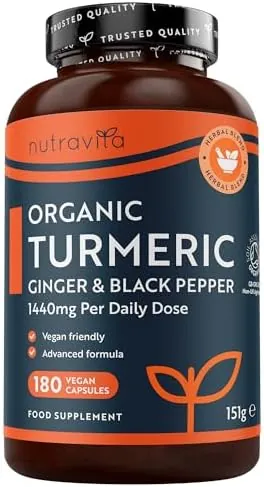
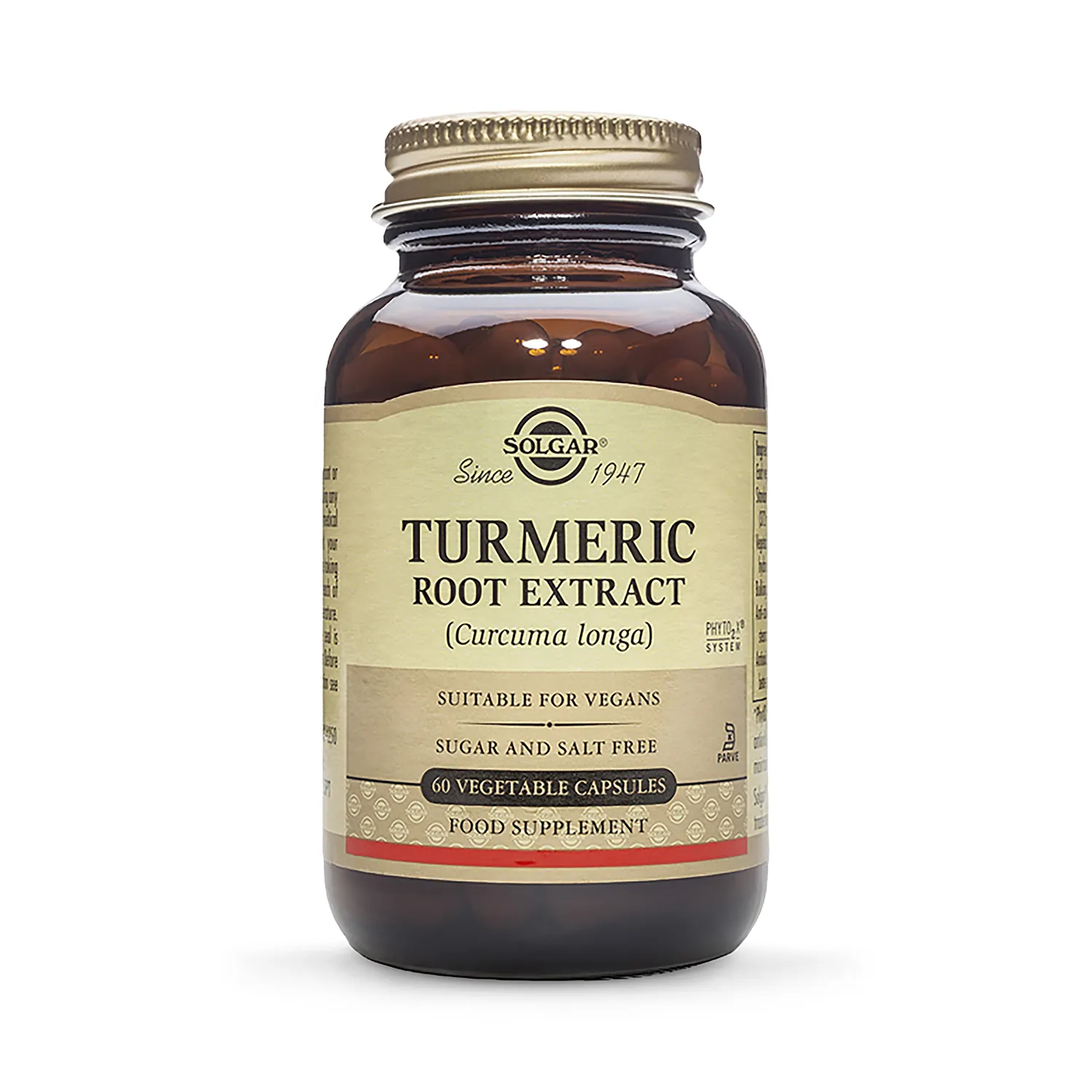
Nutravita Organic Turmeric 1440mg (High Strength) with Black Pepper & Ginger - 180 Vegan Turmeric Capsules (3 Month Supply) – Organic Termeric with Active Ingredient Curcumin - Made in The UK
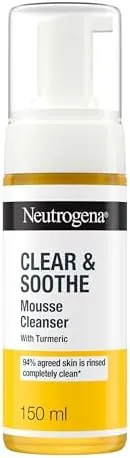
Neutrogena Clear & Soothe Mousse Cleanser Face Wash with Turmeric (1x 150ml), Gentle Facial Wash to Cleanse and Soothe Stressed Skin, Suitable for Daily Use
Check interactions with your other supplements
Add Turmeric / Curcumin to our interactive Stack Analyzer and see how it works with everything else you take.
Add Turmeric / Curcumin to your stack →Related Ingredients
Frequently Asked Questions
Research suggests curcumin can support joint comfort, particularly in osteoarthritis. A randomised controlled trial by Chandran and Goel (2012, Phytotherapy Research) found that curcumin outperformed diclofenac sodium on ACR response criteria in active rheumatoid arthritis with fewer adverse effects. A 2016 meta-analysis in the Journal of Medicinal Food covering 8 RCTs found statistically significant reductions in WOMAC pain scores. Bioavailability-enhanced formulations appear necessary to achieve these effects; standard turmeric powder at culinary doses is unlikely to be sufficient. Individual responses may vary.
Standard curcumin is hydrophobic and rapidly metabolised in the gut and liver, resulting in very low plasma concentrations. Shoba et al. (1998, Planta Medica) demonstrated that co-administration of 20 mg piperine (black pepper extract) increased curcumin bioavailability by approximately 2,000% in humans. Alternatively, lipid-based delivery systems such as Meriva (phospholipid complex) or Longvida (solid lipid nanoparticles) significantly enhance absorption without requiring piperine — useful for anyone avoiding piperine due to medication interactions.
Emerging evidence suggests a role in mood support. A randomised, double-blind, placebo-controlled trial by Lopresti et al. (2014, Journal of Affective Disorders) found that 1,000 mg/day of curcumin over 8 weeks produced significant improvements in mood-related outcomes compared to placebo. Proposed mechanisms include modulation of serotonin and dopamine pathways and reduction of neuroinflammatory markers. Research in cognitive ageing is at an earlier stage, though Longvida's design to cross the blood-brain barrier makes it the formulation of most interest in this area. Individual responses may vary considerably.