Important: This page is for informational purposes only, based on published peer-reviewed research and official UK dietary guidelines (NHS, EFSA, SACN). It does not constitute medical advice. Always consult your GP or pharmacist before starting, stopping, or combining supplements.
Valerian — Forms, Dosage & Interactions
Also known as: valeriana officinalis, valerian root, valerian extract
Overview
Valerian (Valeriana officinalis) is a flowering plant native to Europe and Asia whose root has been used medicinally for over two millennia, with documented use dating to ancient Greece and Rome. In the UK, it remains one of the most commonly purchased botanical supplements, primarily for sleep support and stress management. The root contains a complex mixture of bioactive compounds — including valerenic acid, isovaleric acid, and iridoid glycosides (valepotriates) — and it is the synergy between these constituents that is thought to underlie its effects. The evidence base is predominantly centred on sleep quality, with several meta-analyses of randomised controlled trials suggesting valerian may modestly reduce sleep latency and improve subjective sleep quality. Evidence for stress management applications is less well established. Most clinical research has used standardised extracts (typically 0.8% valerenic acid) at doses of 300–600 mg, taken 30–60 minutes before bedtime. The overall evidence rating is considered moderate: promising across multiple trials, but constrained by heterogeneous study designs, variable product quality, and relatively small sample sizes. Individual responses may vary considerably, and effects in some users appear to accumulate with consistent use over two to four weeks.
UK Dosage Guidelines
| Guideline | Value | Source |
|---|---|---|
|
Reference Nutrient Intake (RNI)
The amount sufficient for most people |
No established RDA | NHS / SACN |
Forms Comparison
Valerian is available in several supplemental forms. Bioavailability and suitability vary.
| Form Name | Bioavailability | Notes |
|---|---|---|
| Standardised Extract (0.8% valerenic acid) | high | Concentrated active compounds, most reliable dosing |
| Dried Root (as tea or capsule) | moderate | Traditional use, milder effect, higher doses needed |
| Tincture | moderate | Alcohol-based extraction, fast absorption |
When to Take Valerian
Recommended Time
🌙 Evening — research suggests taking Valerian in the evening
Additional Notes
Evening only — 30-60 minutes before bed. Sedating. Do not combine with alcohol or sedative medications. May take 2-4 weeks for full effect.
With or Without Food
Research suggests taking Valerian on an empty stomach for optimal absorption.
Known Interactions
3 known interactions with other supplements.
Both valerian and L-theanine have calming effects. Research suggests combining them may produce a cumulative sedative effect, which is desirable at bedtime but could cause excessive drowsiness during the day.
Action: If combining, using them in the evening for sleep support is typical. Daytime use of both together may cause unwanted drowsiness.
Read full analysis →Both ashwagandha and valerian have sedating properties. Research suggests their combined use may enhance sedation, which is beneficial for sleep but may cause excessive drowsiness.
Action: If combining, evening use for sleep support is most appropriate. Individuals sensitive to sedation may want to start with one and assess tolerance before combining.
Read full analysis →Both valerian and melatonin promote sleep. Combining them may produce excessive sedation in some individuals. Research suggests starting with one and adding the second cautiously.
Action: If combining for sleep, starting with lower doses of each and assessing response is a prudent approach. Both are taken 30-60 minutes before bed.
Read full analysis →Top Valerian Products on AIScored
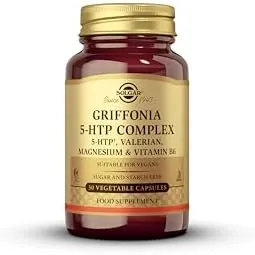
Solgar Griffonia 5-HTP Complex – Sleep and Mood Support with Valerian Root, Magnesium, and Vitamin B6 - Vegan & Gluten Free - Pack of 30
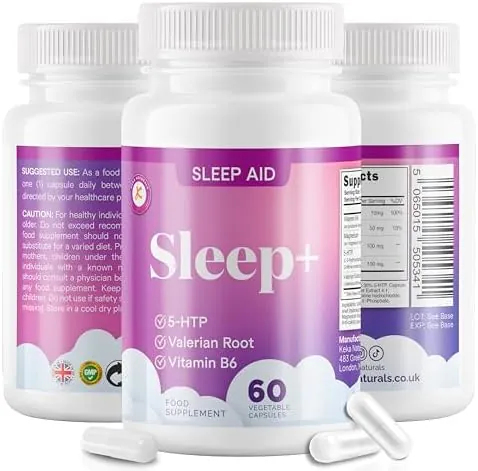
Sleep Support with 5-HTP, Valerian Root, Magnesium and Vitamin B6, Advanced High Strength Formula - 60 Veg Capsules
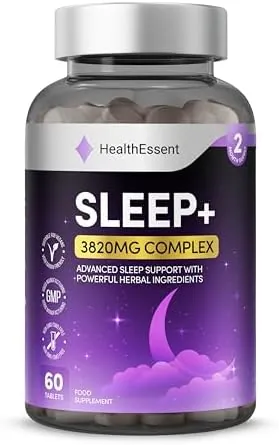
Sleeping Tablets with Magnesium Glycinate, Valerian Root, Lemon Balm Leaf and L-Theanine
Check interactions with your other supplements
Add Valerian to our interactive Stack Analyzer and see how it works with everything else you take.
Add Valerian to your stack →Related Ingredients
Frequently Asked Questions
Research suggests that valerian may not act immediately in all individuals. Some studies, including Leathwood et al. (1982, Pharmacol Biochem Behav), demonstrated acute reductions in sleep latency, whilst other trials indicate that consistent use over two to four weeks produces more reliable improvements in subjective sleep quality. This cumulative response pattern is important to be aware of — individual responses may vary, and a single dose may be insufficient to judge effectiveness.
Valerian may have additive sedative effects when combined with other CNS depressants, including prescribed benzodiazepines, z-drugs, antihistamines, and alcohol. This combination is best avoided without medical supervision. There is also theoretical concern around cytochrome P450 enzyme interactions that could affect the metabolism of certain medications, though robust clinical data are limited. Anyone taking prescribed medicines for sleep, mood, or neurological conditions should consult their GP or pharmacist before using valerian.
Research suggests standardised extracts (typically delivering 0.8% valerenic acid per dose) offer more predictable and consistent dosing than whole dried root preparations or teas. Most clinical trials have used standardised extracts at 300–600 mg doses. Tinctures provide faster absorption due to alcohol-based extraction but make standardised dosing harder to confirm. For sleep support applications, the standardised extract form used in clinical research is generally considered the most evidence-aligned option, though all forms are widely used traditionally.