Important: This page is for informational purposes only, based on published peer-reviewed research and official UK dietary guidelines (NHS, EFSA, SACN). It does not constitute medical advice. Always consult your GP or pharmacist before starting, stopping, or combining supplements.
L-Theanine and Lion's Mane — Can You Take Them Together?
Overview
L-theanine, an amino acid found naturally in green and black tea, and Lion's Mane (Hericium erinaceus), a medicinal mushroom with centuries of use in East Asian tradition, represent an increasingly studied pairing in contemporary nootropic formulations. Emerging research suggests these two compounds may act through distinct but complementary mechanisms: L-theanine appears to promote relaxed alertness by modulating brain wave activity, whilst Lion's Mane has been shown in laboratory and clinical settings to stimulate nerve growth factor (NGF) synthesis, which plays a role in neuroplasticity and neuronal maintenance. The combination is classified as a synergistic interaction, though direct clinical trials examining this specific pairing remain limited.
How They Interact
L-theanine's cognitive effects are primarily attributed to its ability to increase alpha frequency brain wave activity (8–14 Hz), a pattern associated with calm, focused attention. In a placebo-controlled study by Nobre et al. (2008, PMID 18296328), 50 mg of L-theanine was sufficient to produce measurable increases in alpha band oscillations within 45 minutes. L-theanine also modulates inhibitory and excitatory neurotransmission — increasing GABA activity whilst attenuating glutamate receptor excitation — without producing sedation. Kimura et al. (2007, PMID 16930802) demonstrated that oral L-theanine reduced heart rate and salivary immunoglobulin A responses under acute stress conditions, suggesting inhibition of cortical neuron excitation as a plausible mechanism. Lion's Mane exerts its effects through two classes of bioactive compounds: hericenones, concentrated in the fruiting body, and erinacines, found predominantly in the mycelium. Both have demonstrated the ability to stimulate NGF synthesis — Mori et al. (2008, PMID 18758067) showed that H. erinaceus extracts enhanced NGF gene expression in human astrocytoma cells via JNK signalling pathways, and that conditioned medium from treated cells promoted neurite outgrowth. NGF is essential for the survival, maintenance, and plasticity of neurons, particularly in hippocampal regions associated with learning and memory. The theoretical synergy is that L-theanine supports acute cognitive clarity whilst Lion's Mane supports longer-term neurological maintenance. Individual responses may vary.
Timing & Dosage Guidance
Both L-theanine and Lion's Mane are commonly taken in the morning or early afternoon to support daytime cognitive function. L-theanine's effects on alpha wave activity appear relatively acute — Nobre et al. (2008) recorded significant changes within 45 minutes of a single dose — making it most relevant when taken shortly before tasks requiring focused attention. Lion's Mane is considered to operate over a longer timeframe; the double-blind trial by Mori et al. (2009, PMID 18844328) required eight weeks of daily supplementation before statistically significant cognitive improvements were observed. For Lion's Mane, consistent daily intake appears more important than specific timing relative to tasks. Taking both supplements together in the morning is a commonly reported approach in nootropic communities, though formal timing studies on this specific combination are lacking.
L-theanine has been studied in human trials at doses ranging from 50 to 200 mg per serving. Nobre et al. (2008) observed alpha wave activity changes at just 50 mg, whilst Kimura et al. (2007) used 200 mg to assess stress responses. There is no established RDA or EFSA-approved health claim specific to L-theanine. Lion's Mane dosing has varied considerably across clinical studies; the Mori et al. (2009) trial administered 3,000 mg daily of Yamabushitake dry powder. Standardised extract products are typically used at lower doses due to higher concentrations of active constituents. Extract quality varies significantly between products — fruiting body dual extracts are generally considered more potent than mycelium-on-grain formats. Individual responses may vary, and those taking prescription medications or managing a health condition should consult a qualified healthcare professional before supplementing.
Recommended Action
This combination is popular in nootropic stacks. Both can be taken in the morning for cognitive support.
L-Theanine Timing
When: Any
Note: Can be taken any time. Often paired with caffeine (2:1 ratio) for focused calm. Evening use supports relaxation.
Lion's Mane Timing
When: Morning
Note: Morning or early afternoon preferred — may support focus and cognition. Take with food. Look for extracts standardised to hericenones and erinacines (NGF stimulators).
Scientific Evidence
4 peer-reviewed studies cited. All links lead to PubMed abstracts.
Asia Pacific Journal of Clinical Nutrition (2008) · PMID: 18296328
50 mg L-theanine produced measurable increases in alpha band brain wave activity within 45 minutes in healthy adults, indicating relaxed alertness without sedation.
Biological Psychology (2007) · PMID: 16930802
Oral L-theanine at 200 mg reduced heart rate and salivary IgA stress responses during an acute mental arithmetic task versus placebo, consistent with inhibition of cortical neuron excitation.
Phytotherapy Research (2009) · PMID: 18844328
Adults aged 50–80 with mild cognitive impairment who received 3,000 mg daily of H. erinaceus powder for 16 weeks showed significantly higher cognitive function scores than the placebo group, with no adverse effects reported.
Biological and Pharmaceutical Bulletin (2008) · PMID: 18758067
H. erinaceus ethanol extracts enhanced NGF gene expression and protein secretion in human astrocytoma cells via JNK signalling, and conditioned medium from treated cells promoted neurite outgrowth in PC12 cells.
Frequently Asked Questions
Direct clinical trials examining this specific combination are currently lacking. The proposed synergy is based on the independently studied mechanisms of each compound — L-theanine's alpha wave-promoting effects (Nobre et al., 2008) and Lion's Mane's NGF-stimulating properties (Mori et al., 2008) — rather than head-to-head combination studies. The interaction is therefore classified as emerging evidence. Individual responses may vary considerably, and further controlled human research is needed before firm conclusions can be drawn.
The fruiting body is the form most commonly used in published clinical research, as it is particularly rich in hericenones. Dual extracts — employing both hot water and alcohol extraction — aim to capture a broader range of bioactive compounds, including erinacines from the mycelium. Mycelium-on-grain products have attracted criticism for potentially lower concentrations of active constituents due to residual grain substrate. For evidence-based cognitive support, a fruiting body extract or dual extract is generally considered the better-supported option, though individual product quality will vary.
L-theanine is frequently studied alongside caffeine and the combination appears to be well-tolerated. Research suggests L-theanine may moderate some of caffeine's stimulatory effects whilst preserving alertness. Some nootropic formulations combine all three compounds. There are no known adverse interactions between caffeine and Lion's Mane. Individuals sensitive to caffeine should adjust their intake accordingly, and those with underlying cardiovascular concerns or who are taking medication should seek guidance from a qualified healthcare professional.
Top L-Theanine Products on AIScored
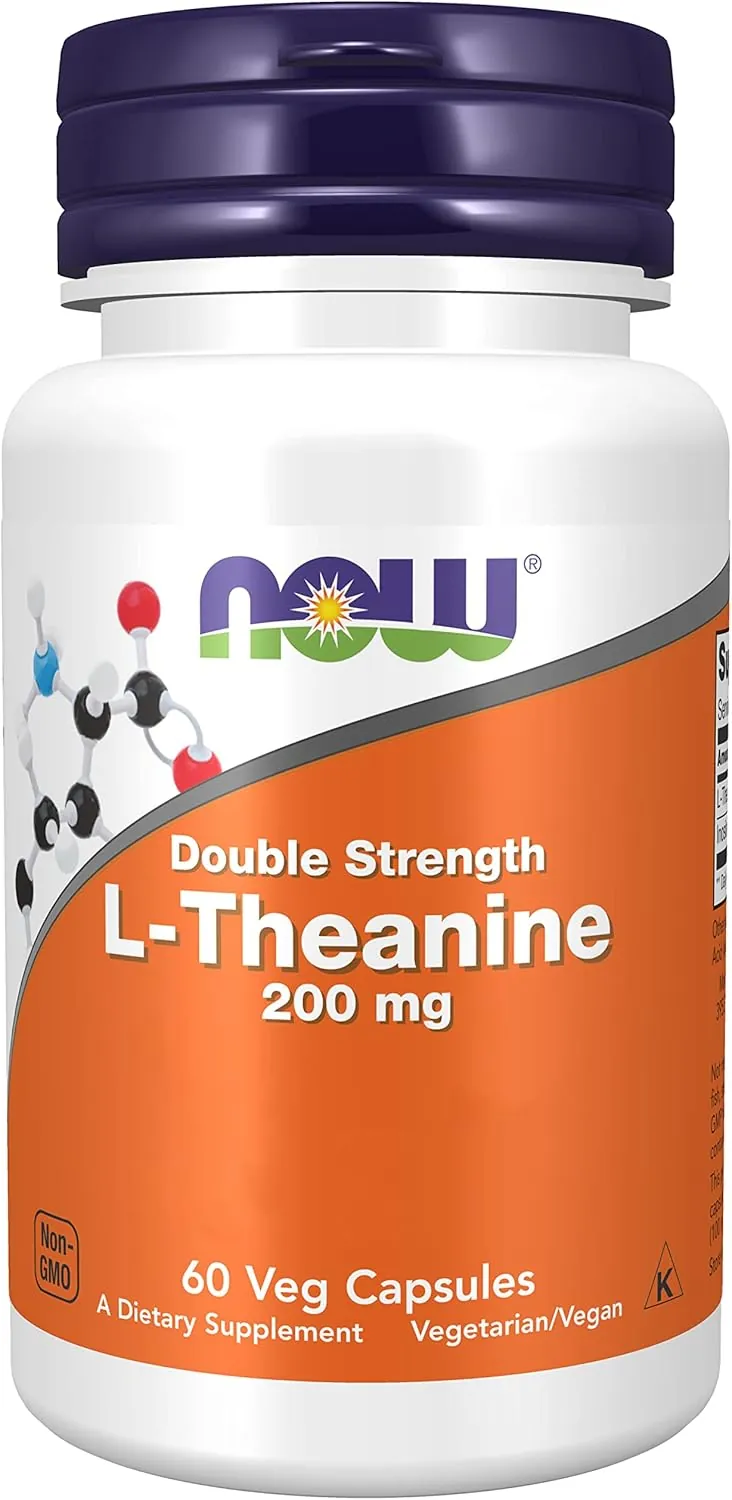
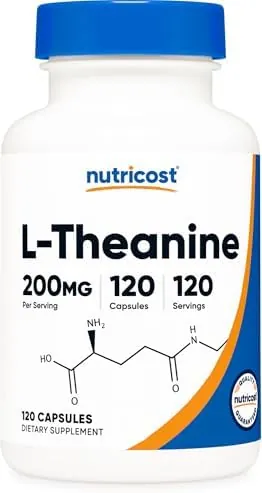
Nutricost L-Theanine 200mg, 120 Capsules, Double Strength - Non-GMO, Gluten Free
Top Lion's Mane Products on AIScored
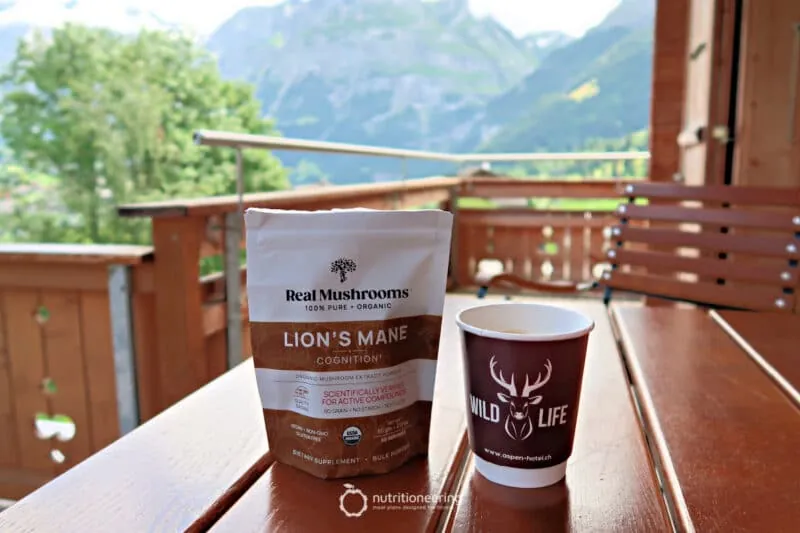
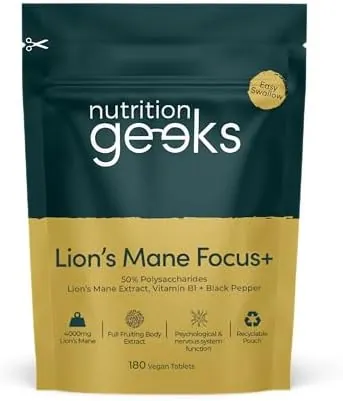
Lions Mane Supplement 4000mg with Vitamin B1 & Black Pepper, 180 Vegan Tablets - Lion's Mane Mushroom 15:1 Extract (Not Lions Mane Powder or Capsules), UK Made for Mental Performance & Nervous System
Want to check more interactions?
Add these and other supplements to our interactive Stack Analyzer for a full analysis.
Build your full stack →