Important: This page is for informational purposes only, based on published peer-reviewed research and official UK dietary guidelines (NHS, EFSA, SACN). It does not constitute medical advice. Always consult your GP or pharmacist before starting, stopping, or combining supplements.
L-Tryptophan and Melatonin — Can You Take Them Together?
Overview
L-tryptophan and melatonin are both used to support sleep, yet they occupy consecutive positions in the same biosynthetic pathway. Because the body converts dietary tryptophan first into serotonin, and serotonin subsequently into melatonin, supplementing both simultaneously raises a genuine biochemical question: is the combination redundant, or could it amplify serotonergic and melatonergic activity beyond what either compound would produce alone? This interaction is classified as a timing conflict of moderate severity — not because combining them is inherently dangerous, but because the overlap in mechanism warrants careful consideration. Individual responses may vary depending on enzyme activity, diet, and baseline melatonin production.
How They Interact
L-tryptophan is an essential amino acid that serves as the primary dietary precursor to melatonin via a well-characterised multi-step enzymatic cascade. Following intestinal absorption, tryptophan is hydroxylated by tryptophan hydroxylase (TPH) — the rate-limiting enzymatic step — to produce 5-hydroxytryptophan (5-HTP), which is then decarboxylated to serotonin (5-HT) by aromatic L-amino acid decarboxylase (AADC). Within the pineal gland during dark-phase signalling, serotonin undergoes N-acetylation via arylalkylamine N-acetyltransferase (AANAT) and O-methylation via hydroxyindole-O-methyltransferase (HIOMT) to yield melatonin. Taking exogenous melatonin bypasses this entire upstream pathway entirely. Supplementing L-tryptophan, by contrast, feeds into the cascade from the very beginning, potentially elevating both serotonin and melatonin simultaneously. It should also be noted that the majority of ingested tryptophan (roughly 95%) is directed through the competing kynurenine pathway, meaning conversion to melatonin is not linear or reliably predictable. Concurrent supplementation with both compounds may nonetheless compound melatonergic and serotonergic activity — particularly at higher doses — increasing the risk of excessive sedation.
Timing & Dosage Guidance
For sleep support, research suggests exogenous melatonin is most effective when taken 30–60 minutes before the intended sleep time, especially for circadian rhythm adjustment. L-tryptophan, when used for sleep, is typically taken in the early evening, often alongside a small carbohydrate-containing snack to promote preferential transport across the blood-brain barrier via the large neutral amino acid transporter. If both supplements are being used concurrently, spacing them by at least two to three hours may reduce the risk of overlapping peaks in serotonergic activity. Because this specific combination has not been evaluated in formal clinical trials, the conservative approach — using one compound at a time — is generally considered sufficient. Individual responses may vary considerably.
Melatonin is typically used in doses of 0.5–5 mg for sleep support, with studies indicating that lower doses (0.5–1 mg) are often sufficient and may carry a better tolerability profile. L-tryptophan supplements commonly range from 500 mg to 2,000 mg per dose. Because tryptophan's conversion to melatonin is indirect and subject to multiple rate-limiting enzymatic steps and competing metabolic routes, the melatonergic contribution from supplemental tryptophan cannot be precisely predicted. In the UK, the Medicines and Healthcare products Regulatory Agency (MHRA) treats melatonin products containing more than 1 mg as prescription-only medicines; lower-dose products remain available as food supplements. Starting with the lowest effective dose of either compound — and not both simultaneously without professional guidance — is the prudent approach.
Recommended Action
Using one or the other for sleep support is generally sufficient. If combining, starting with low doses of each and monitoring for excessive drowsiness is prudent.
L-Tryptophan Timing
When: Evening
Note: Take on empty stomach for best absorption — competes with other amino acids for transport. Evening use supports serotonin/melatonin production.
Melatonin Timing
When: Evening
Note: Take 30-60 minutes before bed in dim light. Lower doses (0.5-1 mg) are often more effective than high doses. In UK, doses above 2 mg are prescription only (Circadin).
Scientific Evidence
3 peer-reviewed studies cited. All links lead to PubMed abstracts.
International Journal of Tryptophan Research (2009) · PMID: 23139440
A comprehensive review establishing tryptophan's role as the primary serotonin and melatonin precursor, and summarising clinical evidence for its use in sleep and mood support, including the competitive dynamics of the kynurenine pathway.
Sleep Medicine Reviews (2005) · PMID: 15649737
Meta-analysis of 17 randomised controlled trials finding that exogenous melatonin significantly reduced sleep onset latency and increased total sleep time, with the greatest effect sizes observed in circadian rhythm disorders.
PLOS ONE (2013) · PMID: 23691095
Pooled analysis of 19 studies demonstrating that melatonin decreased sleep onset latency by 7.06 minutes and increased total sleep time by 8.25 minutes compared with placebo across primary sleep disorder populations.
Frequently Asked Questions
No controlled clinical trials have directly evaluated the safety of combining L-tryptophan and melatonin concurrently. Because tryptophan is a biochemical precursor to melatonin, taking both may produce greater-than-intended serotonergic or melatonergic activity. Current evidence suggests that either supplement alone may be sufficient for sleep support, and concurrent use — particularly at higher doses — should be approached with caution. Consulting a healthcare professional before combining them is advisable. Individual responses may vary.
Melatonin has the more robust evidence base for sleep support, particularly for circadian rhythm disruptions such as jet lag or shift work, as demonstrated across several meta-analyses. L-tryptophan has a longer history of use and may support sleep through serotonin-mediated mechanisms, though its downstream conversion to melatonin is variable. The most appropriate choice depends on the likely mechanism behind disrupted sleep. Neither supplement replaces attention to sleep hygiene, light exposure, and consistent sleep scheduling.
Research suggests that large doses of L-tryptophan can increase plasma tryptophan availability and, under the right conditions, shift more substrate toward the serotonin–melatonin pathway — particularly during evening hours when pineal AANAT activity is naturally elevated. However, because the competing kynurenine pathway processes the vast majority of ingested tryptophan, the melatonergic effect is not linear. Individual enzyme activity, diet composition, and existing serotonin levels all significantly influence how much tryptophan reaches the melatonin pathway.
Top L-Tryptophan Products on AIScored
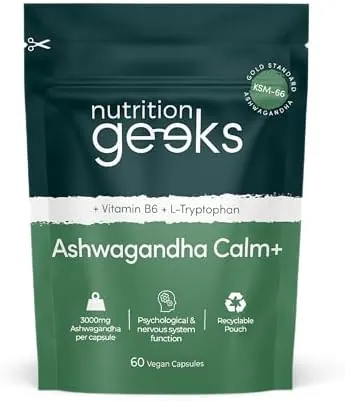
Ashwagandha KSM 66 Complex – 3000mg Enhanced with L-Tryptophan & Vitamin B6 (2 Month Supply) – Ashwagandha High Strength Capsules with 250mg Extract (Not Gummies or Powder) - Vegan, UK Made
Top Melatonin Products on AIScored
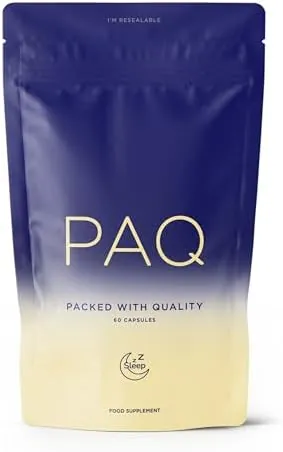
Sleep PAQ Natural Sleep Aid – 60 Vegan Capsules – Magnesium, L-Theanine, Passion Flower, Cherry – Non-Habit Forming, No Melatonin – Clinically Dosed for Sleep, Recovery & Relaxation
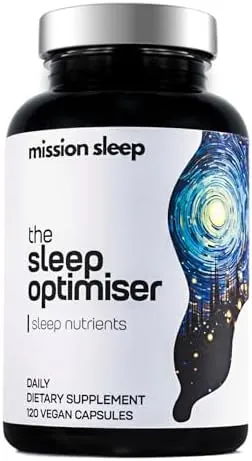
The Sleep Optimiser Sleeping Capsules - Non Melatonin Tablets Sleep Supplement for Adults with Magnesium Glycinate, L Theanine, Apigenin & Zinc - Nutrient-Based Sleeping Aid Suitable for Long Term Use
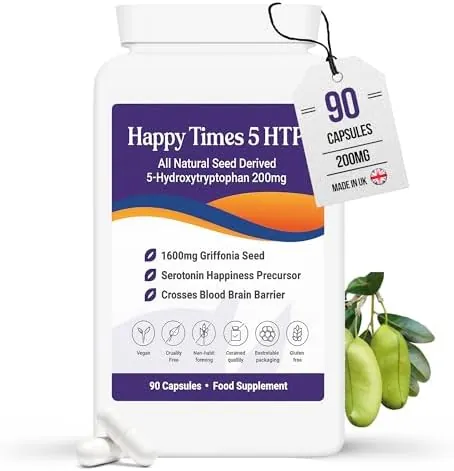
Happy Times Double Strength 5-HTP Supplement (200mg) Amino Acid 5 Hydroxytryptophan -Serotonin Melatonin Happiness Hormone Precursor Natural Griffonia Seed Extract Herbal Healthy Sleeping
Want to check more interactions?
Add these and other supplements to our interactive Stack Analyzer for a full analysis.
Build your full stack →