Important: This page is for informational purposes only, based on published peer-reviewed research and official UK dietary guidelines (NHS, EFSA, SACN). It does not constitute medical advice. Always consult your GP or pharmacist before starting, stopping, or combining supplements.
Magnesium and Vitamin K2 — Can You Take Them Together?
Overview
Magnesium and vitamin K2 are both involved in bone health, yet their combined role is often overlooked in supplement discussions. Research suggests these two nutrients may operate in a complementary fashion: magnesium supports enzymatic processes central to bone matrix formation, whilst vitamin K2 activates key Gla proteins — including osteocalcin and matrix Gla protein — that direct calcium into bone tissue rather than blood vessel walls. Evidence for a direct biochemical interaction between the two remains emerging, but several studies indicate that adequate magnesium status may support the full expression of vitamin K-dependent biological activity. Individual responses may vary.
How They Interact
At the biochemical level, vitamin K2 activates a class of proteins known as Gla proteins through γ-carboxylation — a process in which glutamate residues are converted to γ-carboxyglutamic acid by the enzyme γ-glutamyl carboxylase, using vitamin K as an essential cofactor. Magnesium, as a required cofactor in numerous ATP-dependent enzymatic reactions, may play a supporting role in the wider enzymatic cycle underpinning this carboxylation process. Studies in animal models suggest that magnesium insufficiency can impair normal bone mineralisation and reduce bone crystal quality — an effect that vitamin K2 (MK-4) has been shown to partially compensate for (Amizuka et al., Histology and Histopathology, 2008; PMID 18785118). Independently, magnesium is incorporated directly into the hydroxyapatite crystal lattice of bone and supports osteoblast function. Vitamin K2, particularly in its MK-7 form, activates osteocalcin to anchor calcium within bone matrix and activates matrix Gla protein to inhibit pathological vascular calcification. A 2020 review in Maturitas (Capozzi et al., PMID 32972636) identified calcium, vitamin D, K2, and magnesium as contributing to skeletal health through interdependent, mutually supportive pathways.
Timing & Dosage Guidance
Both nutrients are well tolerated when taken with food and current evidence suggests no need to separate them. Vitamin K2 is fat-soluble, so absorption is optimised alongside a meal that contains some dietary fat — this promotes bile acid secretion and the micellar incorporation required for fat-soluble vitamin uptake. Magnesium is generally better absorbed and tolerated with food rather than on an empty stomach, as food can buffer any gastrointestinal discomfort. Taking both supplements with the day's main meal is a practical approach supported by their respective absorption profiles. No competitive absorption between magnesium and vitamin K2 has been identified in published research. Individual responses may vary.
The NHS reference nutrient intake for magnesium is 300 mg per day for adult men and 270 mg per day for adult women, with the upper safe level for supplemental magnesium set at 400 mg per day by the NHS. The European Food Safety Authority (EFSA) sets the adequate intake for total vitamin K at 75 mcg per day for adults. Supplemental vitamin K2 as MK-7 is most commonly evaluated at doses of 90–200 mcg per day in human clinical trials examining bone outcomes. When combining the two nutrients, individuals should account for existing dietary intake before selecting supplemental doses. Anyone taking anticoagulant medications — such as warfarin — must seek advice from a GP or pharmacist before supplementing with any form of vitamin K, as it may interact with anticoagulant therapy.
Recommended Action
Both can be taken with a meal. No special separation needed.
Magnesium Timing
When: Evening
Note: Evening preferred — may promote relaxation. Take with food to reduce GI discomfort.
Vitamin K2 Timing
When: Morning
Note: Fat-soluble — take with a meal containing dietary fat
Scientific Evidence
3 peer-reviewed studies cited. All links lead to PubMed abstracts.
Maturitas (2020) · PMID: 32972636
A narrative review concluding that calcium, vitamin D, vitamin K2, and magnesium each contribute to skeletal health through interdependent pathways, and that combined consideration of all four micronutrients may be warranted when addressing bone health.
Histology and Histopathology (2008) · PMID: 18785118
In a magnesium-insufficient animal model, vitamin K2 (MK-4) was found to partially restore impaired bone crystal nucleation, suggesting a functional interaction between magnesium status and vitamin K-dependent mineralisation processes.
Bone (2004) · PMID: 15542039
In rats fed a low-magnesium diet, vitamin K2 supplementation improved measures of bone mineral density and mechanical bone strength, indicating a potential compensatory role for vitamin K2 under conditions of dietary magnesium insufficiency.
Frequently Asked Questions
Research suggests no interaction that would preclude taking these two supplements together. Both are ideally taken with a meal — vitamin K2 to improve fat-soluble absorption, and magnesium to minimise gastrointestinal discomfort. No competitive absorption between the two has been reported in the literature. Individuals taking anticoagulant medications such as warfarin should consult a healthcare professional before adding vitamin K2 to their regimen, as vitamin K may affect anticoagulant therapy.
The two most studied forms are MK-4 (menaquinone-4) and MK-7 (menaquinone-7). MK-7 has a considerably longer half-life in circulation, enabling once-daily dosing at lower microgram quantities, and has been evaluated in several human clinical trials on bone density. MK-4 has been studied extensively in Japanese research, often at higher pharmacological doses. The majority of recent bone health trials use MK-7, though the evidence base for both forms continues to develop and individual responses may vary.
Research in animal models suggests that magnesium insufficiency may impair normal bone mineralisation and reduce bone crystal quality. A study by Amizuka et al. (Histology and Histopathology, 2008; PMID 18785118) found that vitamin K2 partially normalised bone crystal nucleation defects associated with magnesium deficiency, suggesting some functional interdependence between the two nutrients. Whether this relationship is clinically significant in humans at typical dietary intake levels remains an active area of investigation, and current evidence is primarily preclinical.
Top Magnesium Products on AIScored



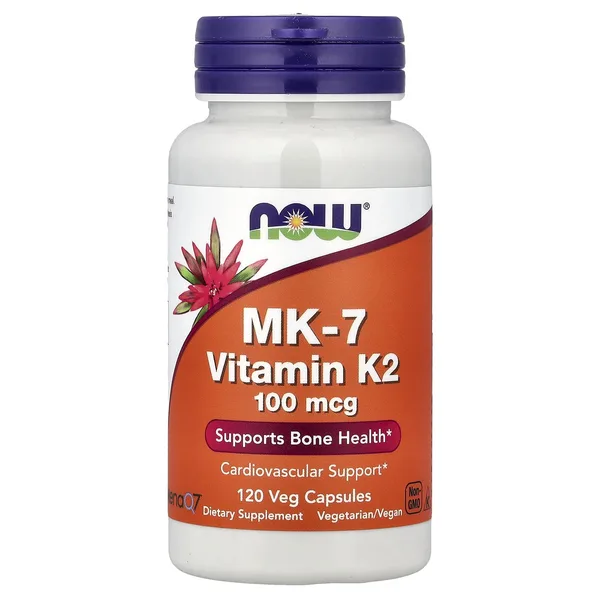
Top Vitamin K2 Products on AIScored

Want to check more interactions?
Add these and other supplements to our interactive Stack Analyzer for a full analysis.
Build your full stack →