Important: This page is for informational purposes only, based on published peer-reviewed research and official UK dietary guidelines (NHS, EFSA, SACN). It does not constitute medical advice. Always consult your GP or pharmacist before starting, stopping, or combining supplements.
Melatonin and Valerian — Can You Take Them Together?
Overview
Melatonin and valerian root are among the most widely used sleep support supplements in the UK, frequently found in combination products and taken together by those managing disrupted sleep patterns. Melatonin is an endogenous hormone that signals the onset of darkness to the brain's circadian system, while valerian has centuries of use in European herbal medicine as a calming botanical. When used together, their distinct pharmacological mechanisms may compound sedative effects in ways that exceed either compound alone. Research suggests caution is warranted, particularly around dose selection. Individual responses may vary considerably depending on age, body weight, and sensitivity to sedative compounds.
How They Interact
Melatonin exerts its primary effects by binding to MT1 and MT2 G-protein-coupled receptors in the suprachiasmatic nucleus (SCN) — the brain's master circadian pacemaker — as well as in peripheral tissues. MT1 receptor activation is associated with acute sleep-promoting effects and suppression of neuronal firing in the SCN, while MT2 activation influences circadian phase shifting. Valerian root operates through a fundamentally different pathway. Its principal bioactive constituent, valerenic acid, has been shown to act as a positive allosteric modulator at GABA-A receptors, enhancing chloride ion channel conductance and increasing inhibitory tone in the central nervous system — a mechanism broadly shared with benzodiazepine-class pharmaceuticals, albeit at a distinct binding site (Benke et al., 2009, Neuropharmacology). Because melatonin and valerian engage separate receptor systems that both converge on CNS sedation, their combined effects are likely additive rather than redundant. This dual-pathway suppression of arousal is the primary mechanistic concern when combining them, and explains why the resultant sedation may exceed what either supplement would produce individually at the same doses.
Timing & Dosage Guidance
Both melatonin and valerian are most commonly taken 30 to 60 minutes before the intended sleep time, meaning their administration windows naturally overlap. Melatonin's efficacy is closely tied to circadian timing — administration in the hour or two preceding habitual sleep, aligned with the physiological dim-light melatonin onset (DLMO), is considered most effective (Brzezinski et al., 2005, Sleep Medicine Reviews). Valerian shows less precise timing dependency, though consistent nightly use over several weeks appears associated with more reliable outcomes in some trials (Bent et al., 2006, American Journal of Medicine). When combining both, taking each approximately 45–60 minutes before bed represents a practical starting point, though establishing tolerance at low doses before any timing adjustments is advisable.
In UK clinical use, melatonin doses range from 0.5 mg to 5 mg, with evidence indicating that lower doses (0.5–1 mg) are often sufficient for circadian support, and that higher doses do not proportionally increase efficacy (Ferracioli-Oda et al., 2013, PLOS ONE). Valerian extract doses in published trials generally range from 300 mg to 600 mg of a standardised extract providing 0.8% valerenic acid. When combining both supplements, research suggests beginning with the minimum dose of each — for example, 0.5 mg melatonin alongside 300 mg valerian — before any upward adjustment. Particular caution is warranted in older adults, individuals with hepatic conditions, and those taking CNS-active medications such as antidepressants or antihistamines. Individual responses may vary significantly.
Recommended Action
If combining for sleep, starting with lower doses of each and assessing response is a prudent approach. Both are taken 30-60 minutes before bed.
Melatonin Timing
When: Evening
Note: Take 30-60 minutes before bed in dim light. Lower doses (0.5-1 mg) are often more effective than high doses. In UK, doses above 2 mg are prescription only (Circadin).
Valerian Timing
When: Evening
Note: Evening only — 30-60 minutes before bed. Sedating. Do not combine with alcohol or sedative medications. May take 2-4 weeks for full effect.
Scientific Evidence
4 peer-reviewed studies cited. All links lead to PubMed abstracts.
American Journal of Medicine (2006) · PMID: 16343255
A meta-analysis of 16 randomised trials found that valerian may improve sleep quality without producing significant side effects, though the authors noted methodological heterogeneity limited firm conclusions.
PLOS ONE (2013) · PMID: 23691095
Melatonin significantly reduced sleep onset latency and increased total sleep time compared to placebo across 19 studies, with the largest effects observed for circadian rhythm sleep disorders.
Sleep Medicine Reviews (2005) · PMID: 15649737
Exogenous melatonin reduced sleep onset latency and improved sleep efficiency, with the most pronounced benefits observed in individuals with circadian rhythm disruption rather than general sleep maintenance difficulties.
Sleep Medicine (2010) · PMID: 20347389
Meta-analysis of six randomised controlled trials found valerian extract produced a statistically significant improvement in sleep quality compared to placebo, with no serious adverse effects reported across included studies.
Frequently Asked Questions
Research suggests trialling each supplement separately before combining is a prudent approach. This allows you to identify which — if either — provides sufficient sleep support alone, and establishes a personal baseline for sedative sensitivity. Melatonin appears particularly useful for circadian rhythm-related disruptions such as jet lag or shift work, while valerian has been studied more broadly for general sleep quality (Fernández-San-Martín et al., 2010, Sleep Medicine). If one provides adequate support alone, adding the second introduces additive sedation without demonstrated additional benefit.
Next-day sedation is a plausible concern, particularly at higher doses of either supplement. Immediate-release melatonin has a half-life of approximately 30–50 minutes, though sustained-release formulations have a longer action profile. Valerian's sedative constituents may persist for several hours. Starting with low doses of both and avoiding evening alcohol reduces this risk. Individual responses may vary, and older adults or those with lower body weight may be more susceptible to residual effects the following morning.
Yes. In the UK, melatonin above 0.5 mg is classified as a prescription-only medicine (POM) under the Medicines Act, requiring a GP prescription for standard therapeutic doses. Valerian root is classified as a food supplement and is available over the counter without restriction. This regulatory distinction is relevant: accessing higher-dose melatonin through UK channels requires medical oversight, which itself provides an opportunity to discuss combination use with a healthcare professional.
Top Melatonin Products on AIScored
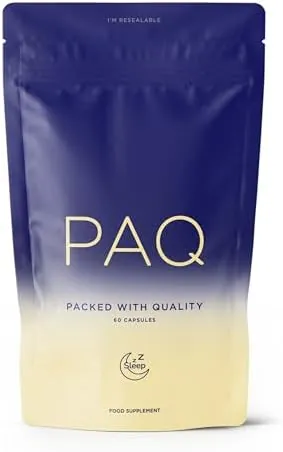
Sleep PAQ Natural Sleep Aid – 60 Vegan Capsules – Magnesium, L-Theanine, Passion Flower, Cherry – Non-Habit Forming, No Melatonin – Clinically Dosed for Sleep, Recovery & Relaxation
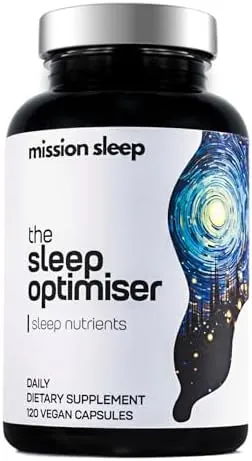
The Sleep Optimiser Sleeping Capsules - Non Melatonin Tablets Sleep Supplement for Adults with Magnesium Glycinate, L Theanine, Apigenin & Zinc - Nutrient-Based Sleeping Aid Suitable for Long Term Use
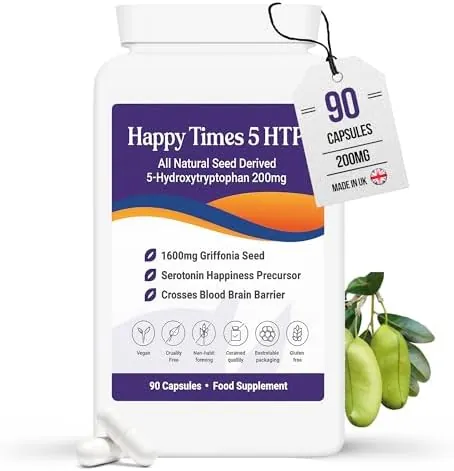
Happy Times Double Strength 5-HTP Supplement (200mg) Amino Acid 5 Hydroxytryptophan -Serotonin Melatonin Happiness Hormone Precursor Natural Griffonia Seed Extract Herbal Healthy Sleeping
Top Valerian Products on AIScored

Solgar Griffonia 5-HTP Complex – Sleep and Mood Support with Valerian Root, Magnesium, and Vitamin B6 - Vegan & Gluten Free - Pack of 30
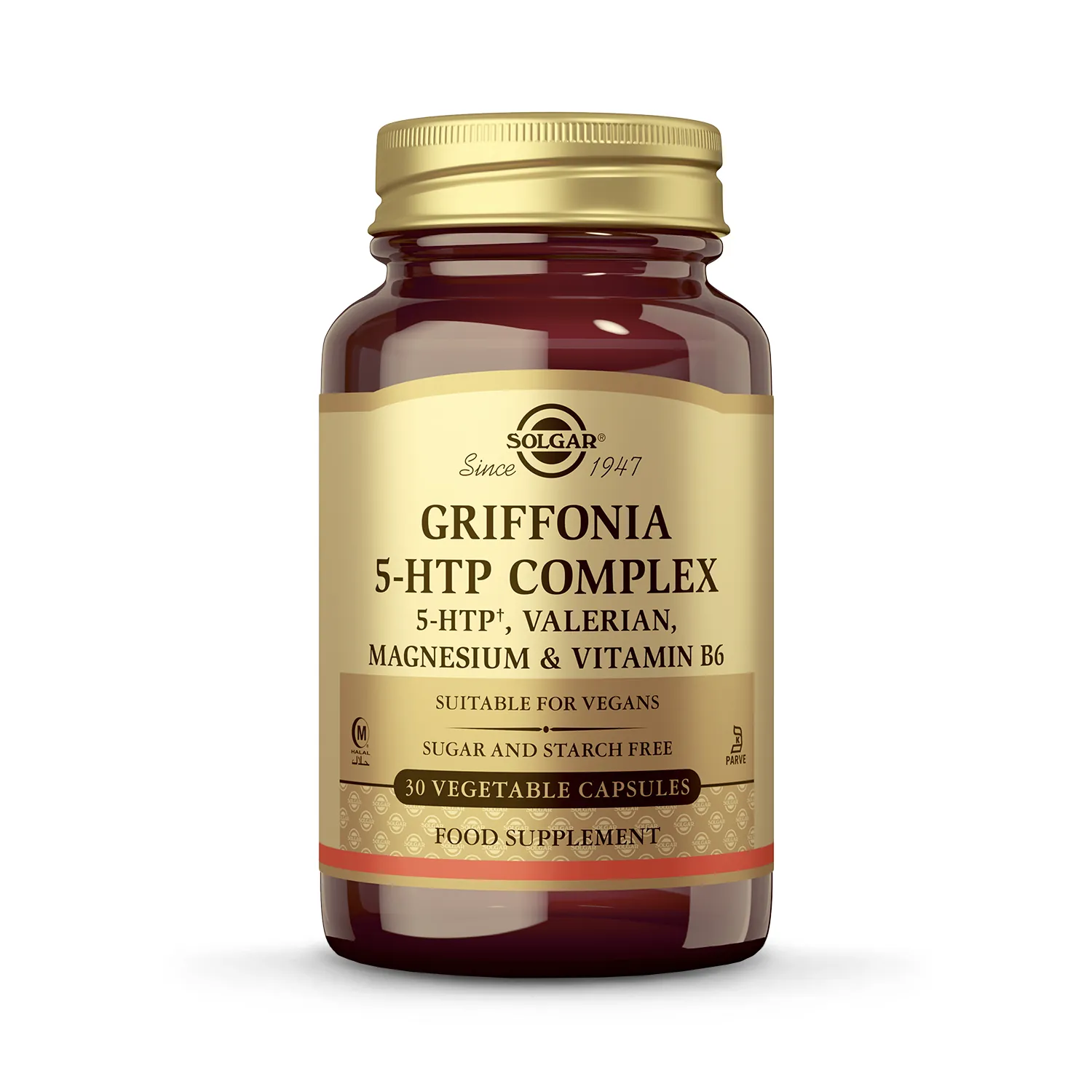
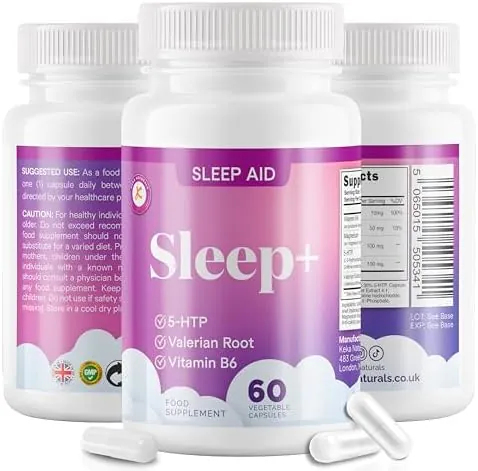
Sleep Support with 5-HTP, Valerian Root, Magnesium and Vitamin B6, Advanced High Strength Formula - 60 Veg Capsules
Want to check more interactions?
Add these and other supplements to our interactive Stack Analyzer for a full analysis.
Build your full stack →