Important: This page is for informational purposes only, based on published peer-reviewed research and official UK dietary guidelines (NHS, EFSA, SACN). It does not constitute medical advice. Always consult your GP or pharmacist before starting, stopping, or combining supplements.
Supplements Studied for Digestive Health
Ingredients researched for gut microbiome and digestive comfort
Why This Stack?
The gut-health stack combines three well-researched interventions — multi-strain probiotics, prebiotic fibre, and L-glutamine — that target complementary aspects of gastrointestinal function. Probiotics introduce beneficial live bacteria; prebiotics selectively feed those bacteria to promote their colonisation; and glutamine provides the primary fuel substrate for intestinal epithelial cells, supporting the structural integrity of the gut lining. The NHS acknowledges that gut microbiome composition is linked to digestive health, immune function, and broader metabolic processes, though it notes that the field is still maturing. EFSA has granted authorised health claims for psyllium husk in relation to normal bowel function, and recognises that certain Lactobacillus and Bifidobacterium strains maintain digestive comfort, though strain-specific claim approvals remain limited. This combination is most commonly used by individuals managing antibiotic-associated digestive disruption, irritable bowel symptoms, or seeking general microbiome support. Evidence for synergistic benefit from combining probiotics with prebiotics (termed 'synbiotics') is emerging, with Markowiak and Ślizewska (Nutrients, 2017) concluding that synbiotic formulations may confer additive advantages over either component alone. Standard protocols suggest a minimum trial period of four to eight weeks before assessing benefit.
What’s in This Stack
Probiotics
10-30 billion CFU (multi-strain)A 2018 Cochrane review found probiotics reduced antibiotic-associated diarrhoea by 37%. Specific strains (L. rhamnosus GG, S. boulardii) have the strongest evidence.
Available Forms
| Form | Bioavailability | Notes |
|---|---|---|
| Multi-Strain Capsules | high | Combination of Lactobacillus + Bifidobacterium strains, broad-spectrum |
| Saccharomyces boulardii | high | Yeast-based probiotic, survives antibiotics, evidence for diarrhoea prevention |
| Spore-Based (Bacillus) | high | Naturally acid-resistant, no refrigeration needed, shelf-stable |
Top Products



Prebiotics
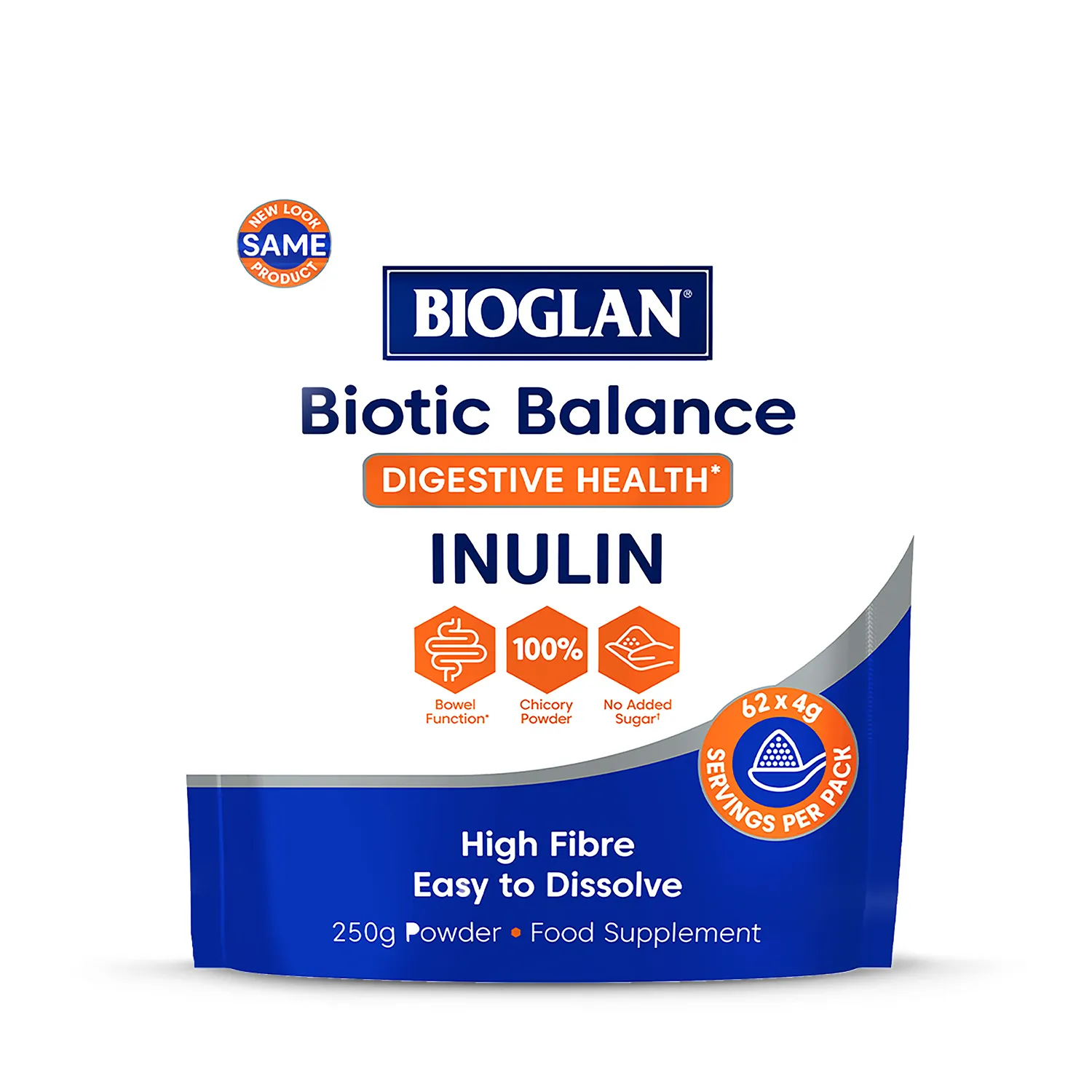
5-10g (inulin, FOS, or psyllium)Prebiotics feed beneficial gut bacteria. Research indicates inulin and FOS supplementation increases Bifidobacteria populations and may improve bowel regularity (Kolida et al., 2007, Br J Nutr).
Available Forms
| Form | Bioavailability | Notes |
|---|---|---|
| Inulin | high | From chicory root, most studied prebiotic fibre |
| FOS (Fructooligosaccharides) | high | Shorter chain than inulin, fermented faster, may cause more initial gas |
| GOS (Galactooligosaccharides) | high | Particularly supports Bifidobacteria, well-studied in infants and adults |
| Partially Hydrolysed Guar Gum (PHGG) | high | Well-tolerated, less gas than inulin/FOS, supports regularity |
Top Products

Q+A Niacinamide Gentle Exfoliating Face Cleanser (125ml), Face Scrub, Exfoliating Face Wash with Jojoba Esters and Prebiotics, Cleanses While Calming Sensitivity and Blemish-Prone Skin, Fragrance Free

Glutamine
5,000mgL-glutamine is the primary fuel for intestinal epithelial cells. Research suggests it may support intestinal barrier function and reduce gut permeability (Rao & Samak, 2012, Curr Opin Clin Nutr Metab Care).
Available Forms
| Form | Bioavailability | Notes |
|---|---|---|
| L-Glutamine | high | Free-form, most common and well-studied |
| Glutamine Peptides | high | Bonded form, more stable in solution, similar efficacy |
Top Products


Optimum Nutrition Gold Standard Whey Protein Powder Muscle Building Supplements With Glutamine and Amino Acids, French Vanilla Creme, 30 Servings, 900 g, Packaging May Vary, 891 - 908 g

How This Stack Works
Probiotics are the active biological component of this stack. The strongest clinical evidence centres on Lactobacillus rhamnosus GG and Saccharomyces boulardii, which Goldenberg et al. (Cochrane Database of Systematic Reviews, 2017) found were associated with approximately a 37% reduction in antibiotic-associated diarrhoea risk across randomised controlled trials. Multi-strain formulations in the range of 10–30 billion CFU are typically used in research, though optimal strain selection and dosing remain areas of active investigation. Probiotics should be refrigerated unless labelled shelf-stable, and taken with or shortly before a meal to improve gastric transit survival.
Prebiotic fibres — principally inulin, fructooligosaccharides (FOS), and psyllium husk — act as selective fermentation substrates for beneficial bacteria. Kolida et al. (British Journal of Nutrition, 2007) demonstrated that inulin and FOS supplementation selectively increases Bifidobacterium populations in the human colon. Roberfroid et al. (British Journal of Nutrition, 2010) provided a comprehensive review confirming that prebiotics modulate microbiota composition and may influence immune markers and metabolic outcomes. EFSA's scientific opinion (EFSA Journal, 2012) supports psyllium husk's role in maintaining normal bowel function at doses of 3.5g per serving. A dose of 5–10g daily is consistent with research protocols, though individuals should increase intake gradually over one to two weeks to minimise transient bloating and flatulence.
L-glutamine is the most abundant free amino acid in the body and serves as the predominant energy source for intestinal epithelial cells and colonocytes. Rao and Samak (Current Opinion in Clinical Nutrition and Metabolic Care, 2012) reviewed evidence that glutamine supplementation supports tight-junction protein expression and reduces gut permeability under stress conditions, including following surgery or critical illness. Evidence in otherwise healthy adults is more limited, but research suggests 5g daily is a reasonable supplemental dose. Glutamine should be dissolved in water or a cool liquid, as heat degrades it.
A key caution: probiotics are generally well tolerated in healthy adults, but individuals who are severely immunocompromised, have central venous catheters, or are post-organ transplant should not use probiotics without medical supervision, as rare cases of bacteraemia and fungaemia have been reported in these populations.
Interaction Analysis
2 known interactions between ingredients in this stack.
Prebiotics serve as fuel for probiotic bacteria. Research suggests combining them (a 'synbiotic' approach) may enhance probiotic survival and colonisation in the gut.
Action: Taking prebiotics alongside probiotics may improve outcomes. Many combined products exist as 'synbiotics'.
Read full analysis →Research suggests glutamine supports intestinal barrier integrity, which may complement probiotic supplementation for gut health.
Action: Both can be taken together. Glutamine is often taken on an empty stomach, while probiotics can be taken with or without food depending on the strain.
Read full analysis →Suggested Timing Schedule
Morning
Take with or just before a meal — food buffers stomach acid, improving bacterial survival. Strain specificity matters — different strains have different effects.
Evening
None in this stack
Any Time
Take with food. Start with low doses (2-3 g) and increase gradually to avoid bloating and gas. Feed beneficial gut bacteria already in your colon.
Can be taken any time. Often used post-workout or before bed. Primary fuel source for gut lining cells.
What to Avoid with This Stack
- • Probiotics may not be suitable for severely immunocompromised individuals
Alternatives & Variations
Individuals who cannot tolerate fermented dairy may use non-dairy probiotic capsules (avoiding inulin-containing excipients if sensitive to FODMAPs). For prebiotic fibre, partially hydrolysed guar gum (PHGG) is better tolerated than inulin in those with irritable bowel syndrome and produces less fermentation-related gas. Acacia fibre is another low-FODMAP prebiotic option. If L-glutamine is cost-prohibitive, dietary sources such as beef, eggs, and cottage cheese are reasonably rich, though supplemental doses are difficult to achieve through food alone. Digestive enzyme blends are sometimes used alongside this stack but address a distinct mechanism — substrate breakdown rather than microbiome modulation.
Notes & Caveats
Gut health is complex and highly individual. Probiotic effects are strain-specific — not all products are equivalent. Introduce prebiotics gradually to minimise bloating.
Customise This Stack
Load these supplements into our interactive Stack Analyzer to adjust dosages, add or remove ingredients, and get personalised timing.
Customise this stack →Frequently Asked Questions
Taking them together is convenient and consistent with synbiotic research protocols. However, timing is not critical — the key is consistency. If prebiotics cause bloating initially, some individuals find it helpful to take them separately from probiotics until tolerance improves. There is no evidence that co-administration reduces probiotic efficacy; if anything, the prebiotic substrate may support bacterial colonisation.
Most clinical trials measure outcomes at four to eight weeks. Antibiotic-associated digestive symptoms may resolve more quickly — often within a week or two of antibiotic completion. General microbiome shifts, as measured by stool analysis, are detectable within two to four weeks of consistent probiotic and prebiotic use. Gut barrier effects of glutamine are harder to quantify without clinical testing, so subjective improvements in comfort are the most practical marker.
Research suggests probiotics are most beneficial when taken during and immediately after a course of antibiotics, specifically to reduce antibiotic-associated diarrhoea risk. To avoid the antibiotic neutralising the probiotic dose, take them at least two hours apart. Glutamine and prebiotic fibre carry no known interaction with antibiotics. Always inform your GP or pharmacist if you are taking multiple supplements alongside prescribed medication.